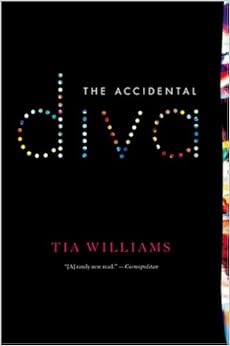
The Accidental Diva by Tia Williams 2004
Putnam
Incredible Quote: "What he didn't tell Billie was how naive she sounded, telling him what hustling was about. In the fifth grade, he had more game in his size-five Adidas kicks than anyone at that party could ever hope to have. He hustled to survive. It was either get out there and sell the shit out of some crack, or eat grape jelly for dinner and hope the rat that bit you in your sleep wasn't carrying anything lethal. When Billie talked about hustling and playing the game, what she really meant was that she was ambitious. She was a go-getter. She set high goals for herself and met them, exceeded them. But the bottom line was that she had been born into a supportive, loving, comfortably middle-class family that took care of her and nurtured her and provided as security blanket. Jay came from nothing. Worse than nothing" (186).
One Sentence Review: A diverting read that is excellently paced and notable for both its now-outdated culture references and relevant social commentary on a number of topics ranging from class to fashion to race with a distinctive (in the best way possible) narrative voice.
I love this distinction Ms. Williams makes in her novel. I never realized that people describing themselves as "hustlers" bothered me until I read this passage and found myself nodding in agreement. Especially when celebrities use the term, I just find it ridiculous (excluding those who actually came up from nothing as opposed to those born to famous parents, etc etc) and Ms. Williams perfectly illustrates why. If you're thinking this quote is a bit heavy and shying away from this novel, never fear. This quote is expertly woven into a romp of a read that straddles the line between light and social commentary. It was exactly what I needed to end 2015, a lot of fun to read while making witty observations about being "the only" and exploring class issues that it managed to not only hold my attention but also cause me to pause and think after reading a passage.
The only negative I can see is that it confirmed my fears about the beauty industry in terms of its shallowness. But it's a unique (for me) professional setting for a book so it kept me turning the pages. This book was published in 2004, 12 years later it's sad that we're still having the same conversations. Through Billie the author tackles cultural appropriation (which Bille calls "ethnic borrowing" in the beauty and fashion industry and maybe it's just because of the rise of the Internet and public intellectuals and blogging but it had honestly never occurred to me that people were having these conversations pre-Twitter. That demonstrates my ignorance and I was happy to be enlightened while also being sad that white gaze still has so much power over beauty standards. Although it is getting better because it is harder for beauty companies, fashion companies and magazines to ignore being called out when they "discover" some trend people of color have been naturally gifted with/been doing/wearing for years.
Aside from the pleasing depth of the novel, it's a quick paced read. I actually felt caught up in Billie's sweeping romance and just as intoxicated as she did, I didn't want to resurface from her studio apartment. Honestly I'd like a prequel so that we can live vicariously through Billie, Renee and Vida's college years. And I'm so happy her friends served more of a role than just providing advice at Sunday brunch. Also Billie's family dynamics were absolutely hilarious and unexpected.
I dealt with similar issues to Billie and Jay although not on as large a scale, granted I'm not a professional (yet) but I can relate to the class issues that come up in a relationship with two different economic backgrounds. And not to be a cliche but especially when it's the woman who comes from the comfortable lifestyle and the preconceived notions that we have/that other have about us, difficulty is involved and so on a personal level I was able to really connect with Billie (and better understand Jay).
The Quick Guide to Reading in Color
Showing posts with label book review. Show all posts
Thursday, March 10, 2016
Throwback Thursday: The Accidental Diva
Posted by
MissA
at
3/10/2016 09:23:00 PM
Throwback Thursday: The Accidental Diva
2016-03-10T21:23:00-06:00
MissA
adult fiction|African Americans|Black people|book review|chick lit|Putnam|The Accidental Diva|Throwback Thursday|Tia Williams|
Comments
Friday, February 26, 2016
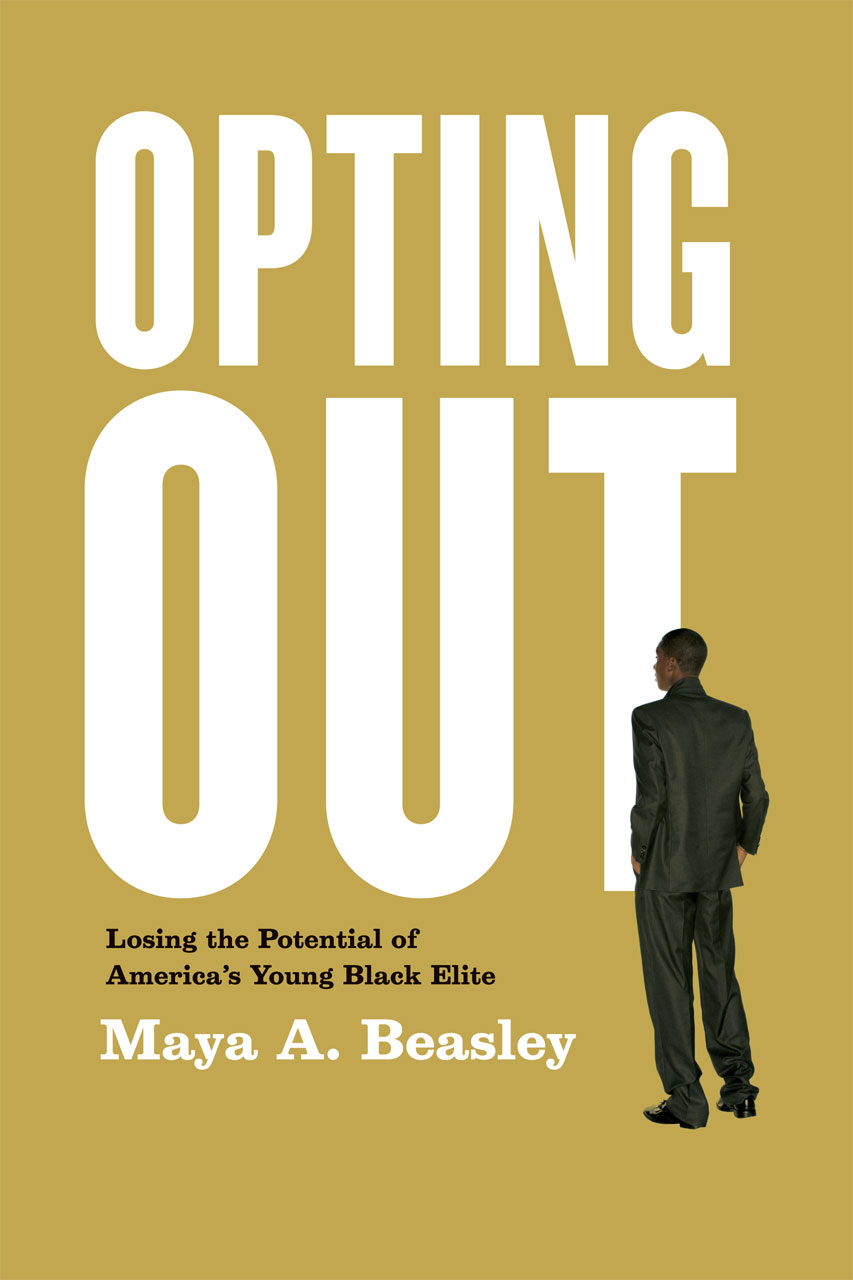
Opting Out: Losing the Potential of America's Young Black Elite
U Chicago Press
IQ "Further, because racism is endemic and
built into the structure and institutions of American life, attacking
inequalities in a minimal number of areas via a small number of channels is
limiting. [...] Radicalized occupations are neither ineffectual nor obsolete,
but they are no longer sufficient to create the wide-ranging, long-term changes
that are needed by the African American communities these students wish to
serve. It is therefore imperative that black college students become better
informed about the full spectrum of career opportunities that are compatible
with their community service goals" (143).
One sentence review: A thought provoking read that greatly contrasted with my own personal experiences which was somewhat confusing but the author makes some extremely vital points in concise language that deserves to receive more attention.
I have no problem with the premise of this book as outlined in the quote, we need more people of color in STEM, business, films and law. I personally can attest to this "The emergent trend is that black students with segregated social networks are selecting occupations that directly target the black community and ones in which they will not feel isolated. In contrast, those with integrated networks are choosing a more varied set of careers which are generally higher-paying and higher status with less of a direct emphasis on African Americans" (73). HOWEVER to me there is a disconnect between that quote and Beasley's findings on stereotype threat. Her findings (after interviewing Black and white Stanford and Berkley students) found that stereotype threat affected Black students' career decisions. I do not completely buy this. I do not understand how she does not explore the possibility of a correlation between class, diverse social networks and stereotype threat. Granted I'm not sure the university I went to is considered "elite" but when I look at the Black people I know who had diverse friend groups and went to all white schools and participated in mostly white activities, they are entering field where Black people are not dominant. Myself included. It just does not make sense to me that someone who grew up in an environment like the one I just outlined would then resist entering predominantly white fields. Beasley notes that they are often discouraged by their parents who are in similar fields, my parents have never told me not to enter a career simply because of white people. Sure they prepared me as best as they could for the little comments that might come my way but they never took a warning or discouraging tone. I'm willing to chalk this up to generational differences. The book is published in 2011 but cites a lot of studies from the 90s/early 2000s so maybe things really have changed in the last few years. But I read this book and had no idea who she was talking about when discussing the patterns of upper middle class Blacks.
Now with that being said, her research backed up some of my personal experiences as well, such as the alienation some Black students feel when they chose not to fully immerse themselves in the on campus Black community. But I wish she had further explored why Black students from working class or lower middle class families are more active than those who come from a wealthier background (and yes I have a few thoughts on the matter but I won't get into it). The importance of connections and how that leaves marginalized groups behind is also well addressed. I do not want to give this book a bad review because it conflicts with my worldview; I thought it was an extremely interesting read that presented intriguing findings and analysis. However I think this would have been more effective if she surveyed a greater variety of students maybe waited a few years or talked to students at an Ivy League or liberal arts college in the East. I hope she does a follow up. I would love to hear other people's thoughts in the comments.
Posted by
MissA
at
2/26/2016 11:49:00 AM
Opting Out: Losing the Potential of America's Young Black Elite
2016-02-26T11:49:00-06:00
MissA
3/5|Black people|book review|Maya Beasley|non fiction|
Comments
Labels:
3/5,
Black people,
book review,
Maya Beasley,
non fiction
Tuesday, February 23, 2016
Negroland
Negroland: a memoir by Margo Jefferson 2015
Pantheon/Knopf Doubleday
IQ "Average American women were killed like this [by men in crimes of passion] every day. But we weren't raised to be average women; we were raised to be better than most women of either race. White women, our mothers reminded us pointedly, could afford more of these casualties. There were more of them, weren't there? There were always more white people. There were so few of us, and it had cost so much to construct us. Why were we dying?" 168
There is so much to unpack here, so many quotes I want to discuss, which I will do later on in the review but if you only want to read one paragraph I'll try to make this one tidy.
One sentence review: There is something new to focus on with every reading and like all great works of literature there is something for everyone, the writing is flowery but I mean that in the best way possible.
I fell in love with the life of Margo Jefferson and the history of the Black American elite (think Our Kind of People). I would say I'm on the periphery of the Negroland world so much of what Jefferson describes is vaguely familiar to me but obviously I am not a product of the '50s and '60s so that was all new to me. I appreciated Jefferson's honesty that she finds it difficult to be 100% vulnerable, I imagine that is part of why she chooses to focus so much on the historical. But at least she doesn't pretend that she will bare her soul, but she still manages to go pretty damn far for someone who believes it is easier to write about the sad/racist things. Jefferson eloquently explores the black body, class, Chicago, gender, mental illness and race from when she was a child into adulthood with a touch of dry humor here and there. Jefferson is the epitome of the cool aunt and I want to just sit at her feet everyday and learn (I was fortunate to hear her speak at U of C and it was magical, her voice is heavenly and she's FUNNY).
I understand complaints that the narrative is disjointed but Jefferson always manages to bring her tangents back to the main point. It is not simply random ramblings the author indulges in, each seemingly random thought serves a purpose that connects to the central theme of the chapter/passage. Jefferson does not owe us anything, yes she chose to write a memoir but she also chose to write a social history. She explores some of her flaws and manages to avoid what she so feared; "I think it's too easy to recount unhappy memories when you write about yourself. You bask in your own innocence. You revere your grief. You arrange your angers at their most becoming angles. I don't want this kind of indulgence to dominate my memories" (6). For someone raised to be twice as good and only show off to the benefit of the Black race, Jefferson thankfully manages to let us in on far more than I expected when it comes to the Black elite.
Jefferson comes at my life when she says, "At times I'm impatient with younger blacks who insist they were or would have been better off in black schools, at least from pre-K through middle school. They had, or would have had, a stronger racial and social identity, an identity cleansed of suspicion, subterfuge, confusion, euphemism, presumption, patronization, and disdain. I have no grounds for comparison. The only schools I ever went to were white schools with small numbers of Negroes" (119). I too attended majority white schools and have often wondered if I would have had an easier time identifying with other Black students in college (and even high school) if I had gone to majority Black schools instead of remaining on the periphery. She goes on to explain her impatience because she felt that for the first few years of school she was able to live her life unaware of race and I would agree, there were only a few incidents but mostly I felt free. So she's right, it's a trade off and ultimately we all end up in the same white world. I still think I should have gone to an HBCU just to see what it's like, to force myself to confront my own privilege but I managed to do that at my PWI and there's no point in worrying about it anymore. It's this matter-of-fact tone Jefferson uses throughout the book that I adored, she largely avoids sentimentality. Although she somehow manages to fondly look back at Jack & Jill which makes me sad that I don't share the same happy memories of the group and based on conversations with a few others on Twitter I am not alone in that (someone should research the history of Jack & Jill and explain why it has become so awful although I have my own theory).
Much has already been said about how candidly Jefferson discusses depression, an aspect of mental health that was not discussed in the Black community. Thus I do not wish to dwell on the topic since writers far more articulate than I have mentioned it in their reviews, but I appreciate her talking about it and I know what she means. Slowly but surely the 'strong Black woman' facade is being allowed to crack and we are all the better for it. I wish she had delved a bit into Black women and eating disorders because she mentions how much she loved Ballet and the ideal beauty standards of the Black elite (no big butts or noses for example) but maybe this is not something she witnesses personally. Jefferson mentions that when Thurgood Marshall and Audrey Hepburn died around the same time, she and her friend felt guilty for caring more about Hepburn's death because of all she symbolized for them. At first I raised my eyebrows at this sign of racial disloyalty but she notes what Hepburn meant to her; "And the longing to suffer nothing at all, to be rewarded, decorated, festooned for one's charms and looks, one's piquant daring, one's winning idiosyncrasies: Audrey Hepburn in Funny Face and Breakfast at Tiffany's. Equality in America for a bourgeois black girl meant equal opportunity to be playful and winsome. Indulged" (200). And I understood exactly what she meant. It's why I cling to Beyonce, Carmen Jones (and Dorothy Dandridge by extension), Janelle Monae etc etc. I can't think of a Black manic pixie dream girl but I'd love to have a Black girl play one, to be able to complain about a character we have long been denied.
On Black men & women; "But the boys ruled. We were just aspiring adornments, and how could it be otherwise? The Negro man was at the center of the culture's race obsessions. The Negro woman was on the shabby fringes. She had moments if she was in show business, of course; we craved the erotic command of Tina Turner, the arch insolence of Diana Ross, the melismatic authenticity of Aretha. But in life, when a Good Negro Girl attached herself to a ghetto boy hoping to go street and compensate for her bourgeois privilege, if she didn't get killed with or by him, she usually lived to become a socially disdained, financially disabled black woman destined to produce at least one baby she would have to care for alone. What was the matter with us? Were we plagued by some monstrous need, some vestigial longing to plunge back into the abyss Negros had been consigned to for centuries? Was this some variant of survivor guilt? No, that phrase is too generic. I'd call it the guilty confusion of those who were raised to defiantly accept their entitlement. To be more than survivors, to be victors who knew that victory was as much a threat as failure, and could be turned against them at any moment" (169). Jefferson embraces feminism and pushes back on the constraints of Black womanhood.
I've already picked this book up and re-read random passages which is rare for me so soon after finishing it the first time (this is what happens when you have a towering TBR pile). I took an African American Autobiography class in college and I really hope this book gets added to the syllabus. It combines so many topics of interest to me, acknowledges so many greats in Black history, exposes some secrets of the Black upper class (passing, brown paper bag test) while combining history and memoir, absolutely captivating. I instinctively knew I would need to buy this book (ended up getting it autographed) and I am so glad I did. The cover is phenomenal.
Pantheon/Knopf Doubleday
IQ "Average American women were killed like this [by men in crimes of passion] every day. But we weren't raised to be average women; we were raised to be better than most women of either race. White women, our mothers reminded us pointedly, could afford more of these casualties. There were more of them, weren't there? There were always more white people. There were so few of us, and it had cost so much to construct us. Why were we dying?" 168
There is so much to unpack here, so many quotes I want to discuss, which I will do later on in the review but if you only want to read one paragraph I'll try to make this one tidy.
One sentence review: There is something new to focus on with every reading and like all great works of literature there is something for everyone, the writing is flowery but I mean that in the best way possible.
I fell in love with the life of Margo Jefferson and the history of the Black American elite (think Our Kind of People). I would say I'm on the periphery of the Negroland world so much of what Jefferson describes is vaguely familiar to me but obviously I am not a product of the '50s and '60s so that was all new to me. I appreciated Jefferson's honesty that she finds it difficult to be 100% vulnerable, I imagine that is part of why she chooses to focus so much on the historical. But at least she doesn't pretend that she will bare her soul, but she still manages to go pretty damn far for someone who believes it is easier to write about the sad/racist things. Jefferson eloquently explores the black body, class, Chicago, gender, mental illness and race from when she was a child into adulthood with a touch of dry humor here and there. Jefferson is the epitome of the cool aunt and I want to just sit at her feet everyday and learn (I was fortunate to hear her speak at U of C and it was magical, her voice is heavenly and she's FUNNY).
I understand complaints that the narrative is disjointed but Jefferson always manages to bring her tangents back to the main point. It is not simply random ramblings the author indulges in, each seemingly random thought serves a purpose that connects to the central theme of the chapter/passage. Jefferson does not owe us anything, yes she chose to write a memoir but she also chose to write a social history. She explores some of her flaws and manages to avoid what she so feared; "I think it's too easy to recount unhappy memories when you write about yourself. You bask in your own innocence. You revere your grief. You arrange your angers at their most becoming angles. I don't want this kind of indulgence to dominate my memories" (6). For someone raised to be twice as good and only show off to the benefit of the Black race, Jefferson thankfully manages to let us in on far more than I expected when it comes to the Black elite.
Jefferson comes at my life when she says, "At times I'm impatient with younger blacks who insist they were or would have been better off in black schools, at least from pre-K through middle school. They had, or would have had, a stronger racial and social identity, an identity cleansed of suspicion, subterfuge, confusion, euphemism, presumption, patronization, and disdain. I have no grounds for comparison. The only schools I ever went to were white schools with small numbers of Negroes" (119). I too attended majority white schools and have often wondered if I would have had an easier time identifying with other Black students in college (and even high school) if I had gone to majority Black schools instead of remaining on the periphery. She goes on to explain her impatience because she felt that for the first few years of school she was able to live her life unaware of race and I would agree, there were only a few incidents but mostly I felt free. So she's right, it's a trade off and ultimately we all end up in the same white world. I still think I should have gone to an HBCU just to see what it's like, to force myself to confront my own privilege but I managed to do that at my PWI and there's no point in worrying about it anymore. It's this matter-of-fact tone Jefferson uses throughout the book that I adored, she largely avoids sentimentality. Although she somehow manages to fondly look back at Jack & Jill which makes me sad that I don't share the same happy memories of the group and based on conversations with a few others on Twitter I am not alone in that (someone should research the history of Jack & Jill and explain why it has become so awful although I have my own theory).
Much has already been said about how candidly Jefferson discusses depression, an aspect of mental health that was not discussed in the Black community. Thus I do not wish to dwell on the topic since writers far more articulate than I have mentioned it in their reviews, but I appreciate her talking about it and I know what she means. Slowly but surely the 'strong Black woman' facade is being allowed to crack and we are all the better for it. I wish she had delved a bit into Black women and eating disorders because she mentions how much she loved Ballet and the ideal beauty standards of the Black elite (no big butts or noses for example) but maybe this is not something she witnesses personally. Jefferson mentions that when Thurgood Marshall and Audrey Hepburn died around the same time, she and her friend felt guilty for caring more about Hepburn's death because of all she symbolized for them. At first I raised my eyebrows at this sign of racial disloyalty but she notes what Hepburn meant to her; "And the longing to suffer nothing at all, to be rewarded, decorated, festooned for one's charms and looks, one's piquant daring, one's winning idiosyncrasies: Audrey Hepburn in Funny Face and Breakfast at Tiffany's. Equality in America for a bourgeois black girl meant equal opportunity to be playful and winsome. Indulged" (200). And I understood exactly what she meant. It's why I cling to Beyonce, Carmen Jones (and Dorothy Dandridge by extension), Janelle Monae etc etc. I can't think of a Black manic pixie dream girl but I'd love to have a Black girl play one, to be able to complain about a character we have long been denied.
On Black men & women; "But the boys ruled. We were just aspiring adornments, and how could it be otherwise? The Negro man was at the center of the culture's race obsessions. The Negro woman was on the shabby fringes. She had moments if she was in show business, of course; we craved the erotic command of Tina Turner, the arch insolence of Diana Ross, the melismatic authenticity of Aretha. But in life, when a Good Negro Girl attached herself to a ghetto boy hoping to go street and compensate for her bourgeois privilege, if she didn't get killed with or by him, she usually lived to become a socially disdained, financially disabled black woman destined to produce at least one baby she would have to care for alone. What was the matter with us? Were we plagued by some monstrous need, some vestigial longing to plunge back into the abyss Negros had been consigned to for centuries? Was this some variant of survivor guilt? No, that phrase is too generic. I'd call it the guilty confusion of those who were raised to defiantly accept their entitlement. To be more than survivors, to be victors who knew that victory was as much a threat as failure, and could be turned against them at any moment" (169). Jefferson embraces feminism and pushes back on the constraints of Black womanhood.
I've already picked this book up and re-read random passages which is rare for me so soon after finishing it the first time (this is what happens when you have a towering TBR pile). I took an African American Autobiography class in college and I really hope this book gets added to the syllabus. It combines so many topics of interest to me, acknowledges so many greats in Black history, exposes some secrets of the Black upper class (passing, brown paper bag test) while combining history and memoir, absolutely captivating. I instinctively knew I would need to buy this book (ended up getting it autographed) and I am so glad I did. The cover is phenomenal.
Posted by
MissA
at
2/23/2016 05:51:00 PM
Negroland
2016-02-23T17:51:00-06:00
MissA
5/5|adult fiction|African Americans|book review|Knopf|Margo Jefferson|memoir|Negroland|
Comments
Labels:
5/5,
adult fiction,
African Americans,
book review,
Knopf,
Margo Jefferson,
memoir,
Negroland
Thursday, August 14, 2014
Throwback Thursday: Ship of Souls
Amazon Publishing
Rating: 3.5/5
IQ "Kids on my block called 'reject'. Grown folks at church called me an 'old soul'. One girl at school told me I talked like a whiteboy. But when I ask Mom about it she just said, 'you are black. And nothing you say, or do, or pretend to be will ever change that fact. So just be yourself, Dmitri. Be who you are." pg. 3
Dmitri, known as D, is living with a foster family after his mother dies of breast cancer. D is used to having his foster mom all to himself, when she takes in Mercy, a crack-addicted baby he finds himself unable to cope. He is at a new school and while tutoring he becomes friend with Hakeem, a basketball star who needs extra math help and Nyla, a military brat both boys have crushes on. Sometimes after school D bird watches in Prospect Park and he discovers a mysterious bird, Nuru that can communicate with him. He enlists Hakeem and Nyla to help him help Nuru (who is injured) escape evil forces, the ghosts of soldiers that died during the Revolutionary War. They journey from Brooklyn to the African Burial Ground in Manhattan to assist Nuru in freeing the souls that reside there.
I wish some of the fantasy elements had been developed a bit further, such as Nuru's role, his dialogue also came across sounding a little ridiculous and heavy on the 'wise mentor' scale. The characters did come across as having a message. It is made very clear that Hakeem is Muslim and Nyla is 'different from the stereotype. I wish the individuality of the characters had come off in a more subtle way (for example when Hakeem describes how his older sister listed all Muslim basketball players to convince his dad to let him play. And then Hakim lists them all and weaves in tidbits about the hijab. It came across as stilted for middle school dialogue). But then again this book is intended for a younger audience who need it hammered in that it's dangerous to define people and put them in boxes. I also wish the book had been longer just by a few chapters, selfishly because I wanted more historical tidbits but also because I felt that the fantasy elements happened so fast as did the sudden strong friendship with Hakeem and Nyla. And the love triangle made me sad but that's not the author's fault! Although I would have been happy without it.
Yet again Zetta Elliott seamlessly blends together history and fantasy, Black American history that is often ignored in textbooks. Unlike the descriptions of the characters I found the historical tidbits woven in artfully. There are so many goodies in here about the importance of working with other people, that heroes need not go it alone. This is especially vital because the author makes it explicitly clear that D is unbearably lonely but he keeps himself isolated from other people because he doesn't want to be abandoned or disappointed or lose them in a tragic way as happened with his mother. The author does a great job of making you truly feel and understand D's loneliness and your heart aches for him. Also while I didn't think the friendship had enough time to really grow into the strong bonds that developed so quickly, it was a very genuine friendship (once you suspend your disbelief) in terms of doing anything and everything for your friends and believing the seemingly improbable. It is also clear that the author has a strong appreciation of nature and that makes the fantasy elements more interesting while also making it appear more realistic.
Ship of Souls is a great story that focuses on a portion and population of the American Revolution that is completely ignored by most history outlets. The fantasy world is well-thought out, I only wish the book had been longer to explain more about the world D and his friends get involved in as well as more time to believably develop their friendship. The characters are strong, but they were written with a heavy hand that tries hard to point out how they defy stereotypes. I devoured the story not just because of the length but because it is so different from anything else out there and it's a lovely addition to the YA/MG fantasy world. I can't wait to see what the author does next and again I adored her first YA novel A Wish After Midnight. I recommend both books.
Disclosure: Received from the author, who I do consider a wonderful friend and mentor. Many thanks Zetta!
Posted by
MissA
at
8/14/2014 07:16:00 PM
Throwback Thursday: Ship of Souls
2014-08-14T19:16:00-05:00
MissA
3.5/5|African Americans|book review|fantasy|Middle Grade|multicultural|Throwback Thursday|urban fantasy|Zetta Elliott|
Comments
Monday, June 10, 2013
Girl Meets Boy
Girl Meets Boy: Because There Are Two Sides to Every Story; edited by Kelly Milner Halls, featuring stories by Chris Crutcher, Kelly Milner Halls, Jospeh Bruchac, Cynthia Leitich Smith, James Howe, Ellen Wittlinger, Rita Williams-Garcoa. Terry Trueman, Terry Davis, Rebecca Fjelland Davis, Sara Ryan & Randy Powell (ARC version) 2012Chronicle Books
Rating: 2.5/5
IQ "I know this shouldn't be anything, shouldn't matter, but for some reason it does matter to me; Raffina is black, and I'm white. Of course, she's not really black any more than I'm really white. She's kind of dark brown, no, kind of medium brownish. I'm definitely sort of beige or something, light beige, tinted pink or red depending on how much time I spend in the sun (I don't tan, I just burn). Maybe a better way to put this is that Raffina's ancestors came from Africa, and my ancestors came from....I don't know....not Africa. Someplace like England or Germany or Canada or something." Sean + Raffina, Sean pg. 117 (Trueman)
Twelve authors, 6 stories, straight and gay relationships. One author tells the story from the guy's point of view, the other tells the story from the girl's point of view. I picked the quote I did because it made me laugh in its simplicity and truth.
I did really enjoy the story 'Love or Something Like It' (its Chris Crutcher, who I love) and its complementary story, 'Some Things Never Change' (Halls) because they really took stereotypes and turned them on its head with the jock and the 'slut'. I felt Cynthia Leitich Smith and Joseph Bruchac did a good job of actually linking up their stories in 'Falling Down to see the Moon' (Bruchac) and 'Mooning Over Broken Stars' (Smith). And 'Launchpad to Neptune' (Sara Ryan & Randy Powell) is absolutely fascinating, it actually had a plot twist that I did not see coming and had well developed characters besides the main ones. There are points in each story that are relatable and while each story has one major issue and its all rather straightforward, they are stories that need to be told especially for those who need to get over their own prejudices. Books like these might help gently prod them to rethink their antipathy to dating someone outside their race, or to disapprove of those who are gay or lesbian or to judge people based on the number of people they may or may not have slept with.
Girl Meets Boy contains a collection of short and sweet stories from some of the best talents in the YA world and while I think these stories might have been more memorable if they were longer/a book of their own, better to have a little of the story than none at all. The stories can be heavy-handed at times and the supporting characters fell flat (and the cover's weird) but they are interesting. I also loved the last bit at the end where each of the authors (except Rita Williams Garcia, who I really wanted to hear from) shared their inspiration for their respective story. This book is a quick read that will pass the time but it most likely won't stay with you, read it at the beach or in a park.
Disclosure: This is embarrassing but I don't remember.....I think I got it from the publisher. Whoever it was, thank you!
Posted by
MissA
at
6/10/2013 12:00:00 AM
Girl Meets Boy
2013-06-10T00:00:00-05:00
MissA
2.5/5|book review|Chris Crutcher|Chronicle Books|contemporary|Cynthia Leitich Smith|Ellen Wittlinger|GLBT|Joseph Bruchac|Kelly Milner Halls|Rita Williams Garcia|short stories|Terry Trueman|Young Adult|
Comments
Tuesday, June 4, 2013
Irises
Irises by Francisco X. Stork, 2012
Arthur A. Levine/Scholastic
Rating: 3/5
IQ "Mary smiled. She always smiled when people said living family. It meant that people didn't stop being family when they died; they just turned into your dead family" pg. 144
18 year old Kate wants to be a doctor, 16 year old Mary wants to be an artist. Both girls must put their dreams on hold when their strict father dies, leaving Kate as Mary's legal guardian since their mother is in a permanent vegetative state. Her father told Kate that family always comes first, even if that means Kate needs to hold off on Stanford. Further complicating the matter is that Simon, Kate's boyfriend, has asked her to marry him in order to provide for both her and Mary. Meanwhile Mary is drawn to Marcos, a boy with artistic talent but a violent past. The girls are struggling over the death of their father, accepting their different personalities but what may be the final wedge between them is the decision regarding their mother. They can no longer afford to pay the medical bills keeping her in her vegetative state but she is their mother....
I love Francisco Stork's books. Long time readers of this blog know that, I adored Marcelo in the Real World and was quite fond of The Last Summer of the Death Warriors. Unfortunately I found Irises to be my last favorite Stork book thus far. Granted, this was bound to happen but the summary was so good that my hopes were quite high. All this being said, it was difficult for me to put my finger on why I did not like this book. It just didn't work for me. Part of the issue was that Stork raises juggles so many balls in the air, in a way that I did not find effective. I wish he had stuck to two or three issues (such as the issue of whether or not to pull the plug and how to cope with their new-found independence) and focused on really fleshing out the secondary characters (such as Simon and even Mary). I found the issue of life support inadequately explored, even though I had thought that was at the whole heart of the book. I did find it interesting that the girls (especially Mary since she was younger) did not go crazy or at least engage in more normal teenage acts that their father had previously forbidden. Of course most people don't immediately go party after the death of a parent, but I was surprised that very little mention was made about bigger temptations of Mary and Kate (such as going to the mall, an act their father did not allow).
Both girls seem to be losing their way where their Christian faith is concerned and I felt that Mr. Stork did a good job of subtly addressing the questions that arise when one has a crisis of faith and whether or not you can return to your faith. I also found it really interesting that the author made the girls Protestant. This was a note of interest to me because the girls are Latino and I'm Latino, and I have grown up around mostly Catholic Latinos so I found this new world of Protestant Latinos quite intriguing (of course not all experiences are the same but the book gave me a basic idea). I thought the idea of marriage-as-an-escape was an issue well-explored, even if its a concept many people do not realize is prevalent. Kate was also a great multidimensional character as was the pastor, Andy Soto. I found their interweaving storyline to be the best in the book (it is mostly Kate's story) and very believable.
Ultimately Irises left me indifferent, I certainly don't hate it but I did not love it or even enjoy the book all that much. However the writing is mostly strong, with a few secondary characters left underdeveloped. The book mostly suffers from having too many plots and setbacks occurring. Its strength lies in the simple, effective writing and the realistic dialogue. The issue of faith was portrayed in a respectful, non-preachy manner which made the book more compelling. What did everyone else think?
Disclosure: Mr. Stork kindly sent it to me (a whole year ago I'm ashamed to say). Thank you so very much!
Cover image from Francisco Stork's website
Arthur A. Levine/Scholastic
Rating: 3/5
IQ "Mary smiled. She always smiled when people said living family. It meant that people didn't stop being family when they died; they just turned into your dead family" pg. 144
18 year old Kate wants to be a doctor, 16 year old Mary wants to be an artist. Both girls must put their dreams on hold when their strict father dies, leaving Kate as Mary's legal guardian since their mother is in a permanent vegetative state. Her father told Kate that family always comes first, even if that means Kate needs to hold off on Stanford. Further complicating the matter is that Simon, Kate's boyfriend, has asked her to marry him in order to provide for both her and Mary. Meanwhile Mary is drawn to Marcos, a boy with artistic talent but a violent past. The girls are struggling over the death of their father, accepting their different personalities but what may be the final wedge between them is the decision regarding their mother. They can no longer afford to pay the medical bills keeping her in her vegetative state but she is their mother....
I love Francisco Stork's books. Long time readers of this blog know that, I adored Marcelo in the Real World and was quite fond of The Last Summer of the Death Warriors. Unfortunately I found Irises to be my last favorite Stork book thus far. Granted, this was bound to happen but the summary was so good that my hopes were quite high. All this being said, it was difficult for me to put my finger on why I did not like this book. It just didn't work for me. Part of the issue was that Stork raises juggles so many balls in the air, in a way that I did not find effective. I wish he had stuck to two or three issues (such as the issue of whether or not to pull the plug and how to cope with their new-found independence) and focused on really fleshing out the secondary characters (such as Simon and even Mary). I found the issue of life support inadequately explored, even though I had thought that was at the whole heart of the book. I did find it interesting that the girls (especially Mary since she was younger) did not go crazy or at least engage in more normal teenage acts that their father had previously forbidden. Of course most people don't immediately go party after the death of a parent, but I was surprised that very little mention was made about bigger temptations of Mary and Kate (such as going to the mall, an act their father did not allow).
Both girls seem to be losing their way where their Christian faith is concerned and I felt that Mr. Stork did a good job of subtly addressing the questions that arise when one has a crisis of faith and whether or not you can return to your faith. I also found it really interesting that the author made the girls Protestant. This was a note of interest to me because the girls are Latino and I'm Latino, and I have grown up around mostly Catholic Latinos so I found this new world of Protestant Latinos quite intriguing (of course not all experiences are the same but the book gave me a basic idea). I thought the idea of marriage-as-an-escape was an issue well-explored, even if its a concept many people do not realize is prevalent. Kate was also a great multidimensional character as was the pastor, Andy Soto. I found their interweaving storyline to be the best in the book (it is mostly Kate's story) and very believable.
Ultimately Irises left me indifferent, I certainly don't hate it but I did not love it or even enjoy the book all that much. However the writing is mostly strong, with a few secondary characters left underdeveloped. The book mostly suffers from having too many plots and setbacks occurring. Its strength lies in the simple, effective writing and the realistic dialogue. The issue of faith was portrayed in a respectful, non-preachy manner which made the book more compelling. What did everyone else think?
Disclosure: Mr. Stork kindly sent it to me (a whole year ago I'm ashamed to say). Thank you so very much!
Cover image from Francisco Stork's website
Posted by
MissA
at
6/04/2013 12:30:00 AM
Irises
2013-06-04T00:30:00-05:00
MissA
3/5|book review|contemporary|Francisco X. Stork|Irises|Latino/a|religion|Scholastic|Young Adult|
Comments
Labels:
3/5,
book review,
contemporary,
Francisco X. Stork,
Irises,
Latino/a,
religion,
Scholastic,
Young Adult
Tuesday, March 13, 2012
The Agency: The Traitor in the Tunnel
Candlewick Press
Rating: 4/5
IQ "All the feelings she had long suppressed overcame her at last, making her stagger. It was like a physical blow: she not just alone, but lonely. The solitary sate was nothing new, of course. But she was lonely now for different reasons. She was lonely despite the possibility of family-perhaps because of that very likelihood. Because she might not be absolutely truly alone, after all, and she might have preferred it so." Mary pg. 98
Mary Quinn is officially an agent and she is determined to do exceptionally well on her first assignment. To her dismay, she is given a "boring" case in which a petty thief is stealing inconsequential things from Buckingham Palace. Mary is placed as a maid in Queen Victoria's court in order to prevent any future thefts and discover the identity of the thief. But while Mary grows impatient with her case another arises when the Prince of Wales witnesses a murder in an opium den. The queen does not want him to testify due to the scandal and Mary's interest is piqued further when she learns that the accused killer may be someone she is quite familiar with.
Compared to the other two books, this one left me disappointed in terms of the mystery. The mystery element seemed to be completely disregarded at times. Worse, the conclusion was random and anti-climatic. It was not nearly as exciting or interesting as I had hoped. I read this as though it would be the final book in the trilogy (it was originally supposed to be a trilogy and it is the 3rd book) so perhaps that explains some of the ambiguity in terms of the motives of certain characters (lady-in-waiting, Octavius Jones, Anne & Felicity). Nevertheless I am still baffled as to why the criminal(s) committed the crimes that they did.
I chose the quote I did because I can relate to not necessarily wanting company, to preferring being alone but not lonely. But what this book lacks in terms of mystery development, it more than makes up for it on the romance front. James & Mary have the most engaging of exchanges, especially at the end. They both have a wry sense of humor, stubborn nature, a love of adventure and a belief in fairness for all. They make a wonderfully exasperating team which makes the storyline all the more fun. I was thrilled that we finally learned more about Mary's past, this is when new twists are thrown into the story and everything untangles in a way that makes sense. As always the best part of the book is Mary Quinn herself (with Mary&James a close second). Mary is extremely resourceful, it is amusing to see how frustrated she gets with this case in which no gossip is allowed at the palace, thus how is she to discover information? Never doubt that Mary Quinn will find a way to obtain the information she wants. Mary's resilience is inspiring, and I love the author's focus on her working-class origins as well as the daily life of other working-class people. I think many historical novels today want to focus solely on the wealthy or upper middle class, it's nice to see a book that does not shy away from describing the poverty of Victorian England and the grinding lives of the English and immigrant working class.
I needed a lovely historical fiction read, one that reminded me of why I loved studying history so much and The Traitor in the Tunnel more than delivered on that front. I appreciated the personal glimpses of Queen Victoria when she was not playing her role as THE QUEEN, instead the author paints a portray of a Queen Victoria who bore a great weight on her shoulders but who also loved her family and lots of laughter, she had a mischievous spirit. I felt that this book in the series spent more time explaining things but not in a boring manner, rather the author finds ways to cleverly insert historical or tactical information into the story (or blink-and-you-might-miss-it). One of my 'complaints' (not really I complaint since I LOVED the second book) was that I wanted to know more about The Agency and gradually more details are being revealed in this book. James Easton is infatuated with Mary Quinn as am I. This is a series that I cannot praise enough, I wish every world/European history class had at least one of these books as required reading.
Disclosure: Received from the author as part of the Candlewick Blog Tour. Thank you so much for including me Ms. Lee & Candlewick! Please read the guest post (very prevalent to the book) about opium as a Victorian obsession
Posted by
MissA
at
3/13/2012 09:44:00 AM
The Agency: The Traitor in the Tunnel
2012-03-13T09:44:00-05:00
MissA
4/5|Asian|book review|Candlewick|historical fiction|The Agency series|Y.S.Lee|Young Adult|
Comments
Labels:
4/5,
Asian,
book review,
Candlewick,
historical fiction,
The Agency series,
Y.S.Lee,
Young Adult
Monday, February 20, 2012
Male Monday: Cracking the Ice
Cracking the Ice by Dave Hendrickson 2012Westside Books
Rating: 3.5/5
IQ "No one had said a word in his defense. No one had lifted a finger. No one. Jessie thought of a phrase Pop often used: No snowflake in an avalanche feels responsible. He hated all of them, every snowflake on the hockey team. Yet he couldn't very well give up, could he? Doing that would rob him of his dreams and give them what they wanted." pg.153
Jessie wants to play hockey, eventually making it to the NHL. It's not a problem per se, but it will be a battle because Jessie is growing up in the 1960s and there was only one Black professional hockey player at this time, Willie O'Ree for him to look up to. Jessie is offered the opportunity to attend a prestigious New Hampshire boarding school on a full scholarship and the chance to play on the school's hockey team. Best case scenario Jessie hopes he will get spotted by scouts and be on his way to the NHL after a grand college career, worst case scenario, Jessie plays for one of the best high school hockey teams in the country and attends a top college. He sees this situation as a win-win and although his parents have some serious misgivings, they ultimately agree. Unfortunately, Jessie expected some racism but he is shocked by the racism he faces from 99% of his teammates, he expected his teammates to come around when he showed his skills. Jessie does not want to throw in the towel, but he's not sure he wants to spend four years of his life being miserable, and not given playing time by his hockey coach.
I don't have many problems with this book, I didn't love but it was not a waste of my time. In fact, I think it's one of the most interesting books I've read this year. And it touches a subject close to my heart. But first a few quibbles. Jessie has a girlfriend, they are in love. Jessie is fifteen. I thought this would be one of those 'first-love but move on' type stories but it's not which I felt was unrealistic. But then again, it was the 1960s, maybe people fell in love and stayed together at an earlier age. *shrugs* I also did not like the ending because I felt like it made the whole story pointless. I can't explain it without going into spoilers but while it wasn't completely depressing, I did feel like the ending made the whole premise unnecessary. Furthermore, I really really liked the focus on hockey but I was curious as to how Jessie was doing academically. Were his classmates just as racist? His teachers? There are a few dorm incidents but it was never clear to me if Jessie's teachers and classmates were all narrow-minded.
My father loves hockey. My father is Panamanian American so this is not exactly "normal". I am not going to pretend I watch hockey avidly because I don't have time to watch sports everyday but some of my earliest memories of father-daughter time is me lying on my father's stomach as we watch a hockey game, usually the Blackhawks versus whoever. I watched all the Stanley Cup playoff games last year and I would venture a guess that I know a little more about the Blackhawks than most bandwagon fans after our 2010 win. But whenever I hear someone talk about hockey, I think about my father. Especially because we often discuss the few Black players in the NHL and usually, if the BHawks aren't playing, we support whichever team has a Black player (if they both have Black players on their teams, great. Then it's just based on talent). My father has told me that he gets some ribbing from his friends for liking hockey and the few times I mention I like hockey, I get some weird looks (and Black people usually tell me that it's a "white sport" to watch and play). I found it interesting that the author chose to give the book a 1960s setting when this book could have been even more interesting set in the present-day. Cracking the Ice did not, I felt, do a good job of explaining why many Black Americans do not play hockey. It's mostly an economics issue and I would venture a guess that this held true in the 1960s as well as today plus I am sure there are still racial incidents today. I was also curious as to how Jessie became a fan of hockey, that was never explained. If it was because he grew up in the Northeast where hockey is hugely popular, than the book should have explained why other Black teenagers were not interested in hockey. The descriptions of hockey however are delightful. The author clearly has deep-rooted affection for this sport and it shows in the detailed dialogue and descriptions of hockey greats, hockey plays and the euphoric highs one gets playing this often-brutal, skilled, sport.
Cracking the Ice is noteworthy because it is a one-of-a-kind book, it takes the civil rights movement to the hockey arena and it handles the subject nicely. The racism is disgusting and difficult to read about, it's always scary to play with racist teammates but especially in hockey because it is a team sport and violence is involved and so as Jessie points out, you need to know your teammates have your back. If they are too bigoted to protect their own teammate solely because of his skin color, that's a serious problem. I think the author does a great job conveying the determination not just of Jessie but of Black people in general in the 1960s to follow their passions even though many white Americans tried to dissuade them. This story skates by and at times I grew genuinely nervous for Jessie. I also appreciated that the story showed how hockey evolved by explaining the safety measures, helmets were a recent thing which is scary to think about. Jessie and his roommate Stick, the only other Black student at the school, present two examples of how Black youth dealt with the racism they experienced on a daily basis, it was even more fascinating because it was from the perspective of Black athletes. Stick is willing to just coast by academically or even cheat because he knows that he's a great football and basketball player and the benefactors won't let him fail. But that doesn't mean he is accepted by all the students and even Stick realizes that he needs to be more than "the dumb Black athlete" stereotype. I am glad to see an author attempting to break the sheen of ice that covered hockey and its often-racist past for young readers.
Disclosure: Received from publisher, thank you!!
PS Here's a list of current Black NHL players. I'm a big fan of Dustin Byfuglien (the only African American currently playing to have won the Stanley Cup. With the BLACKHAWKS =D), Jamal Mayers and Jarome Iginla (Black Canadian, first Black captain in NHL)
Posted by
MissA
at
2/20/2012 08:36:00 AM
Male Monday: Cracking the Ice
2012-02-20T08:36:00-06:00
MissA
3.5/5|African Americans|book review|Dave Hendrickson|male monday|sports|Westside Books|Young Adult|
Comments
Friday, January 27, 2012
Half the Sky
Half the Sky: Turning Oppression into Opportunity for Women Worldwide by Nicholas D. Kristof and Sheryl WuDunn 2009IQ "In the nineteenth century, the central moral challenge was slavery. In the twentieth century, it was the battle against totalitarianism. We believe that in this century the paramount moral challenge will be the struggle for gender equality in the developing world." pg. xvii
A call to arms to end violence against women and to educate women because, as the Chinese proverb says, "women hold up half the sky". The point these authors make throughout the book, is how can a country flourish without drawing on half of its resources and tapping into women's potential? The issues discussed are dangers to women's reproductive and prenatal health, rape, sexual slavery and lack of education for women. The issues are explained, courageous women are profiled, organizations making a difference are spotlighted and everyday solutions are provided for readers around the world.
I am a sucker for these sort of books, real life tales that both depress and inspire. I enjoy reading these kind of non-fiction books because while all non fiction books teach me something new, I like that these books are told in narrative format, with explanations and history lessons smoothly interspersed. This book literally made me sick to my stomach, even though that is not the point of the book. In one incident in eastern Congo, the Congolese militias use rape as a weapon of war. "In one instance, soldiers raped a three-year old girl and their fired their guns into her." All I could think when I read that was 'oh my god.' The story continues "When surgeons saw her, there was no tissue left to repair. The little girl's grief-stricken father then committed suicide." (pg. 84). I do not share the story for the sake of pity, rather I want those two sentences to move people the same way it moved me. While I was reading this book I was infuriated. People not only confuse me, they make me sick, this book really brings home how cruel we humans can be to each other. It's not pretty, it's not pleasant, but it is the truth and it needs to be spread. The book never takes on a self-important tone or becomes too difficult to follow, instead it engages the reader by posing questions, sharing stories, and expanding on shocking statistics (as opposed to simply listing depressing statistics which doesn't do much more than temporarily shock someone).
The most fascinating aspect of this book is when it discusses the importance of Americans not trying to solve the problems of developing countries, but rather provide resources to people within that country so that they can solve their own problems. This idea has slowly been repeated by many but Half the Sky goes a step further in showing how sometimes Americans' ideas of progress may differ from the developing country's idea of progress. We may have different results in mind. Take the organization Tostan, "Tostan sometimes angers feminists for its cautious approach and for its reluctance to use the word 'mutilation' or even say that it is fighting against genital cutting. Instead, it relentlessly tries to stay positive, preparing people to make their own decisions. The curriculum includes a non judgemental discussion of human rights and health issues related to cutting but it never advises parents to stop cutting their daughters. Still, the program broke a taboo by discussing cutting. And once women thought about it and realized that cutting wasn't universal, they began to worry about the health risks" (pg. 226). When I first read about the mission of Tostan even I was baffled at how they didn't openly speak out against genital cutting. But as the authors explain the history of this horrific tradition and why more often than not, its mothers who do this to their daughters, understanding dawned. This organization instead of trying to push their own agenda, listens to the African women it is trying to help and places heavy emphasis on their respective culture. If all non profits did that perhaps we could actually make a difference....
Half the Sky is a siren's song sans the bad result, only good can come out of you heeding the call of this book. There is no way you can read this book without first being heartsick and then resolved to answer the call for action. Women's rights is deemed to be the issue of our generation and while some may debate that, what is not debatable is that we cannot continue to ignore the plight of women around the world. We have to make up for lost time whether by donating to non profits run by native changemakers, providing microfinance loans (the book explains in great detail as to why it is better to loan money to women than men in the developing world), volunteering or a host of other methods. The authors encourage young Americans to travel abroad and volunteer in a hospital, school, etc. run by natives of the respective country or mostly run by the native people. They argue (and I would agree) that this work will have more of an impact on the youth and give them a better understanding of the problems, possible solutions and the culture of the developing country. It may be a shock, but often, the shock factor is the best way to motivate change. This is a book that I think not only everyone should read, but everyone should buy. I certainly intend to, it's a fantastic resource.
Disclosure: From library
*Read in 2011
Posted by
MissA
at
1/27/2012 03:40:00 AM
Half the Sky
2012-01-27T03:40:00-06:00
MissA
book review|Half the Sky|Nicholas Kristof|non fiction|non profits|Sheryl WuDunn|social justice|
Comments
Thursday, January 5, 2012
Throwback Thursday: The Ruby Notebook
The Ruby Notebook by Laura Resau 2010Delacorte Press/Random House
Rating: 5/5
IQ (Zeeta thinking about the Castle of If aka Chateau d’If, located on a small island about a mile away from Marseille) “I wonder about true love, if that’s what J.C. had for my mother, even after one night. I wonder about Vincent and Madame Chevalier, and what their lives would have been like if they’d admitted their love years ago. I wonder about eternal life, if it would get boring, if you’d get sick of yourself and your thoughts and the world…or if things would seem new and different every day. I wonder if living forever would be terribly sad, always loving people, then leaving them behind. I wonder how you’d survive so many losses and still be able to love.” Pg. 233
Zeeta and her mother live in a different country every year, France is 16-year old Zeeta’s 16th country. Previously they lived in Ecuador which is where the first book in this trilogy, The Indigo Notebook is set. Zeeta’s mother loves living near water because she believes it calms her and can have healing powers so they settle in Aix-en-Provence, a city full of fountains, charm and mystery. Zetta soon befriends some traveling street performers and even develops a crush on one, Jean Claude. Unfortunately (or fortunately) Zetta’s boyfriend Wendell will be living in Aix-en-Provence for a summer art program, Zetta is torn over how she feels about Wendell and Jean Claude. She is also troubled by the mysteries anonymous notes and gifts she has been receiving, she calls this admirer her fantome (ghost). Wendell agrees to help her find out who her fantome is and to find a mysterious underground spring whose water is rumored to bring immortality. Zeeta’s help is enlisted by a local antiques dealer, Vincent and his reclusive artist friend, Madame Chevalier.
I’m still puzzled by Rumi quotes but I’ve just accepted that I will never understand him or Zeeta's mother's random use of them, but at least Zeeta doesn't get it either. This book was as close to utter perfection as a book can get. I freely admit that I’m biased towards books where the main character is completely immersed in another country. *shrugs* My previous complaint was that the author didn’t throw in enough Spanish/Quichua phrases but she obliges me here. I LOVE that this book not only features common French words and phrases but also French slang. It truly makes these books stand out because the reader is as close to immersion as possible without visiting or having the book be entirely in French. I’ve been on a French kick lately (reading this book, Anna and the French Kiss, watching Midnight in Paris-FABULOUS movie, and soon to read Paris Noire and This Side of the Sky) and I adore the culture, I desperately want to visit. I enjoyed this brief exchange about the French language when Zetta meets Jean Claude for the first time, “’Enchante, Zeeta.’ He says formally, shaking my hand. Enchanted to meet you. Not pleased. Not glad. Not happy. Enchanted. Magic seeps into even the most mundane interactions in this language.” (pg. 31), no wonder French is known as the language of love! Once again the setting comes alive in Laura Resau’s more-than-capable hands. We can see the street performers doing backflips and passing around a hat for coins, the quiet mime in the town’s square, envision the old houses with private houses and commiserate with Zeeta early in the book as she heads to the only Internet café in town to email and call Wendell. The cast of characters are lively, almost every facet of their being explored from the isolated Madame Chevalier to the mime Torture (French for turtle. Pronounced tor-TEW) to the nomadic members of the theater group Illusion (Jean Claude, Amadine, etc).
I could relate to Zeeta’s fear that she did not know how to be in a long-term relationship because her mother has ever been one. Not that I am in that same situation but Zeeta expresses her confused feelings on romance so well that it’s easy to sympathize with her because it's a frustrating situation. It’s easy to see why she is attracted to Wendell and Jean Claude, they both have attractive qualities. Instead of chasing Wendell’s birth parents as in the first book, here Zeeta is trying to get a better idea of her father because she suspects he might be her fantôme, even if he’s not she’s determined to make Layla remember any sort of clue. I can’t imagine having absolutely no idea who may father was or no way of tracking him down and having a mother who is utterly unconcerned. It’s easy to get caught up in Zeeta’s fantasy about her father but the actual scenario isn’t all that unrealistic. The story turns into a mystery and then takes a delightful turn into the magical involving Celtic lore and warriors and fountains. There’s definitely a quality of magical realism in this story and it flows smoothly with the narrative. I was pleasantly surprised by the Celtic traditions woven into the story but it was fascinating to read about because I was not familiar with the Celtic influence in France.
The Ruby Notebook has a whimsical quality but there’s more complexity to the story than that word allows. It’s a captivating read set in a captivating place, Aix-en-Provence. I really liked that Wendell and Zeeta didn’t do a cliché we-are-so-in-love-in-France type thing, instead their relationship is rocky. They both had some unrealistic expectations of a long-distance relationship and they have to work out the kinks or decide to break up. Not an easy decision but one that is explored realistically. The mystery unravels slowly and it’s truly difficult to figure out who the fantôme is, I did not see it coming. These stories could easily be adapted into films, they read like a screen-play (not that I’ve ever read one). Again, it is not necessary to read the first book in the Notebooks series but I highly recommend you do. You will finish this book feeling utterly enchanted with the setting, characters and author. Do not read these books hoping to be cured of wanderlust, I now have an insatiable desire to travel.
Disclosure: From the library
Posted by
MissA
at
1/05/2012 03:58:00 AM
Throwback Thursday: The Ruby Notebook
2012-01-05T03:58:00-06:00
MissA
5/5|book review|contemporary|France|Latino/a|Laura Resau|Random House|Throwback Thursday|trips|Young Adult|
Comments
Labels:
5/5,
book review,
contemporary,
France,
Latino/a,
Laura Resau,
Random House,
Throwback Thursday,
trips,
Young Adult
Tuesday, November 29, 2011
Under the Mesquite
Under the Mesquite by Guadalupe Garcia McCall 2011Lee & Low Books
Rating: 4/5
IQ "I know he wouldn't purposely/hurt me; he's just venting/his frustrations,/So when I feel his anger/blowing my way,/I hold my breath and try to see through it. /But then the smoke burns my eyes/till they start to water,/and I know it's time to move-/find a clear spot/away from the smoldering coals." "What's Gone" Lupita pg. 111
Lupita is the oldest of eight siblings and so she is a huge help to her mother. Her mother tries to hide her cancer diagnosis from her children but Lupita discovers the truth and she is terrified by the very real possibility that she could lose her mother, the thread that holds their large family together. Lupita must take charge as head of the family while her father works and drives her mother to various treatment facilities, but her siblings won't cooperate with her and her class load is hardly manageable. If Lupita falls apart she fears the family will fall apart and she cannot allow that to happen.
Lupita's friends were bizarre. They jarred me so much that I couldn't get them out of my head even after they disappeared for a brief time from the pages. Her friend Mireya makes one horrid comment in the beginning of the book and I expected Lupita to stop being her friend. But she doesn't. Lupita seems to pretty much be a loner anyway so I could not fathom why she still talked to Mireya. It seemed unrealistic to me because I do not think anyone would remain friends with someone who made such an awful comment about their family. I also think that whether because it was free-verse or just short, it was hard to connect with the other characters. This is Lupita's story but when you have eight other siblings I can't help but feel that more notice should be taken of them. I also wanted to know more about her relationship with her father.
This novel is not driven by plot, it is driven by emotions and a series of small events in Lupita's life that affected how she is now. I think this book's strength lies in the fact that it focuses less on Lupita's mother succumbing to the disease and more on how her mother's illness affects Lupita and their strong mother-daughter bond. The mesquite grows in Lupita's mother's rose garden and at first her mother tries to remove it but eventually she gives up. Lupita and her mother are both stubborn and they book strive to see the beauty in pain and in ugly things. Lupita uses her mother's illness to help herself become a better actress, to inspire her writing. But her poems are not angst-ridden, instead they are thoughtful. This thoughtfulness is a theme for the author as more and more now I find myself able to applaud the ease at which an author includes Spanish and English side-by-side without offering the direct translation. Lupita is not babied and neither is the reader. I appreciated the little moments of joy that permeated throughout this novel. Like Lupita I was worried for their family and then something amusing or a border-line miracle would occur and we would both be reassured that maybe everything would be OK.
Under the Mesquite is a fast read filled with sublime poems that will make this book stretch out further because you want to go back and re-read the lines. Lupita's self-direction and courage are admirable qualities and we should only be so lucky to remain as steadfast as she does. She is not a saint, she lashes out at her siblings at times just like anyone else would. I admired her utter selflessness as her college funds and the college funds of her siblings were drained in order to pay for her mother's operations. I would do the same but it might take me a little more time to come around. To be perfectly honest though, while this book is lovely, it did not stay with me. I had trouble writing this review because I could not remember the small details in this book. Since this is a book that is all about the small things, the little details that change during the illness of a loved one, this is problematic. But that's just me.
Disclosure: From the publisher. Thank you so much Lee & Low!
Posted by
MissA
at
11/29/2011 12:46:00 AM
Under the Mesquite
2011-11-29T00:46:00-06:00
MissA
4/5|book review|contemporary|debut YA/MG author challenge|Guadalupe Garcia McCall|Latino/a|Lee and Low|
Comments
Tuesday, November 15, 2011
Leaving Microsoft to Change the World
Leaving Microsoft to Change the World: An Entrepreneur's Odyssey to Educate the World's Children by John Wood 2006Collins/HarperCollins
IQ "My favorite creative idea came from Parkgate, a Montessori primary school in London. Catherine, the energetic founder and headmistress of the school, called to say that her students had invented a new fund0raising technique. They offered their parents the opportunity to pay for what they called the Sponsored Silence. For 10 [I believe pounds] per hour, the parents could basically hit the Mute button on their children for the evening. Sales of this new luxury item were quite robust. [...]Children can be natural fundraisers, and very entrepreneurial, if given the freedom to think creatively." pg. 224
I found that quote especially appealing because I 100% agree, kids never cease to amaze me with their cruelty but then they outdo themselves with kindness, finding ingenious ways to raise money for a variety of causes. And I love the idea the children in London came up with. It got me thinking that something similar could be done in schools where students are particularly rowdy and they could raise money for those "with no voice" such as those incarcerated, victims of sexual and physical abuse, etc.
John Wood is the founder of RoomtoRead, an organization I was unfamiliar with until the fabulous Sarah Rettger recommended Wood's book to me. I'm so glad she did, it was fantastic! Room to Rea's goal is to promote literacy and provide an education to every child, no big deal. Currently they are based in Nepal, Vietnam, Cambodia, Sri Lanka, India, Laos, Bangladesh, South Africa and Zambia. John Wood originally worked for Microsoft as a marketing director but after a hiking trip to Nepal where the illiteracy rate is 70% he was inspired to send books for a library. The Nepalese people were skeptical he would return but he did, bringing "thousands of books bundled on the back of a yak", shortly afterward he decided to start his yet-unnamed non profit organization to build libraries, schools and distribute books. This is his story and the story of the origins of Room to Read.
One of the most intriguing aspects of this story is the business model of Room to Read, even though Room to Read is a nonprofit. The author talks about how they relay on donations of all kinds, not simply the ones from billionaires. They insist the community they build the school/library in must take part in the building of the school/library, this way the community feels a deeper connection to it. I think that's a really great point that I have never heard mentioned by other non-profits. If people don't feel a sense of ownership they won't care, but give them some responsibility and people will create the best product they can. Classic business model, no? They also ensure that they have local staff and partner with local businesses/governments. I think more and more non profits are realizing that they need to consult with the actual people who live in the country they are trying to "reform/improve." It's very refreshing and reassuring. I loved reading John Wood's explanation as to why Room to Read tries to fund raise from more than large donors "there simply are not enough billionaires out there to solve all of the world's problems. True change requires mass participation, because one person writing a large check is never enough. He could change his mind about the cause, or make bad investment decisions that deplete his capital, or die and leave his money to his heirs rather than to charity. To rely on just one person is quite risky, especially when the future of millions of people is at stake. The larger problem is that too many of the truly rich are loath to give away their fortune in any meaningful way. [...he then goes on to say...] The Andrew Carnegie of the 21st century will not be a rich white male. It will be a network of concerned global citizens, and we will create it" (pgs. 151-152), he's ambitious, determined, and optimistic. In short, everything I would expect a business person to be (obviously intelligent as well) with the rarity of being truly about service.
The added bonus of this inspirational and productive story is the behind-the-scenes look at Microsoft. He doesn't spend a lot of time talking about Bill & Melinda Gates but he does mention a time when he met Bill Gates. It's not the most flattering portrait but the author makes apologizes for why Gates might have acted the way he did. What I found even more interesting was the author describing his interview with Melinda French Gates, who was Bill Gates' girlfriend at the time. The position he was interviewing for would be under her supervision and while it was brief mention, it gave a tiny peek at Microsoft in the earlier days. Something that wasn't mentioned but that I'm curious about, is if the Bill & Melinda Gates Foundation supports Room to Read? Furthermore the author is very pragmatic but also very fair. Perhaps I found him to be very fair because I can be very harsh and critical of people who I feel have been given much but do very little (which I am working on), regardless it's a wonderful quality to have. He discuses telling his girlfriend Sophie about his trip to Nepal and how amazing it was to deliver the books and his idea to do something similar but she isn't interested. "I reminded myself that despite her international postings, her strong preference was for the glamour of the expatriate life in a big city like London, Prague, or Paris. Large paychecks, housecleaners, and a full-time driver on call could make any city feel even better than home. My desire to strap on backpacks and 'go walk about' in the developing world held no appeal to her. We were both 'international', but in very different ways. This does not make either of us a better or worse person than the other" (pg. 43), I want the best of both worlds but I'm slowly realizing that it's not possible but that's Ok. I would rather "go walk about".
Room to Read was founded in 2000 and what makes this literacy organization really stand out is that it's run like a business, but the businesspeople actually have compassion. Room to Read is trying to sell you the importance of gender equality and raising literacy around the world, they have a business plan. Please consider donating to them, I know I will be (I will donate to them before I specifically profile the organization this weekend). John Wood seized the moment and created a dynamic non profit and this gives him a super-hero quality. He has human qualities though, he has doubts sometimes. Wood discusses his wish to own a home, to stay in a long-term relationship, to have more money to devote to a few small luxuries but at the end of the day he loves what he does. If only we all could be so lucky. I wish I could work for Room to Read but I'm not so sure I'd make it past the first round, it's a very competitive interviewing process! Which is as it should be, we need the best and the brightest working with nonprofits to change the world. Fortunately we have Room to Read and John Wood.
Disclosure: From the library. I wish I had bought it though since proceeds go to Room to Read. I may still buy a copy because it's definitely a book needed for my shelf
Posted by
MissA
at
11/15/2011 03:50:00 AM
Leaving Microsoft to Change the World
2011-11-15T03:50:00-06:00
MissA
autobiography|book review|Harper Collins|John Wood|literacy|non fiction|off color|social justice|
Comments
Monday, October 24, 2011
Male Monday: Wolf Mark
Wolf Mark by Joseph Bruchac 2011 (ARC)Tu Books/Lee & Low
Rating: 1.5/5
IQ "They say it's always darkest before the dawn. But what do you do when the sun comes up and it's still not a new day?" Dad pg. 338
Lucas King knows a lot, but what he doesn't know is what exactly his father does as a Black Ops infiltrator. He doesn't know why his family moves around so much. He doesn't know what happened exactly to his Uncle Cal, only that he's dead. When Luke and his father settle in a new town (I don't remember where, I think a small town out West) it seems as though they will be there for a while and maybe Luke can finally adjust and be invisible to everyone except his new friends, Meena and Renzo. But Luke has to come out of the shadows when his dad goes missing and he spots mysterious men near their trailer, he suspects they are waiting for him. Now Luke is on the run and with the help of some mysterious Russian hipsters, Luke might manage to out wit the kidnappers and save his father. But can the hipsters be trusted? And why exactly was his father kidnapped?
I wanted to like this book. The first book published by Tu Books, an imprint whose mission I adore. I have really liked previous books by Joseph Bruchac and yet Wolf Mark was a disappointment for me. First, this book commits one of my little pet peeves which is short but many chapters. There are 73 chapters, 374 pages and about five pages per chapter. I think that's a waste of a chapter, especially since each chapter ended SO DRAMATICALLY which was pointless. Why end with a cliffhanger when the reader will just turn the page and discover the big secret? It creates pointless drama and after awhile it becomes annoying and ridiculous. Another thing that bothered me was the character of Meena. She's Pakistani as the author likes to remind us whenever he bothers to mention her, she's solely there to be the love interest and the climax of the book features one of the most cliche scenes concerning love interests. I legitimately rolled my eyes. Plus I didn't understand why the author was obsessed with talking about the 'repressive culture' of Muslims in Pakistan and how Luke and Meena could never be together because of her father and yet when her father is introduced he doesn't seem all that conservative...But what finally drove me to the edge and made it impossible for me to finish this book was ALL THE METAPHORS. Not only were there too many metaphors, some of them were just strange. here's a sampling "I'd be listening as avidly as a lion in a zoo does when i hears the footsteps of its keeper approaching at feeding time with a bucket of raw meat. Growling with happy expectations" (pg. 178), "I'm further down the social ladder from them than a worm is from an eagle" (pgs. 17-18) and "she gives a little nod at that piece of information I've fed her as carefully as a zoo-goer slipping a piece of fruit through the bars to a sharp-beaked bird" (pg. 214). These metaphors are too long, too random and too ridiculous. Who thinks/talks/writes like that?
I could not even focus on the spy elements of the novel which I had thought would be the best part of the book because I was so busy rolling my eyes at the metaphors. I was also irked at how cliche the climax was, not only with Meena but also with the evil villain. And Luke even acknowledges that the whole scene is completely cliche but then....the author does nothing to make the scene any less of a cliche. Luke also intentionally reads like a know-it-all. He explains that he remembers everything, which is fine, but he feels the need to spout random facts that are completely irrelevant. Furthermore, there were dramatic moments in the story where Luke would say something like "I started thinking about....." and it would be SO RANDOM and take away from that particular scene that was getting interesting and dissolve into some philosophical musings (one particular scene towards the end comes to mind). I do however think that the genetically engineered beast hybrids were creative if not sad. And while I didn't like how the author used Luke as a mouthpiece to express his views, he makes some great points. Luke is also a funny guy which never hurts.
Wolf Mark has some good elements but they do not create the exciting story I was hoping for. The author clearly wants his readers to learn a lesson (he says as much in the Afterword) the problem is that the story is sacrificed for the lessons and the audience is forgotten. I was also bothered at how the evil villains all had to be racist. One of them kept saying "Honest Injun" which I thought was a phrase people stopped using around the '70s...but maybe in small towns? Or is it a Western expression? I don't know but it was jarring and it sounded alien to my ears which made the character who said it even more of a joke. Between the caricature characters (the elite Russian mafia-esque students that Luke sort-of befriends had potential but they are all so one-dimensional), the overuse of metaphors (I'm starting to realize that sometimes metaphors are not one's friends) and the random tangents on various aspects of today's societies (rants about our foreign policy, war in general, racism, etc) I could not handle this package. The many short chapters ironically enough made it harder for me to want to finish this book because it seemed to never end.
Disclosure: Received from Tu Books. Thank you! Especially for starting the imprint Tu Books =D
Posted by
MissA
at
10/24/2011 11:54:00 PM
Male Monday: Wolf Mark
2011-10-24T23:54:00-05:00
MissA
1.5/5|Abenaki|book review|Joseph Bruchac|Lee and Low|mystery|Native Americans|paranormal|Tu books|Wolf Mark|Young Adult|
Comments
Labels:
1.5/5,
Abenaki,
book review,
Joseph Bruchac,
Lee and Low,
mystery,
Native Americans,
paranormal,
Tu books,
Wolf Mark,
Young Adult
Subscribe to:
Posts (Atom)