Showing posts with label 3/5. Show all posts

Friday, February 26, 2016

Opting Out: Losing the Potential of America's Young Black Elite

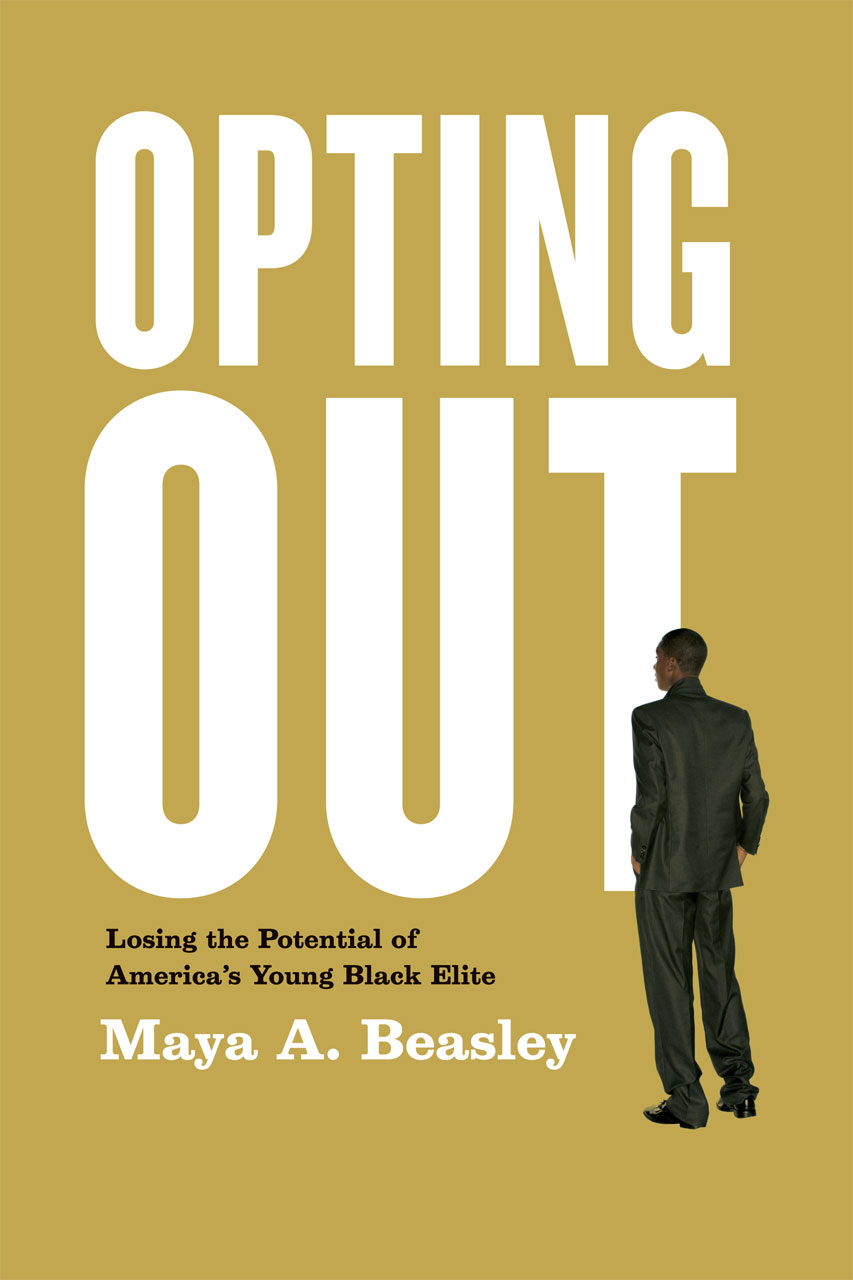
Opting Out: Losing the Potential of America's Young Black Elite by Maya Beasley 2011
U Chicago Press


IQ "Further, because racism is endemic and built into the structure and institutions of American life, attacking inequalities in a minimal number of areas via a small number of channels is limiting. [...] Radicalized occupations are neither ineffectual nor obsolete, but they are no longer sufficient to create the wide-ranging, long-term changes that are needed by the African American communities these students wish to serve. It is therefore imperative that black college students become better informed about the full spectrum of career opportunities that are compatible with their community service goals" (143).

One sentence review: A thought provoking read that greatly contrasted with my own personal experiences which was somewhat confusing but the author makes some extremely vital points in concise language that deserves to receive more attention.

I have no problem with the premise of this book as outlined in the quote, we need more people of color in STEM, business, films and law. I personally can attest to this "The emergent trend is that black students with segregated social networks are selecting occupations that directly target the black community and ones in which they will not feel isolated. In contrast, those with integrated networks are choosing a more varied set of careers which are generally higher-paying and higher status with less of a direct emphasis on African Americans" (73). HOWEVER to me there is a disconnect between that quote and Beasley's findings on stereotype threat. Her findings (after interviewing Black and white Stanford and Berkley students) found that stereotype threat affected Black students' career decisions. I do not completely buy this. I do not understand how she does not explore the possibility of a correlation between class, diverse social networks and stereotype threat. Granted I'm not sure the university I went to is considered "elite" but when I look at the Black people I know who had diverse friend groups and went to all white schools and participated in mostly white activities, they are entering field where Black people are not dominant. Myself included. It just does not make sense to me that someone who grew up in an environment like the one I just outlined would then resist entering predominantly white fields. Beasley notes that they are often discouraged by their parents who are in similar fields, my parents have never told me not to enter a career simply because of white people. Sure they prepared me as best as they could for the little comments that might come my way but they never took a warning or discouraging tone. I'm willing to chalk this up to generational differences. The book is published in 2011 but cites a lot of studies from the 90s/early 2000s so maybe things really have changed in the last few years. But I read this book and had no idea who she was talking about when discussing the patterns of upper middle class Blacks.

Now with that being said, her research backed up some of my personal experiences as well, such as the alienation some Black students feel when they chose not to fully immerse themselves in the on campus Black community. But I wish she had further explored why Black students from working class or lower middle class families are more active than those who come from a wealthier background (and yes I have a few thoughts on the matter but I won't get into it). The importance of connections and how that leaves marginalized groups behind is also well addressed. I do not want to give this book a bad review because it conflicts with my worldview; I thought it was an extremely interesting read that presented intriguing findings and analysis. However I think this would have been more effective if she surveyed a greater variety of students maybe waited a few years or talked to students at an Ivy League or liberal arts college in the East. I hope she does a follow up. I would love to hear other people's thoughts in the comments.

Monday, August 19, 2013

The GQ Candidate + Government Girl

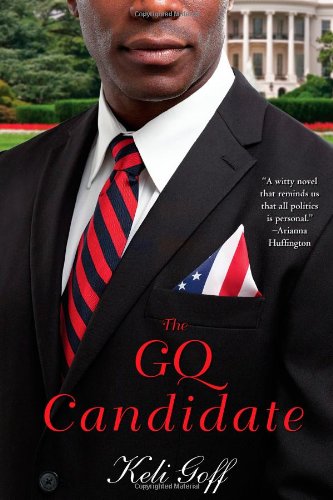
The GQ Candidate by Keli Goff, 2011
Atria Books/Simon & Schuster

Rating: 3/5

IQ "Well, there's not much left to say except that I'm really glad I wore my Manolos today, because if I'm going to insert my foot this far in my mouth I at least want to be wearing nice shoes", Mimi pg. 349
Luke Cooper started out as a state senator and was then recruited to run on the Michigan governor's ticket as lieutenant governor, they won but due to a sex scandal Luke became Michigan's first Black (and Jewish by adoption) governor and one of the youngest governor. His ratings are soaring and due to some remarkably good luck concerning acts of goodwill (such as defending a white nationalist from injury while a group of white nationalists were protesting his policies) that involved social media the rest of the country has a vague inkling of who he is. Some of his friends and mentors advise him to run for president and he throws his hat into the ring for the Democratic presidential nomination. With the help of a loyal, talented group of friends Luke feels confident with his decision to enter the race but it will affect those he loves far more than he could have ever imagined.

It felt like the author was sick of upper class/upper middle class Black people not being portrayed in fiction so she peppered her novel with them. I understand and appreciate her intention but the delivery left a lot to be desired. Luke's family was cheesy in its perfection, even its quarrels felt forced and ridiculous. Everyone had these great personal backgrounds from the oldest characters being Freedom Riders to the youngest being successful and powerful in their respective careers. Not all characters were perfect but it was hard to focus on their flaws when I could barely keep them straight. The narration plodded on and I think the author should have instead focused on Luke and his immediate family instead of Luke's family, friends and his friends of friends. The book was very long in order to accommodate all these characters and the gazillion plot lines (or so it seemed) which was frustrating when the book reached the end and a rather dramatic moment was rushed through. Furthermore the book ends with Luke making a crucial decision and although I can guess what he chooses, I think that since this book was all about politics (in a way) it should have ended with him actually making a political decision.

This book is about a presidential campaign but politics do not enter the equation which keeps it from being a polarizing read due to controversial issues. While Luke is a Democratic, a variety of political affiliations are mentioned but since the issues are not delved into its inconsequential. Instead the book focuses on how political campaigns are run, the people behind the scenes of the candidate, the media's relationship to a campaign and networking and fundraising. It was nice to read a book with such a dream cast, I just wish the author had either taken the presidential campaign storyline out of it (and instead focused on a group of highly educated Black friends post-college living life) or narrowed down the cast of characters. The book was a slow read but Luke and his friends are a highly entertaining bunch, try to ignore the lack of plot and while you will most likely get frustrated at the ending The GQ Candidate is still a good read.


PS Fact: I bought this book at my Borders as it was closing. So this book will always be associated with that, I even still have the receipt that says 'final sale'. Sadness

PPS: I know everyone else read this as Barack Obama-like but I actually related Luke Cooper more so to Cory Booker. Anyway just a thought


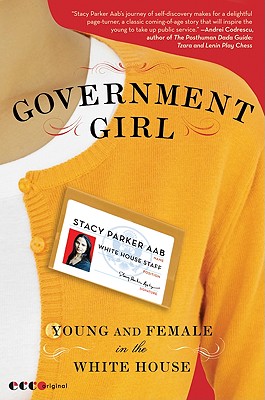
Government Girl: Young and Female in the White House by Stacy Parker Aab 2010
Ecco/HarperCollins

Rating: 2.5/5

IQ "If I have one wish for America, it is my hope that when our leaders stumble, as they will, when they hurt others and themselves, which is inevitable, that we will be as compassionate to them as we sense they would be with us if the faults were our own. Our leaders are not gods, and they are not our fathers. But they can be our best hope for peace among nations", pgs. 291-292

Stacy Parker Aab's memoir details the life of a young, biracial White House staffer. She was born (1974) and raised in Detroit and attended George Washington University where she became an intern at the White House, working in George Stephanopolous' office. Eventually she began working for Paul Begala as his special assistant.

My summary is brief because unlike the back of the book I'm not trying to claim that this memoir provides "a searing look at the dynamics between smart young women and the influential older men who often hold the keys to their dreams". It didn't reveal much about gender relations in the Clinton White House but it did provide a look at the daily atmosphere. However the stories shared are not that interesting, while I didn't want scandalous tidbits (indeed it took me awhile to recover from the story of Vernon Jordan sexually harassing her because I admire that man immensely) I did hope this memoir would provide some interesting anecdotes. Instead since Aab was never that high up this book is more of a day-by-day look at the work of young staffers, people who are important to the functioning of our government but who don't interact with that many people of name-recognition. I also thought that the author spent a lot of time bragging about herself, making sure we knew how loved she was in Stephanopoulous' and Begala's office. Furthermore she was determined to gloss over any issues that might have made her more interesting, instead she focused on portraying herself as the perfect staffer (there was about 2 sentences about drug use that held up her security clearance but she doesn't go into further detail). It just rubbed me the wrong way which I grant is a matter of personal taste. I also wish she had went into more detail about her life post-White House, especially meeting her husband, since she goes on and on about wanting a boyfriend but then rarely talks about her relationships (which she doesn't have to do but then why talk about how important having a boyfriend was to her?). Finally, the end part about the Obamas fit oddly into the book and seemed more like her way of sharing her thoughts about their presidency rather than connecting the dots to her time in the White House (except for mentioning that they hired some veteran Clinton staff).

I did find it fascinating to read about the inner-workings of the staff (for a time and then it got old) such as "RON"s (remain overnight), people who were in charge of paving the way for the president at whatever hotel or celebrity home he stayed at on his travel. Those are roles that we definitely don't think about and I was also appreciative at the glimpses of humanity displayed in the Secret Service men she talked about since they seem like daunting, mysterious figures (which is their job to do but still). Overall Government Girl left me disappointed because I had expected it to be more exciting, at the very least, I wish the protagonist had focused more on being genuine and less on presenting a perfect good girl image. It does a good job though of giving people an idea of daily life for the young men and women who are so helpful to the 'big names' and really keep our government running, I am grateful to them.

Tuesday, June 4, 2013

Irises

Irises by Francisco X. Stork, 2012
Arthur A. Levine/Scholastic

Rating: 3/5

IQ "Mary smiled. She always smiled when people said living family. It meant that people didn't stop being family when they died; they just turned into your dead family" pg. 144

18 year old Kate wants to be a doctor, 16 year old Mary wants to be an artist. Both girls must put their dreams on hold when their strict father dies, leaving Kate as Mary's legal guardian since their mother is in a permanent vegetative state. Her father told Kate that family always comes first, even if that means Kate needs to hold off on Stanford. Further complicating the matter is that Simon, Kate's boyfriend, has asked her to marry him in order to provide for both her and Mary. Meanwhile Mary is drawn to Marcos, a boy with artistic talent but a violent past. The girls are struggling over the death of their father, accepting their different personalities but what may be the final wedge between them is the decision regarding their mother. They can no longer afford to pay the medical bills keeping her in her vegetative state but she is their mother....

 I love Francisco Stork's books. Long time readers of this blog know that, I adored Marcelo in the Real World and was quite fond of The Last Summer of the Death Warriors. Unfortunately I found Irises to be my last favorite Stork book thus far. Granted, this was bound to happen but the summary was so good that my hopes were quite high. All this being said, it was difficult for me to put my finger on why I did not like this book. It just didn't work for me. Part of the issue was that Stork raises juggles so many balls in the air, in a way that I did not find effective. I wish he had stuck to two or three issues (such as the issue of whether or not to pull the plug and how to cope with their new-found independence) and focused on really fleshing out the secondary characters (such as Simon and even Mary). I found the issue of life support inadequately explored, even though I had thought that was at the whole heart of the book. I did find it interesting that the girls (especially Mary since she was younger) did not go crazy or at least engage in more normal teenage acts that their father had previously forbidden. Of course most people don't immediately go party after the death of a parent, but I was surprised that very little mention was made about bigger temptations of Mary and Kate (such as going to the mall, an act their father did not allow).

 Both girls seem to be losing their way where their Christian faith is concerned and I felt that Mr. Stork did a good job of subtly addressing the questions that arise when one has a crisis of faith and whether or not you can return to your faith. I also found it really interesting that the author made the girls Protestant. This was a note of interest to me because the girls are Latino and I'm Latino, and I have grown up around mostly Catholic Latinos so I found this new world of Protestant Latinos quite intriguing (of course not all experiences are the same but the book gave me a basic idea). I thought the idea of marriage-as-an-escape was an issue well-explored, even if its a concept many people do not realize is prevalent. Kate was also a great multidimensional character as was the pastor, Andy Soto. I found their interweaving storyline to be the best in the book (it is mostly Kate's story) and very believable.

 Ultimately Irises left me indifferent, I certainly don't hate it but I did not love it or even enjoy the book all that much. However the writing is mostly strong, with a few secondary characters left underdeveloped. The book mostly suffers from having too many plots and setbacks occurring. Its strength lies in the simple, effective writing and the realistic dialogue. The issue of faith was portrayed in a respectful, non-preachy manner which made the book more compelling. What did everyone else think?

Disclosure: Mr. Stork kindly sent it to me (a whole year ago I'm ashamed to say). Thank you so very much!

Cover image from Francisco Stork's website

Monday, January 7, 2013

Male Monday: What You Wish For

What You Wish For: Your favorite authors write to honor Darfur 2011
Edited by Stacey Barney, Foreword by Mia Farrow, stories & poems by Alexander McCall Smith, Meg Cabot, Jeanne DuPrau,  Cornelia Funke, Nikki Giovanni, John Green, Karen Hesse, Ann M. Martin, Marilyn Nelson, Naomi Shihab Nye, Joyce Carol Oates, Nate Powell, Sofia Quintero, R. L. Stine, Gary Soto, Francisco X. Stork, Cynthia Voight & Jane Yolen

Ratings: 3/5

IQ "Do you think wishes just happen?" she demanded. "Stars are busy. They can't sit around all day, making every single one of our wishes come true all by themselves. They need a little help from us. I know if I really want a pony, I need to be like you and go out and earn the money to buy one, like you did with your bike." Jenny to her brother, Dave pgs. 55-56

 This is an anthology of short stories about wishes, the proceeds go to the UN Refugee Agency, UNHCR.

 I liked Jane Yolen's poem "Wishes" and the stories "Reasons" by John Green and "The Rules For Wishing" by Francisco Stork are the best. "Reasons" contains lists after lists and its about Micah, who happens to be in love with Aisha Hussain. Aisha lives in the disputed region of Kashmir, Micah's mother is sponsoring her through For the Children. Its a slightly amusing but really sweet story. There are also photographs throughout the book that may serve as an introduction to the lives of refugee children.

But none of these stories truly stuck with me, I read this anthology awhile ago sometime in the summer and remember few of the stories. I wish there had been a few stories about actual Darfur refugees and the people who work to assist the refugees. Most of the characters in the stories were two-dimensional and very plot-driven. Its perfectly fine for a book to be plot driven but only when the characters are strongly represented and I did not find that to be the case in all the stories.

 What You Wish For is worth buying because a few of the stories are excellent and the proceeds go to a worthy charity. Younger readers especially may enjoy these stories.

Another one of my favorite quotes comes from one of my favorites stories, "Reasons"
"I cannot be held responsible for the fact that Aisha Hussain has truly asserting eyes,, and it's important when sitting at my desk doing homework occasionally to be reminded that there are people for whom going to school is not an unbearable burden, but instead an exciting opportunity." Micah, pg. 115

Saturday, July 30, 2011

Where the Streets Had A Name

Where the Streets Had a Name by Randa Abdel-Fattah 2010 (2008-Australia, 2009-UK)
Scholastic

Rating: 3/5

IQ "I suddenly understand that there is dignity in being able to claim heritage, in being able to derive identity from a rocky hill, a winding mountain road. Sitti Zeynab's village has never stopped calling her, beckoning her to return home. Her soul is stamped into these hills, and I feel her presence as strongly as if she were standing on the peak of one of the mountains." Hayaat pg. 181

Hayaat is thirteen years old but she has a clear mission: to bring back some soil from her grandmother's (Sitti Zeynab) ancestral home in Jerusalem. Samy, her best friend, will accompany her. Their journey is hindered however, by the fact that they live with their families in Bethlehem and there are curfews and checkpoints to deal with. Not to mention, the Wall that divides the West Bank and the fact that they can't travel wherever they like since they are not Israeli citizens. Samy is loyal and has a good heart, but he's obstinate and trouble follows him and his lack of respect for authority. He may put the trip in jeopardy on his own or the security checkpoints could stop them. The journey starts off on a high-note since they have a curfew-free day to travel, but it's just a start....

This is going to sound so silly to people but I was quite bothered by all the mentions of 'farting' in the book. I know I'm persnickety but I just didn't think it continually needed to be mentioned. And I'm pretty sure someone farts and another character takes note of it in every single chapter. On a more serious note, this story moves at a snail's pace. Hayaat doesn't form the idea for heading for Jerusalem until we are more than a few chapters in which I thought was frustrating. What made it more irksome was that the 'grand finale' so to speak felt rushed and the book ended on a happy but anti-climatic note. The ending just seemed odd and after the climax, I didn't understand why the book just didn't end (with a simple epilogue in place of all the details in the ending). Also, Hayaat recalls certain memories at various points in the story but they appear out-of-the-blue and it's not quite clear when her memory fades and it's back to the present.

The descriptions of life in Bethlehem are what makes this book so impressive. It's impressive because the descriptions are so simple but suddenly seemingly-mundane tasks (such as going to the grocery store) become a big deal when there is a curfew to contend with. Friends may end up as overnight guests if a curfew is ordered (sometimes random, sometimes due to protests as a form of punishment) and big celebrations could end up becoming small celebrations if travel restrictions are imposed, thereby limiting the mobility of guests. It's a ridiculous and frustrating situation especially when it limits people's abilities to get to the hospital, or attend a family wedding, etc. It's even more unbearable to read about the destruction of Palestinian homes and/or the possession of Palestinian homes by Israeli families who believe they have a claim to the land. There's a lot of Arabic food for thought, imagine being forced to leave your home (much like a refugee I think) and then essentially imprisoned in your new home. The story never becomes depressing, there are moments of levity (and no for me they did not come from farting references) especially concerning Hayaat and her beloved grandmother, Sitti Zeynab (sitti means my grandmother). The author describes people in a plain manner but with a little spark/unique touch such as when describing Sitti Zeynab's eyes "bright and untouched, having never caught up with the wrinkling, shrinking curse of the clock" (pg. 233).

One thing I am absolutely positive about is that when you finish Where the Streets Had a Name you will question (if you hadn't already) the Israeli government's treatment of Palestinians as well as America's policy towards Palestine. That's not to say there aren't sympathetic Israeli characters, as in real life, the characters are all human and Hayaat realizes that the Israeli soldiers have families, and that not all Israelis hate Palestinians. I think the author should have included an afterword explaining the situation because I was still curious/confused about quite a bit (for example: who orders curfews, the military or the government?). And obviously you can't make up your mind about such a complex issue after reading one or two or three books on the subject, after all this has been an issue since the '50s. Samy is an interesting best friend, I admired his spirit and obstinacy while at the same time it made me wince. I was glad that Hayaat had him at her side. A more concise ending, smoother transitions, and fewer mentions of bodily odors would have been nice. Hayaat's family is entertaining but mysterious since they aren't on the journey to Jerusalem with her, the reader learns little about them. Hayaat is a likable, genuine, brave main character but she wasn't particularly memorable in my mind. Furthermore, the glossary was strange to me because it didn't list definitions of every word mentioned (such as the 'curse' words or expressions). A good story with uncomplicated descriptions but complicated characters who needed to be more fleshed out, it moves slowly and while it took me some time to remember to go back to the story, I always remembered eventually. My favorite book by the author (and one I would recommend starting with if you want a hysterically funny read) is still Does My Head Look Big in This?

Disclosure: From the library

PS I really liked this quote from Sitti Zeynab "We Arabs say that the wound that bleeds inwardly is the most dangerous" (pg. 54). What an eloquent, interesting and accurate way of describing how hate can eat at your insides (so to speak).

Thursday, July 7, 2011

Throwback Thursday: Wuthering High (off color)

Wuthering High by Cara Lockwood 2006
MTV Books/ Simon & Schuster

Rating: 3/5

IQ "Some crazy people would say that forests and mountains are beautiful, but to me the outdoors are just plain creepy. I see forests and I think of maniacs wielding chainsaws. You never hear of psychotic, crazed killers in movies striking at the mall. No. The freaky killers who turn their victims into wax do it way out of in the country somewhere far away from Banana Republic." Miranda pg. 20

Fifteen year old Miranda Tate is slightly spoiled so you can imagine her horror when after crashing her father's car (and maxing out her stepmother's credit cards) she is sent to Bard Academy, a school in the middle of nothing where no contact is allowed with the outside world. Its a school for 'juvenile delinquents' (or so they are deemed by their parents). No phone calls, no Internet, a uniform must be worn at all times, there's a strict curfew and woods nearby that are just plain creepy. Of course what would a boarding school be if it wasn't haunted? Miranda can't sleep due to terrifying nightmares, fires are randomly being set, strange maniac laughter fills the air and there's something not right about the faculty at Bard. It just so happens that the members of the faculty at Bard are ghosts (many of them famous writers) stuck in limbo. That's not the only secret the faculty is keeping, there's something special about Miranda and why is it so crucial that nothing happen to a worn page torn from Wuthering Heights? Who is setting the fires? Furthermore, is Heathcliff really a student at Bard or is he the ACTUAL Heathcliff from Wuthering Heights?

I like knowing the motives of why an author does what he or she does and this book puzzled me a bit because I thought the assignments of the famous writers turned teachers was random. It could have at least been explained a bit better for those of us not familiar with all the authors. Coach H (Hemingway) as a gym teacher makes sense, I didn't understand why Charlotte Bronte was Headmistress B, perhaps because she was a governess? However, I didn't know Charlotte Bronte was a governess until I looked it up. And why was Virginia Woolf a dorm mother? I'm just curious as to how the author figured out who should do what at Bard academy. I was also disappointed in the misleading of the back cover which claimed "the students' lives also start to mirror the classics they're reading-tragic novels like Dracula, Wuthering Heights and Jane Eyre" but Miranda and her friends are RARELY in class. Bard Academy has a tough curriculum but Miranda only mentions classes to complain a bit but she doesn't mention studying/analyzing the classics. I wish there had been more discussion of the classics. I don't like Ryan either, I know he's supposed to be dreamy and actually really sweet but I just don't like him. Heathcliff all the way!

I decided to review this book because of Samir. I love Samir, the new friend of Miranda. He was sent to Bard because his traditional Indian parents had arranged a marriage for him when he turned nineteen but he refused to comply. Samir is not exactly a ladies' man but as is usually the case, he's quite funny and determined to find a girl for him. One of my favorite bits of dialogue

"'Will you marry me?' he asks me
'Uh....' I glance at Hana
'He asks every girl he meets,' Hanna explains. 'Don't worry about it.'" (pg. 58) Blade, Miranda's roommate remains a caricature and Hana doesn't have much of a personality yet but at least one secondary character (Samir) does. I really like Miranda too. I started out not liking her because she was (still is actually) spoiled and a bit whiny but I probably whine too so I can relate. Plus she's funny because she has this realistic/self-deprecating sense of humor such as "Heathcliff contains my squirming easily, carrying me as if I weigh nothing, which I know is not true at all despite the Bard Academy cafeteria diet" (pg. 208). Miranda is a strong main character but I really like her because she's not too extreme. Not extremely trendy, shy, pretty, mean, etc. She's average, like many other high school girls (including myself) that I know. Sometimes she feels beautiful, other times she thinks she's 'hideous'. How refreshing and realistic.

Wuthering High's strengths lie in its premise being quite novel and having some dominant, interesting characters in Miranda, Samir and Heathcliff. The ending left me with more questions than answers which normally bothers me to no end but I would have been sad to just leave these characters behind, I want to know more about Bard Academy, its students and faculty. One mystery is neatly closed but there are several others left open. At least I know that there are currently two other books out in this series and the author is working on a fourth (final) book. Since the book places such emphasis on the literary classics I want more time to be spent discussing the classics and the people who wrote them. I would also like to see Hana be more than just a sidekick and Blade be more than the creepy roommate. I MUST know more about Heathcliff. And I need Samir to date someone and find happiness :)

Disclosure: From the biblioteca

Thursday, April 28, 2011

Throwback Thursday: Seeing Emily

Seeing Emily by Joyce Lee Wong 2005
Amulet Books/Abrams

Rating: 3/5

IQ "Perhaps the more familiar someone is to you the harder it is to separate her from the person she is to you, and the harder it is to see her as a person in her own right." pg. 204 ("Sleepover")

A free-verse novel that tells the story of sixteen-year old Emily, one of three Asian students at her Richmond, Virginia high school. Emily loves her parents (as their only child they are fiercely protective and doting) and has always obeyed them until she meets Nick, a junior transfer student who seems to have an interest in her. She's not allowed to wear make up or date, but she's actually considering going against her parents wishes. In addition she is growing more and more passionate about art and while her mother encourages it, she also offers advice, advice that Emily doesn't really want. Emily wants to make her own path, through her artwork and her relationships, she needs space from her family. But a trip to Taiwan might just change her perspective on everything and everyone.

The most unsatisfactory element of the book is Emily's relationship with Nick. I don't know if part of the problem was the fact that the novel was in free-verse and so I felt as though there was less dialogue but I wasn't buying their relationship. A transfer student, a year older than Emily, sees her suddenly in the hallway and decides to be extra friendly? Emily describes herself as plain (I no longer have the book so no exact quotes) and I think their relationship would have been more plausible for me if they started as friends. But no, they just started going out. I didn't understand where this story was going. this is my fault but I expected Taiwan to happen much sooner, instead it occurs towards the end and I didn't think those scenes were particularly well-developed. I didn't close this book thinking I had just glimpsed life in Taiwan in the 21st century. Not only was the relationship between Emily and Nick not described in much detail, her relationships with her family and friends were bare. I didn't understand the disconnect between her and her parents because they so rarely communicated. I would venture a guess as to that being why Emily has issues with her parents but to me her parents were never that unreasonable and when they did have a few strict rules, they never spoke them, it was just clear from their expressions (described by Emily). I would have liked more dialogue between all the characters. I was really through when *SPOILER: Highlight to read* WHY DID EMILY NOT TAKE NICK TO TASK for the geisha/exotic comments, etc? Yes he was ignorant but I felt some pity for him because Emily basically broke up with him for no reason. She should have explained why. You can't just ignore a person and hope they'll go away.* End of SPOILER

The free verse works superbly when it's just Emily narrating. Her voice is quiet but her use of metaphors, especially when describing her little epiphanies or her artwork are vivid and make her voice seem stronger. However I'm not sure I would finish this book thinking Emily became stronger. A tiny thing that I loved was how Emily's mom supported Emily's love of painting. From my personal MG/YA reading experience I've found that Asian mothers tend to not want their children to focus on the arts merely for enjoyment, they either push them incredibly hard or discourage them. Emily's mom strikes a nice balance, she loves to paint and she offers advice, but she was never overbearing. I wish I still had a copy of the book (or had thought to write the quote down) but there's a quote that goes something like 'Chinese mothers want their sons to become dragons and their daughters to become phoenixes.' LOVE

Seeing Emily's strength lies in the clear and expressive adjectives used to provide details about herself and her artwork. This novel fell flat for me when it came to the secondary characters because I felt as though they were ignored. The author didn't focus her wonderful way with words on the minor characters and Emily's relationships with them so I was left with a fuzzy view of them. I wish Emily's trip to Taiwan had been explored in more detail and had occurred sooner (and I was secretly hoping that China vs. Taiwan would be touched on but I don't hold that against the book). I was happy with one of the core issues between Nick and Emily. Happy isn't the right word, I was just pleased that the topic of how we view guys and girls from different cultures was addressed (except for the end-see spoiler). Read this book for the eloquent poetry, but there will not be much of a plot or significant character development.

Disclosure: From the library

Saturday, April 23, 2011

Finding Family

Finding Family by Tonya Bolden 2010
Bloomsbury Books for Young Readers

Rating: 3/5

IQ "'People like to talk about how the truth set you free. Truth can come with burdens.' [Grandpa]

'But Grandpa, is a burden worse than mystery?'" Delana pg. 106

Twelve year old Delana has been raised by her quiet Grandpa and her talkative Aunt Tilley. Her mother died giving birth to her and she knows little about her father. And while Aunt Tilley talks plenty, she has nothing to say on the subject of Delana's father. Aunt Tilley has a Book of Bewares, detailing all the things Delana must avoid (boys, fairs, peeling a potato, certain kinds of clothes etc). Aunt Tilley does teach Delana about her family ancestors, they look at photos everyday. However when Aunt Tilley dies, Delana learns that Aunt Tilley may have mixed up family history and that everything is not as simple as it appears. Delana finally feels free enough to start slowly enquiring about her parents...

The ending was unsatisfactory. Delana sends a postcard to a certain family member but the book ends before she gets a response. I didn't think I had enough of a grasp on the personality of that family member to be able to decide how they would have responded. As a lover of historical fiction I wanted to know the exact time period the story was set but it's not clear, only that it's the early 20th century. The biggest problem I had with the book is that there is no plot and the problem is exacerbated by the lack of development of the characters (except for the main character). The book starts off slowly and there's a bit of mystery about halfway through the book, but if I wasn't the type of reader who has to finish every book (and who loves historical fiction) I probably wouldn't have finished it. It's too short of a book for there to be no plot or development of the other characters (for example the story between Grandpa and Miss Ida is predictable but so little mention is made of Miss Ida that it came off seeming random).


The most appealing part of this book is the concept behind it. The author collects photographs and gradually decided to write a story based on the photos she found. Delana is drawn to the photos and she imagines their stories and personalities based on how they appear in the picture. Delana has a voice. As the main character, I was relieved that she at least had some significant character development. At first, Delana accepts everything her Aunt Tilley tells her, once she dies, Delana feels lost. "Why didn't Ambertine just lay everything out for me, like Aunt Tilley and now Miss Ida laid out my clothes. What did Ambertine want me to decide-and want me to want?" (pg. 94) Delana feels lost without her Aunt Tilley not just because Aunt Tilley was fiercely protective of her and had lots of rules for her to floow but also because Delana's grandfather basically ignored her. Once Aunt Tilley has passed away, Delana is essentially all alone since her grandfather rarely talks to her. It's rewarding to see Delana growing more confident in herself. She works up the courage to talk to her grandfather along with other adults in her secret-filled family.

Finding Family suffers from little plot (and the little there is develops very slowly) and second dimensional characters but Delana as the main character avoids being presumptuous, instead she is refreshingly average if not a little timid. Her timidity/naivete are understandable since she's been reared by a domineering woman and once Aunt Tilley is gone, both her grandfather and herself are rather stupefied. Delana's growth is shown and that makes the book much more interactive. Plus learning about the members of Delana's family through the photos included makes this book unique and kept me turning the pages. Through the stories of Delana's family, more unusual (or at least less-well-known_ aspects of the Black experience are presented, reaffirming that there is no one universal Black experience. However, my guess would be that if you don't like historical fiction, you wouldn't be particularly drawn to this book. I wish though that we could have delved deeper into the stories of Delana's relatives (especially Ambertine, Emma and Grandpa).

Disclosure: Received from Lyn. Thank you <3

Tuesday, April 12, 2011

Worst Impressions

Worst Impressions by K.L. Brady 2011 ARC
LadyLit Press

Rating: 3/5

IQ "How many people in the world would be happier for you than you'd be for yourself?" Liz pg. 244

A retelling of Pride & Prejudice with an all Black cast. Wait. Let's just take in this *moment* A quality Jane Austen retelling that features a diverse cast. The first of its kind and it's for the YA set, for the girls who at this age are usually first introduced to Jane Austen. I don't want to digress too much but NONE of my Black friends have read Jane Austen, neither has my mother nor her Black friends. I'm going to 'go out an limb' and assume that it's because teachers don't think we would be interested in Jane Austen and/or we don't have any interest in reading about a lilywhite 19th century English world where everything ends happily and the dialogue is a bit hard to follow and the romance is seemingly chaste. I'll leave it at that but I'm definitely writing a future post about this. I'm not even that big a Jane Austen fan myself. I've read 5 of her 6 books (including Pride & Prejudice) but I don't have undying adoration for any of them (Pride & Prejudice comes close as does Sense & Sensibility, I'm not a romantic so Persuasion doesn't do it for me but that might be changing...) *ahem back to review!*

Liz Bennett is an excellent basketball player whose mother won't let her play on the team. In fact, there's very little her mother will let her do, besides push her to get good grades and STAY AWAY from boys. Her mother has her hands full trying to make sure Liz, her older sister Jeni and her two younger sisters Kat and Lydia. Kat and Lydia are boy-crazy, Jeni gets all the boys but doesn't care and Liz just wants a nice guy. But they all question her sexuality due to her basketball prowess and baggy clothes so she doesn't give many of them a chance (or they just aren't worth talking to). Enter Trent Whitman, who really likes Liz and actively pursues her. He compliments her often and Liz might even go all the way with him someday. Then there's Darcell Williams the handsome star football player who insults Liz in front of everyone at Homecoming. He's a jerk and he knows it. It's only after a Bennett family crisis that everyone's true colors are revealed and maybe first impressions are right, maybe they're wrong.

There were some Pride & Prejudice updates I liked, some I didn't. I didn't like the Trent storyline. I felt that it was trying too hard to connect Worst Impressions to Pride & Prejudice and the whole thing ended up being unbearably dramatic. In fact that was a main theme of this story, lots of over the top drama and cheesy dialogue. I wanted to tell all the characters (parents and teens) to just take a breath, it's not the end of the world. What was most disappointing was the end. The romance was so fast and suddenly Liz was IN LOVE. Then we have to fast forward to the college decision process. However while I disagreed with a certain character's choice, I do think that some teens would do that (but it's a mistake I think to pick a school based on where your boyfriend or girlfriend is going). Furthermore while Mr. Darcy can say some rude things, I don't think he compared to Darcell. Honestly there were no redeemable qualities about Darcell in my opinion, which was disappointing.

All that being said, I laughed out loud so many times reading this book. SO MUCH FUN! Liz is quick to bring the quips, snappy comebacks abound. You also can't help but laugh at how easily avoidable and/or very dramatic certain situations seem to be. Liz's voice rings true and it resounds off the pages, full of life. Her reactions and actions were genuine, she didn't try to act overly brave or tough, she was at the happy medium.
"'You got me? You live in the same neighborhood I live in. You don't know a dang thing about the ghetto. What're you gonna do, hit 'em in the head with a football?' [Liz]

'I saw Boyz in the Hood three times'
'Why didn't you say so before? Now I feel safe...not'" (pg
. 212) That line set me giggling until I shortly thereafter came to the next amusing line.. "'Who is it?' Trent yelled
'No esta aqui' I hollered back.

Okay was it stupid to yell, 'I'm not here' in Spanish from the wrong side of the door? Absolutely. But I was scared shitless and couldn't think of anything else to say. Seconds later, the door opened
." Liz (pg. 212) Besides Liz having a strikingly real voice, I liked the twist on Mrs. Bennet. She goes from one extreme in the original P&P (trying to marry off her daughters) to the next (trying to keep her daughters from discovering boys their own age, especially athletes). Mr. Bennet was true to the original, doting on his daughters and steering clear of his wife.

Worst Impressions is one of I hope many more to come Jane Austen retellings with a diverse cast. This book will probably make more teens laugh out loud then the original...While at times the author's attempts to make the retelling work in modern times seemed to be a bit of stretch (see Trent storyline), at others time it worked (the parents, Liz's quick wit). If nothing else read this book for the humor alone, especially for teenagers who recently took the ACT and/or are preparing for the SAT or AP tests....

Disclosure: Received from author for review (with lots of excitement on my part)

PS Another great line "His diarrhea-brown skin turned seven shades of white, looking like a Twilight reject." (pg. 3) Realistic? No. Did I howl with laughter when I read it? YES

Monday, March 14, 2011

Male Monday: Deadline (Off Color)

Deadline by Chris Crutcher 2007
Greenwillow Books/Harper Collins

Rating: 3/5

IQ "from my point of view, there is simply nothing like her. I know other kids feel the same way about people they're with, which is what makes life on earth interesting. I want to be here longer. I am aware that this might very well be the crowning glory of my life, as I am aware that I am very old if you count back from my end, rather than up from my birth. I think I am in love, and the idea of losing that love fills me with such deep longing I think I might disappear through the gym floor." Ben pg. 117

Ben Wolf has been diagnosed with a blood disease and given one year to live. He wants to make an impact on the world but that's awfully hard to do in small-town Trout, Idaho. He's a senior and he decides that he's not going to die without leaving his mark, at least on Trout. He's determined to learn as much as he can his senior year, challenge his teachers and even though he's the shortest, skinniest kid, he's fast so he's going out for football. He's also had his eye on the beautiful, 5 ft. 11 Dallas Suzuki and if he could just work up the courage to ask her....Ben has decided not to receive treatment for his disease, and he's keeping his diagnosis a secret which turns out to be much harder than he expected.

I think the difficulty in writing a book about a teen whose dying is in not sounding too preachy, too...rushed I suppose. Rushed as in 'hurry-this-teen-is-going-to-die-but-first-they-must-share-an-earth shattering-revelation-about-Carpe-Diem.' If that makes sense. Basically I feel like all these books are about teens realizing that they must live each day like it's their last, but this is the first book I've read where the main character is dying so I really can't say. It just seems to me that when writing that kind of book, the author wants to make sure he or she leaves big nuggets of wisdom about living your life to the fullest, appreciating family, etc. In Deadline I thought the author could have done a better job weaving in these tidbits of life advice in a more subtle, authentic (for teenagers) manner. Instead the author creates Hey-Soos who basically spouts vague bits of wisdom that are supposed to get Ben thinking and to draw his own conclusions. Ben's insights are revealing, but it feels too much like an easy way of throwing in lots of Important Lessons via dialogue. I would have rather seen these discussions been between Ben and a friend or family member. I also thought the whole Malcolm X thing was a bit overdone, I felt that I got beaten over the head about how complicated a man he was, but I have to remember there are people who completely hate Malcolm X or have never even heard of him.

All that being said, I appreciated reading about Ben's exploits as he tried to seize the day and I loved the ending. It seems wrong to say I loved it, but I liked that the author doesn't pull any tricks or throw in any twists. It wouldn't be a Chris Crutcher book if the main character wasn't a pain in the butt to narrow-minded teachers so of course Ben is focused on 'fighting the Man' (or the power or the system, whatever you want to call it). I really admired Ben for not seeking treatment and the fact that he remained so strong when death was so close. I would (am) be terrified out of my mind but I think if my family situation was like, I would have tried to keep it a secret too. The Rudy storyline was a rather shocking revelation although I had my suspicions, but I really hoped they were wrong. It's a storyline that could upset a lot of people, shoot it upset me, but the author kept a surprisingly neutral attitude about Rudy's whole plotline which was a wise move (I think because it could so easily be misconstrued).

Deadline is a painful tale that will force teenagers to confront the fact that we could die at any time, which is something that I personally don't like to think about. I wish the book had been less didactic in nature, the lessons are important but I felt the author was too heavy handed in spreading his message. I love that the main character is short and not ashamed of it, I love that he wants to go out with a girl who towers over him and I love that Dallas Suzuki has such a horrific, heartbreaking storyline and yet she is also a terrific, confident athlete. Her tragedy doesn't define her and neither does Ben's and that's awesome. I also firmly believe that Chris Crutcher has this magical ability to make seemingly random historical facts fit well with the story including Malcolm X and the Japanese concentration camps. I don't always agree with some of the sentiments expressed by the author through the characters (there seems to always be one super conservative character and one very liberal character with the main character being the happy medium) but I'm glad the sentiments are being expressed in such a thoughtful and oftentimes humorous way. There's a lot of football talk (plays, positions) that had me completely lost so if you're like me and know nothing about football, I don't think you'll really learn much. But if you already liked football, you will probably get a little more out of those parts!


Disclosure: Received from my Secret Santa Katie @ Bookishly Yours. Thank you!


PS Please, please, please donate money to relief organizations, specifically ones working to help Japan, such as the American Red Cross.

Thursday, March 10, 2011

Throwback Thursday: Who You Wit?

Who You Wit'? by Paula Chase 2008
Dafina/Kensington

Rating: 3/5

IQ "Jacinta toyed with that thought as the clique joked around her, amazed at how the world kept going even when something huge was happening to people." pgs. 38-39

*Mild Spoilers from the third book, That's What's Up*

Summer is almost here but summer brings a sense of doom to some members of the Del Rio Bay (DRB) clique. For Mina it's the last summer before Brian goes to Duke and she wants to spend every minute of every day with him. Lizzie wants to avoid spending every minute with Todd because she's so head-over-heels, she might end up doing something she (thinks) she'll regret. Jacinta can't wait for summer to be over so that maybe she and Raheem can finally have some space since he's going to Georgetown. Kelly is ambivalent about summer, she looks forward to spending time with her DRB clique and maybe there will be a new guy in her life. Or an old one.

I feel bogus for saying so but what dragged this book down for me were some of the characters. That's a good thing though right? Right. Because each of these characters has redeemable qualities, they aren't one dimensional jerks. Lizzie decides to take a one-year abstinence pact but she doesn't bother to run this pact by her boyfriend, Todd. Her story goes downhill from there, she becomes annoying because she recognizes the problem but is too stubborn/proud to fix it. She's judgemental and is the only character who I don't think ever really redeemed herself. This book focuses a little more on boy problems, less on friendship issues but it never becomes completely about the guys, there's a slightly uneven balance but it's understandable. I didn't like how the clique's extracurricular activities got pushed to the side. I did think that the song lyrics were random at times, not always fitting with the content of the chapter. The last few pages were annoyingly dramatic, full of foreboding and foreshadowing which I don't care for, especially not in a contemporary novel. I couldn't remember how old any of the members of the clique are, I think sophomores? Some characters who started to become well-developed were completely ignored in this book, like Jessica and even Jessica's twin, Sara. JZ still hasn't developed as a character and Michael was a complete prop, only appearing when it was convenient (like when Mina needed a prom dress).

I could relate to Mina especially in this book. She's so terrified of Brian leaving her and then forgetting about her, sleeping with other girls that she makes a decision she might not have had made so soon. Every time I read a book in this series I feel like I'm talking to my Black/Latino friends. We laugh all the time it seems like but there's always some kind of drama going on, either between friends or between couples. The Del Rio Bay Clique series captures all the angst and fun of being a minority in the suburbs as well as just teenage life in suburbia in general. At first it was frustrating that Jacinta is still with Raheem but something occurs that (I think) makes it very understandable as to why she can't force herself to cut all ties with him. Kelly makes a good decision but goes about it in a bad way, very authentic teen :)

Who You Wit'? is a quick read that is guaranteed to transport you back to your teen years or to help you through them. The dialogue is spot-on (a few times the author sounds like she might be trying too hard considering these are suburban teens but for the most part it works). It's funny Mina was my least favorite character at first, now my favorite is either her or Jacinta. Once again, I think Mina's parents are too strict but my parents probably would have been even harsher if they found out I had done what she did so I won't talk. Haha. I love these books because they are universal but the main characters are Blacks and Latinos. Their world is completely diverse too, even the random characters that the main characters interact with have some diversity. I also appreciate that besides racial diversity these books feature economic diversity (i.e. a book about middle class ethnic cultures) and teenage diversity. By teenage diversity I mean these kids are active. I always find it hard to relate to books where the main character does little and/or has no school spirit. Mina cheerleads and writes for the school newspaper, JZ, Todd and Brian play basketball (and JZ plays football), Lizzie is active in the Drama club and Kelly tutors. All of those activities ensure that the author is faithful to teen behavior. I also really liked how a certain character described having sex. It was funny and so very teenage, I would have said the some thing! If you're looking for lighter fair with drama, romance, friendship, heart and diversity, give this series a try.

Disclosure: Bought =)

*I have changed my Throwback Thursday posts. Starting now, I'm going to make a throwback anything that comes from the 1st decade of the 21st century. Ideally, I want to keep the reviews to 2007 and older but exceptions may be made :)

Hosted by Take Me Away Reading

I am currently on a mandatory school retreat so I have no Internet access. I'll be back Friday evening and will try to respond all comments and emails asap!

Saturday, March 5, 2011

Bang, Bang, You're Dead!

Bang, Bang You're Dead by Narinder Dhami 2009
Corgi Books/Random House

Rating: 3/5

IQ "My mind seems to have fractured into tiny pieces that are flying off in all directions, and I can't seem to hold one thought long enough to examine it before I'm racing on to the next." Mia pg. 243

Mia Jackson's school has an invader, a mysterious gunman. The school is immediately evacuated, but one class is being held hostage by the gunman. Mia fears that the gunman may be her twin brother, Jamie so she sets off to find the gunman. Mia is afraid of everything, especially dying, but she's more afraid of the shooter being her brother.

The ending is way too short. The author drops a bombshell on us and then leaves us hanging. Sure everything is resolved and there's going to be progress in the future but I needed more explanation. How did the mother react? And what's up with Leo? I also felt that the secondary characters were underdeveloped. Mia keeps mostly to herself but she has one friend, Bree. Bree serves only to express a bit of concern over Mia, she never becomes her own character. Same with the typical mean girl, I couldn't even recall her name after I finished the book (her name is Kat). Jamie does have more development, probably because he's Mia's twin. The book starts off slow as well and I have to admit, I finished this book still not liking Mia.

This is definitely a book you'll want to re-read it if only to piece together clues that hinted at the ending. Mia's mother is bipolar and I thought her illness was excellently portrayed, she's reluctant to receive treatment, one minute she's high as a kite, the next she can't leave her room. This is very trying for Mia (and Jamie) and I found their reactions to be authentic to teenagers. *SPOILER*OK so what happened?! Mia has a split personality but I wanted to see that storyline developed a lot more. Not just in one quick chapter. I think that chapter was well written, I could practically hear the panic rising in Mia's voice as she grew angry at her therapist as she worked out her split personality. Yet I wanted to know how Mia's mom would take the diagnosis (is that even the right word?), would this send her into a downward spiral? Such a great plot twist though, I would even describe it as epic. Mia/Jamie weren't behind the shooting, but I totally thought Jamie would be. *End of Spoiler*

Bang, Bang You're Dead has one of the best plot twists I've ever heard, unfortunately the ending is rushed thereby taking away from what could have been a truly great ending. I love that this book features mental illness, I think the topic was handled respectfully. There's little humor in this book, just some very dry lines such as (upon watching her classmates scurry to leave the building) "[o]ne single mass of pure blind fear, everyone alike, teachers and pupils. No one cares about looking cool when they might be staring death in the face." (pg. 32). That line isn't even funny, but for some reason it caused me to smirk. A point is made in the book that school shooting are very, very uncommon in the UK. I wouldn't say they are common here, but I gather that we've had more than the UK. Good twist on a fairly-new (or at least new-to-me to read about) topic.

Disclosure: Received from review from publisher, Thank you!

PS If anyone has read this book, do you think Mia is biracial (as in half Asian-half white)? It's really interesting because Mia and her mother and brother are described so ambiguously. I'm not even sure how I feel about that. I presumed she was white, but since the author is biracial (half Indian-half white) I could see Mia being biracial as well.

Saturday, February 19, 2011

Exclusively Chloe

Exclusively Chloe by J.A. Yang 2009
Speak/Penguin Group

Rating: 3/5

IQ "'So you don't care that I'm a nobody?' [Jack]
'Does my being famous mean I'm somebody?'" Chloe pg. 236

Chloe-Grace is a star. Not in her own right, but by association. Her mother is the queen of Hollywood, a major award winner, and her father was a '90s hit wonder. They are the picture perfect couple and when they decide to adopt a child from China, they begin an international adoption craze amongst celebrities. Chloe-Grace is the child they bring back and she's never wondered about her biological parents. Until her father cheats on her mother and the paparazzi won't leave Chloe alone. Plus her mother is going out to the club every night. Chloe misses her parents and she's tired of all the media attention, so she decides to have a 'make under' and go to a 'normal' high school. She changes up her appearance slightly and also opens up a search for her biological parents. But no matter how famous you are or aren't, drama is never far behind when it comes to high school.

Contrary to the back of the book, Chloe does not decide to undergo a makeunder until halfway through the book. It wasn't boring per se, but there was a lot of set up occurring and after awhile I just wanted her to leave her wealthy school and annoying best friend, Rachelle and get on with switching high schools. What's worse is that there are maybe 3-4 chapters dealing with Chloe's new life and then we hurtle towards the ending. All of a sudden, all this drama erupts and then everything is solved a chapter later. Unfortunately, unlike real life, this book ends in a cheery, ultra-neat way. I was hoping for a bit more complexity or at least some loose strings. What's worse is that there's a cheesy epilogue. What really ticked me off was *SPOILER: HIGHLIGHT TO READ: the meeting with Chloe's parents. They were just oh-so-warm and yet they never tried to contact her once and then we get cheated out of reading their conversation. Chloe just tells us that they talked for hours. I was expecting it to be a bit more intense/awkward/emotional but it's glossed over and that really bothered me.* END OF SPOILER. I was also a bit bothered by the fact that Chloe is in love with Jack by the end of the book. Jack whom, as a character, is flatter than a pancake. Angelic personality so of course they'd be in love right? No. All the other characters are equally one-dimensional, I kept expecting Rachelle and Chloe to have a fight because Rachelle is not what I would call best-friend material but to each her own. Furthermore, like Yan, I kept expecting Vicki to do something horrible, I don't know if that was just me being so wary of people or if the writing made it seem like something was going down...

I did like that this is an example of what I want to see more of: diverse YA chick lit. I was expecting to not like Chloe but she could have been far more monstrous than she was. She's obviously used to being famous and she embraces the perks of fame, but she doesn't try to hog the spotlight and certainly doesn't mind spending a quiet night at home. Sure she could annoy the reader by how she views 'ordinary' people as boring, but that makes the book and Chloe, seem more genuine. "Vickie was saying this almost in admiration, as if she thought I was a strong person for having a crazy life or something. I knew she was giving me words of encouragement, but I didn't feel strong at all. Just overwhelmed." (pg. 97). That quote shows how down-to-earth Chloe is. While most of the secondary characters were one dimensional, I did really like Luther. Luther is the typical over-the-top makeup artist, but I was so entertained by his excitement over playing Chloe's fake dad that I didn't mind.

Exclusively Chloe is nothing extraordinary, but it delivers on being a relaxing read, a good choice for when one is in-between some heavier books. The diverse, over-the-top, secondary characters make this book both a tad disappointing and more entertaining. Plus it's the first book I've ever read that gives an idea of what life might be like for the adopted children of celebrities. There were tiny little details that made me smile too, like how Chloe's parents decorated her room in a 'Chinese style' when she was younger. It's a cute idea but it made me shake my head. The book starts off slow and ends too fast and clean, and Chloe falls in love way too quickly. While avid fans of chick lit may not see anything new in this plot, this was a new-to-me read and I can definitely see why people like chick lit.

Disclosure: Bought :)

Thursday, February 17, 2011

Throwback Thursday: Honey Blonde Chica

Honey Blonde Chica by Michele Serros 2006
Simon Pulse/Simon & Schuster Children's Publishing Division

Rating: 3/5

IQ "Maybe it would be good if Villanueva had a dress code, despite what Dee Dee thought. Something like California Casual meets High Drama, a lightweight, knit blend of steel armor. That would be perfect, Evie figured, because it was obvious that Raquel had already declared war." pg.103

Evie Gomez is a proud member of the Flojos (Spanish for flip flops, which all the Flojos wear 18/7). Flojo also means lazy and the Flojos do absolutely nothing except go to a party every now and then. But the Flojos are Evie's crew, she can't imagine not hanging out with her best friend, Raquel everyday. Until their old best friend, Dee Dee returns to California from Mexico where she lived after her mother died. Mexico City has turned shy, thin, brunette Dee Dee into curvaceous, loud and blonde Dela. Where is the Dee Dee the girls used to know? Raquel and Dee Dee butt heads right away but Evie is determined to save their friendship. Even if it means becoming more like Dela, but if she turns into someone like Dela she could risk losing Raquel. Is she a laidback Flojo or a sexy Sangro (short for sangrona which is basically a b****)? 'How's a chica to choose?' (last part from back cover).


Evie is not a particularly endearing main character. All the members of the Flojos are well off and Evie takes many things for granted. She has a housekeeper Lindsay that she treats semi-decently, she's not mean to her, but Evie doesn't try to help ease Lindsay's workload either. Evie can also be rather clueless, bringing up memories that may be painful for the other person or just not particularly enjoyable which makes for some awkward moments (and then you wonder how she can be so clueless). At the same time, these flaws made Evie an authentic main character and while I didn't close the book wanting to be her friend, I did like that the story portrayed is a more unusual one, life for wealthy Mexican-Americans. Evie has to deal with the usual friendship and guy drama, the only difference is that in this book Spanglish is thrown around and the food sounds a lot yummier. I do wish the writing had been more original, there are pop cultures references which are dated and the whole story is told in a matter-of-fact way that seems to be just plodding along. Not much happens, like many lighter contemporary YA novels all the problems could have been avoided if there was more communication and trust. But where's the fun in that? I do wish that the 'mean girl' had been more than a caricature, there has to be more to Alejandra than just being stuck up. All the secondary characters fell flat, Evie complains about her older sister, Sabrina, who is in college, but it's never really clear why Evie is so unwilling to talk to her.

I did appreciate that this book features a diverse cast and that the main clique at Evie's wealthy high school, the Sangros, are Mexican. The girls last names all end in -A, they are the ah-migas (Fabiola, Natalia, Xiomara and their leader, Alejandra) they are all from the DF (Distrito Federal which is Mexico City) and very proud of that fact. The Sangros are known for their blonde highlights and snobbish attitude. The Sangros look down on Mexican-Americans and that is a source of contention between Evie and the Sangros, even Evie's old friend Dee Dee seems to think that Mexicans born in Mexico are better than Mexicans born in America. It's an unique conflict and portrayed well. I also appreciated the Spanglish throughout the book. Sometimes Evie talks to the reader to explain what a word like sangrona means (i.e. slang and/or curse words) but for the most part, Evie and her friends sprinkle Spanish into their English and even combine the words (i.e. pinche beyachee). Honey-Blonde Chica is also about whether or not you should try and salvage a friendship after many years apart. Evie and Dee Dee seem so different and Raquel doesn't even want to talk to Dee Dee, but Evie remembers the days when they were the best of friends and she yearns to go back to those days. The author portrays it as such that I wasn't always sure if they could make up, they all do/say some pretty silly/even cruel things.

Honey Blonde Chica is a diverting read that doesn't take itself too seriously but could use more developed main characters. There's a cute factor but I was disappointed with the secondary covers, I thought the guy Evie had a crush on was just ok and the mean girl, Alejandra is ridiculously over-the-top. However, I did think that Evie's crush progression was realistic, she starts questioning every little thing he says/does and tries not to anxiously await his calls and texts. Been there, get that. I do love the idea of the Sangros though and I wonder if the book is accurate in showing some of the drama between Mexicans and Mexican Americans (Neither Evie nor Raquel speak fluent Spanish but all the Sangros do) or if the drama's been heightened. I also really liked how class isn't so much an issue in this book, all the main characters are wealthy which makes it harder to tolerate how spoiled they can be but it's also a great equalizer when it comes to friendship woes and not feeling Mexican enough. While Evie is proud to be Mexican American (her father made his wealthy running pan de dulce shops which will make you quite hungry), her story is a universal one because we all have to face friends drifting apart and figuring out whether or not we should fight to hold on to that friendship. What's more Evie doesn't just need to prove that she can be both laidback (Flojo) and represent her culture (como un Sangro), wear blonde highlights (Sangro) with designer flip flops (Flojo).

Disclosure: Yo compre