The Accidental Diva by Tia Williams 2004
Putnam
Incredible Quote: "What he didn't tell Billie was how naive she sounded, telling him what hustling was about. In the fifth grade, he had more game in his size-five Adidas kicks than anyone at that party could ever hope to have. He hustled to survive. It was either get out there and sell the shit out of some crack, or eat grape jelly for dinner and hope the rat that bit you in your sleep wasn't carrying anything lethal. When Billie talked about hustling and playing the game, what she really meant was that she was ambitious. She was a go-getter. She set high goals for herself and met them, exceeded them. But the bottom line was that she had been born into a supportive, loving, comfortably middle-class family that took care of her and nurtured her and provided as security blanket. Jay came from nothing. Worse than nothing" (186).
One Sentence Review: A diverting read that is excellently paced and notable for both its now-outdated culture references and relevant social commentary on a number of topics ranging from class to fashion to race with a distinctive (in the best way possible) narrative voice.
I love this distinction Ms. Williams makes in her novel. I never realized that people describing themselves as "hustlers" bothered me until I read this passage and found myself nodding in agreement. Especially when celebrities use the term, I just find it ridiculous (excluding those who actually came up from nothing as opposed to those born to famous parents, etc etc) and Ms. Williams perfectly illustrates why. If you're thinking this quote is a bit heavy and shying away from this novel, never fear. This quote is expertly woven into a romp of a read that straddles the line between light and social commentary. It was exactly what I needed to end 2015, a lot of fun to read while making witty observations about being "the only" and exploring class issues that it managed to not only hold my attention but also cause me to pause and think after reading a passage.
The only negative I can see is that it confirmed my fears about the beauty industry in terms of its shallowness. But it's a unique (for me) professional setting for a book so it kept me turning the pages. This book was published in 2004, 12 years later it's sad that we're still having the same conversations. Through Billie the author tackles cultural appropriation (which Bille calls "ethnic borrowing" in the beauty and fashion industry and maybe it's just because of the rise of the Internet and public intellectuals and blogging but it had honestly never occurred to me that people were having these conversations pre-Twitter. That demonstrates my ignorance and I was happy to be enlightened while also being sad that white gaze still has so much power over beauty standards. Although it is getting better because it is harder for beauty companies, fashion companies and magazines to ignore being called out when they "discover" some trend people of color have been naturally gifted with/been doing/wearing for years.
Aside from the pleasing depth of the novel, it's a quick paced read. I actually felt caught up in Billie's sweeping romance and just as intoxicated as she did, I didn't want to resurface from her studio apartment. Honestly I'd like a prequel so that we can live vicariously through Billie, Renee and Vida's college years. And I'm so happy her friends served more of a role than just providing advice at Sunday brunch. Also Billie's family dynamics were absolutely hilarious and unexpected.
I dealt with similar issues to Billie and Jay although not on as large a scale, granted I'm not a professional (yet) but I can relate to the class issues that come up in a relationship with two different economic backgrounds. And not to be a cliche but especially when it's the woman who comes from the comfortable lifestyle and the preconceived notions that we have/that other have about us, difficulty is involved and so on a personal level I was able to really connect with Billie (and better understand Jay).
The Quick Guide to Reading in Color
Showing posts with label adult fiction. Show all posts
Thursday, March 10, 2016
Throwback Thursday: The Accidental Diva
Posted by
MissA
at
3/10/2016 09:23:00 PM
Throwback Thursday: The Accidental Diva
2016-03-10T21:23:00-06:00
MissA
adult fiction|African Americans|Black people|book review|chick lit|Putnam|The Accidental Diva|Throwback Thursday|Tia Williams|
Comments
Tuesday, February 23, 2016
Negroland
Negroland: a memoir by Margo Jefferson 2015
Pantheon/Knopf Doubleday
IQ "Average American women were killed like this [by men in crimes of passion] every day. But we weren't raised to be average women; we were raised to be better than most women of either race. White women, our mothers reminded us pointedly, could afford more of these casualties. There were more of them, weren't there? There were always more white people. There were so few of us, and it had cost so much to construct us. Why were we dying?" 168
There is so much to unpack here, so many quotes I want to discuss, which I will do later on in the review but if you only want to read one paragraph I'll try to make this one tidy.
One sentence review: There is something new to focus on with every reading and like all great works of literature there is something for everyone, the writing is flowery but I mean that in the best way possible.
I fell in love with the life of Margo Jefferson and the history of the Black American elite (think Our Kind of People). I would say I'm on the periphery of the Negroland world so much of what Jefferson describes is vaguely familiar to me but obviously I am not a product of the '50s and '60s so that was all new to me. I appreciated Jefferson's honesty that she finds it difficult to be 100% vulnerable, I imagine that is part of why she chooses to focus so much on the historical. But at least she doesn't pretend that she will bare her soul, but she still manages to go pretty damn far for someone who believes it is easier to write about the sad/racist things. Jefferson eloquently explores the black body, class, Chicago, gender, mental illness and race from when she was a child into adulthood with a touch of dry humor here and there. Jefferson is the epitome of the cool aunt and I want to just sit at her feet everyday and learn (I was fortunate to hear her speak at U of C and it was magical, her voice is heavenly and she's FUNNY).
I understand complaints that the narrative is disjointed but Jefferson always manages to bring her tangents back to the main point. It is not simply random ramblings the author indulges in, each seemingly random thought serves a purpose that connects to the central theme of the chapter/passage. Jefferson does not owe us anything, yes she chose to write a memoir but she also chose to write a social history. She explores some of her flaws and manages to avoid what she so feared; "I think it's too easy to recount unhappy memories when you write about yourself. You bask in your own innocence. You revere your grief. You arrange your angers at their most becoming angles. I don't want this kind of indulgence to dominate my memories" (6). For someone raised to be twice as good and only show off to the benefit of the Black race, Jefferson thankfully manages to let us in on far more than I expected when it comes to the Black elite.
Jefferson comes at my life when she says, "At times I'm impatient with younger blacks who insist they were or would have been better off in black schools, at least from pre-K through middle school. They had, or would have had, a stronger racial and social identity, an identity cleansed of suspicion, subterfuge, confusion, euphemism, presumption, patronization, and disdain. I have no grounds for comparison. The only schools I ever went to were white schools with small numbers of Negroes" (119). I too attended majority white schools and have often wondered if I would have had an easier time identifying with other Black students in college (and even high school) if I had gone to majority Black schools instead of remaining on the periphery. She goes on to explain her impatience because she felt that for the first few years of school she was able to live her life unaware of race and I would agree, there were only a few incidents but mostly I felt free. So she's right, it's a trade off and ultimately we all end up in the same white world. I still think I should have gone to an HBCU just to see what it's like, to force myself to confront my own privilege but I managed to do that at my PWI and there's no point in worrying about it anymore. It's this matter-of-fact tone Jefferson uses throughout the book that I adored, she largely avoids sentimentality. Although she somehow manages to fondly look back at Jack & Jill which makes me sad that I don't share the same happy memories of the group and based on conversations with a few others on Twitter I am not alone in that (someone should research the history of Jack & Jill and explain why it has become so awful although I have my own theory).
Much has already been said about how candidly Jefferson discusses depression, an aspect of mental health that was not discussed in the Black community. Thus I do not wish to dwell on the topic since writers far more articulate than I have mentioned it in their reviews, but I appreciate her talking about it and I know what she means. Slowly but surely the 'strong Black woman' facade is being allowed to crack and we are all the better for it. I wish she had delved a bit into Black women and eating disorders because she mentions how much she loved Ballet and the ideal beauty standards of the Black elite (no big butts or noses for example) but maybe this is not something she witnesses personally. Jefferson mentions that when Thurgood Marshall and Audrey Hepburn died around the same time, she and her friend felt guilty for caring more about Hepburn's death because of all she symbolized for them. At first I raised my eyebrows at this sign of racial disloyalty but she notes what Hepburn meant to her; "And the longing to suffer nothing at all, to be rewarded, decorated, festooned for one's charms and looks, one's piquant daring, one's winning idiosyncrasies: Audrey Hepburn in Funny Face and Breakfast at Tiffany's. Equality in America for a bourgeois black girl meant equal opportunity to be playful and winsome. Indulged" (200). And I understood exactly what she meant. It's why I cling to Beyonce, Carmen Jones (and Dorothy Dandridge by extension), Janelle Monae etc etc. I can't think of a Black manic pixie dream girl but I'd love to have a Black girl play one, to be able to complain about a character we have long been denied.
On Black men & women; "But the boys ruled. We were just aspiring adornments, and how could it be otherwise? The Negro man was at the center of the culture's race obsessions. The Negro woman was on the shabby fringes. She had moments if she was in show business, of course; we craved the erotic command of Tina Turner, the arch insolence of Diana Ross, the melismatic authenticity of Aretha. But in life, when a Good Negro Girl attached herself to a ghetto boy hoping to go street and compensate for her bourgeois privilege, if she didn't get killed with or by him, she usually lived to become a socially disdained, financially disabled black woman destined to produce at least one baby she would have to care for alone. What was the matter with us? Were we plagued by some monstrous need, some vestigial longing to plunge back into the abyss Negros had been consigned to for centuries? Was this some variant of survivor guilt? No, that phrase is too generic. I'd call it the guilty confusion of those who were raised to defiantly accept their entitlement. To be more than survivors, to be victors who knew that victory was as much a threat as failure, and could be turned against them at any moment" (169). Jefferson embraces feminism and pushes back on the constraints of Black womanhood.
I've already picked this book up and re-read random passages which is rare for me so soon after finishing it the first time (this is what happens when you have a towering TBR pile). I took an African American Autobiography class in college and I really hope this book gets added to the syllabus. It combines so many topics of interest to me, acknowledges so many greats in Black history, exposes some secrets of the Black upper class (passing, brown paper bag test) while combining history and memoir, absolutely captivating. I instinctively knew I would need to buy this book (ended up getting it autographed) and I am so glad I did. The cover is phenomenal.
Pantheon/Knopf Doubleday
IQ "Average American women were killed like this [by men in crimes of passion] every day. But we weren't raised to be average women; we were raised to be better than most women of either race. White women, our mothers reminded us pointedly, could afford more of these casualties. There were more of them, weren't there? There were always more white people. There were so few of us, and it had cost so much to construct us. Why were we dying?" 168
There is so much to unpack here, so many quotes I want to discuss, which I will do later on in the review but if you only want to read one paragraph I'll try to make this one tidy.
One sentence review: There is something new to focus on with every reading and like all great works of literature there is something for everyone, the writing is flowery but I mean that in the best way possible.
I fell in love with the life of Margo Jefferson and the history of the Black American elite (think Our Kind of People). I would say I'm on the periphery of the Negroland world so much of what Jefferson describes is vaguely familiar to me but obviously I am not a product of the '50s and '60s so that was all new to me. I appreciated Jefferson's honesty that she finds it difficult to be 100% vulnerable, I imagine that is part of why she chooses to focus so much on the historical. But at least she doesn't pretend that she will bare her soul, but she still manages to go pretty damn far for someone who believes it is easier to write about the sad/racist things. Jefferson eloquently explores the black body, class, Chicago, gender, mental illness and race from when she was a child into adulthood with a touch of dry humor here and there. Jefferson is the epitome of the cool aunt and I want to just sit at her feet everyday and learn (I was fortunate to hear her speak at U of C and it was magical, her voice is heavenly and she's FUNNY).
I understand complaints that the narrative is disjointed but Jefferson always manages to bring her tangents back to the main point. It is not simply random ramblings the author indulges in, each seemingly random thought serves a purpose that connects to the central theme of the chapter/passage. Jefferson does not owe us anything, yes she chose to write a memoir but she also chose to write a social history. She explores some of her flaws and manages to avoid what she so feared; "I think it's too easy to recount unhappy memories when you write about yourself. You bask in your own innocence. You revere your grief. You arrange your angers at their most becoming angles. I don't want this kind of indulgence to dominate my memories" (6). For someone raised to be twice as good and only show off to the benefit of the Black race, Jefferson thankfully manages to let us in on far more than I expected when it comes to the Black elite.
Jefferson comes at my life when she says, "At times I'm impatient with younger blacks who insist they were or would have been better off in black schools, at least from pre-K through middle school. They had, or would have had, a stronger racial and social identity, an identity cleansed of suspicion, subterfuge, confusion, euphemism, presumption, patronization, and disdain. I have no grounds for comparison. The only schools I ever went to were white schools with small numbers of Negroes" (119). I too attended majority white schools and have often wondered if I would have had an easier time identifying with other Black students in college (and even high school) if I had gone to majority Black schools instead of remaining on the periphery. She goes on to explain her impatience because she felt that for the first few years of school she was able to live her life unaware of race and I would agree, there were only a few incidents but mostly I felt free. So she's right, it's a trade off and ultimately we all end up in the same white world. I still think I should have gone to an HBCU just to see what it's like, to force myself to confront my own privilege but I managed to do that at my PWI and there's no point in worrying about it anymore. It's this matter-of-fact tone Jefferson uses throughout the book that I adored, she largely avoids sentimentality. Although she somehow manages to fondly look back at Jack & Jill which makes me sad that I don't share the same happy memories of the group and based on conversations with a few others on Twitter I am not alone in that (someone should research the history of Jack & Jill and explain why it has become so awful although I have my own theory).
Much has already been said about how candidly Jefferson discusses depression, an aspect of mental health that was not discussed in the Black community. Thus I do not wish to dwell on the topic since writers far more articulate than I have mentioned it in their reviews, but I appreciate her talking about it and I know what she means. Slowly but surely the 'strong Black woman' facade is being allowed to crack and we are all the better for it. I wish she had delved a bit into Black women and eating disorders because she mentions how much she loved Ballet and the ideal beauty standards of the Black elite (no big butts or noses for example) but maybe this is not something she witnesses personally. Jefferson mentions that when Thurgood Marshall and Audrey Hepburn died around the same time, she and her friend felt guilty for caring more about Hepburn's death because of all she symbolized for them. At first I raised my eyebrows at this sign of racial disloyalty but she notes what Hepburn meant to her; "And the longing to suffer nothing at all, to be rewarded, decorated, festooned for one's charms and looks, one's piquant daring, one's winning idiosyncrasies: Audrey Hepburn in Funny Face and Breakfast at Tiffany's. Equality in America for a bourgeois black girl meant equal opportunity to be playful and winsome. Indulged" (200). And I understood exactly what she meant. It's why I cling to Beyonce, Carmen Jones (and Dorothy Dandridge by extension), Janelle Monae etc etc. I can't think of a Black manic pixie dream girl but I'd love to have a Black girl play one, to be able to complain about a character we have long been denied.
On Black men & women; "But the boys ruled. We were just aspiring adornments, and how could it be otherwise? The Negro man was at the center of the culture's race obsessions. The Negro woman was on the shabby fringes. She had moments if she was in show business, of course; we craved the erotic command of Tina Turner, the arch insolence of Diana Ross, the melismatic authenticity of Aretha. But in life, when a Good Negro Girl attached herself to a ghetto boy hoping to go street and compensate for her bourgeois privilege, if she didn't get killed with or by him, she usually lived to become a socially disdained, financially disabled black woman destined to produce at least one baby she would have to care for alone. What was the matter with us? Were we plagued by some monstrous need, some vestigial longing to plunge back into the abyss Negros had been consigned to for centuries? Was this some variant of survivor guilt? No, that phrase is too generic. I'd call it the guilty confusion of those who were raised to defiantly accept their entitlement. To be more than survivors, to be victors who knew that victory was as much a threat as failure, and could be turned against them at any moment" (169). Jefferson embraces feminism and pushes back on the constraints of Black womanhood.
I've already picked this book up and re-read random passages which is rare for me so soon after finishing it the first time (this is what happens when you have a towering TBR pile). I took an African American Autobiography class in college and I really hope this book gets added to the syllabus. It combines so many topics of interest to me, acknowledges so many greats in Black history, exposes some secrets of the Black upper class (passing, brown paper bag test) while combining history and memoir, absolutely captivating. I instinctively knew I would need to buy this book (ended up getting it autographed) and I am so glad I did. The cover is phenomenal.
Posted by
MissA
at
2/23/2016 05:51:00 PM
Negroland
2016-02-23T17:51:00-06:00
MissA
5/5|adult fiction|African Americans|book review|Knopf|Margo Jefferson|memoir|Negroland|
Comments
Labels:
5/5,
adult fiction,
African Americans,
book review,
Knopf,
Margo Jefferson,
memoir,
Negroland
Monday, August 19, 2013
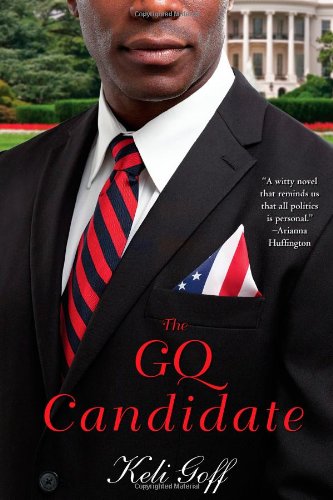
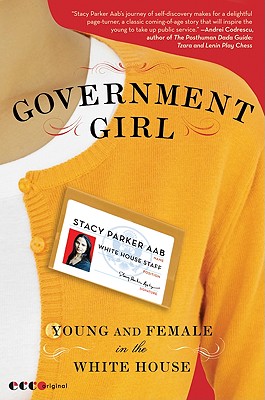
The GQ Candidate + Government Girl
The GQ Candidate by Keli Goff, 2011
Rating: 3/5
IQ "Well, there's not much left to say except that I'm really glad I wore my Manolos today, because if I'm going to insert my foot this far in my mouth I at least want to be wearing nice shoes", Mimi pg. 349
Luke Cooper started out as a state senator and was then recruited to run on the Michigan governor's ticket as lieutenant governor, they won but due to a sex scandal Luke became Michigan's first Black (and Jewish by adoption) governor and one of the youngest governor. His ratings are soaring and due to some remarkably good luck concerning acts of goodwill (such as defending a white nationalist from injury while a group of white nationalists were protesting his policies) that involved social media the rest of the country has a vague inkling of who he is. Some of his friends and mentors advise him to run for president and he throws his hat into the ring for the Democratic presidential nomination. With the help of a loyal, talented group of friends Luke feels confident with his decision to enter the race but it will affect those he loves far more than he could have ever imagined.
It felt like the author was sick of upper class/upper middle class Black people not being portrayed in fiction so she peppered her novel with them. I understand and appreciate her intention but the delivery left a lot to be desired. Luke's family was cheesy in its perfection, even its quarrels felt forced and ridiculous. Everyone had these great personal backgrounds from the oldest characters being Freedom Riders to the youngest being successful and powerful in their respective careers. Not all characters were perfect but it was hard to focus on their flaws when I could barely keep them straight. The narration plodded on and I think the author should have instead focused on Luke and his immediate family instead of Luke's family, friends and his friends of friends. The book was very long in order to accommodate all these characters and the gazillion plot lines (or so it seemed) which was frustrating when the book reached the end and a rather dramatic moment was rushed through. Furthermore the book ends with Luke making a crucial decision and although I can guess what he chooses, I think that since this book was all about politics (in a way) it should have ended with him actually making a political decision.
This book is about a presidential campaign but politics do not enter the equation which keeps it from being a polarizing read due to controversial issues. While Luke is a Democratic, a variety of political affiliations are mentioned but since the issues are not delved into its inconsequential. Instead the book focuses on how political campaigns are run, the people behind the scenes of the candidate, the media's relationship to a campaign and networking and fundraising. It was nice to read a book with such a dream cast, I just wish the author had either taken the presidential campaign storyline out of it (and instead focused on a group of highly educated Black friends post-college living life) or narrowed down the cast of characters. The book was a slow read but Luke and his friends are a highly entertaining bunch, try to ignore the lack of plot and while you will most likely get frustrated at the ending The GQ Candidate is still a good read.
PS Fact: I bought this book at my Borders as it was closing. So this book will always be associated with that, I even still have the receipt that says 'final sale'. Sadness
PPS: I know everyone else read this as Barack Obama-like but I actually related Luke Cooper more so to Cory Booker. Anyway just a thought
Rating: 2.5/5
IQ "If I have one wish for America, it is my hope that when our leaders stumble, as they will, when they hurt others and themselves, which is inevitable, that we will be as compassionate to them as we sense they would be with us if the faults were our own. Our leaders are not gods, and they are not our fathers. But they can be our best hope for peace among nations", pgs. 291-292
Stacy Parker Aab's memoir details the life of a young, biracial White House staffer. She was born (1974) and raised in Detroit and attended George Washington University where she became an intern at the White House, working in George Stephanopolous' office. Eventually she began working for Paul Begala as his special assistant.
My summary is brief because unlike the back of the book I'm not trying to claim that this memoir provides "a searing look at the dynamics between smart young women and the influential older men who often hold the keys to their dreams". It didn't reveal much about gender relations in the Clinton White House but it did provide a look at the daily atmosphere. However the stories shared are not that interesting, while I didn't want scandalous tidbits (indeed it took me awhile to recover from the story of Vernon Jordan sexually harassing her because I admire that man immensely) I did hope this memoir would provide some interesting anecdotes. Instead since Aab was never that high up this book is more of a day-by-day look at the work of young staffers, people who are important to the functioning of our government but who don't interact with that many people of name-recognition. I also thought that the author spent a lot of time bragging about herself, making sure we knew how loved she was in Stephanopoulous' and Begala's office. Furthermore she was determined to gloss over any issues that might have made her more interesting, instead she focused on portraying herself as the perfect staffer (there was about 2 sentences about drug use that held up her security clearance but she doesn't go into further detail). It just rubbed me the wrong way which I grant is a matter of personal taste. I also wish she had went into more detail about her life post-White House, especially meeting her husband, since she goes on and on about wanting a boyfriend but then rarely talks about her relationships (which she doesn't have to do but then why talk about how important having a boyfriend was to her?). Finally, the end part about the Obamas fit oddly into the book and seemed more like her way of sharing her thoughts about their presidency rather than connecting the dots to her time in the White House (except for mentioning that they hired some veteran Clinton staff).
I did find it fascinating to read about the inner-workings of the staff (for a time and then it got old) such as "RON"s (remain overnight), people who were in charge of paving the way for the president at whatever hotel or celebrity home he stayed at on his travel. Those are roles that we definitely don't think about and I was also appreciative at the glimpses of humanity displayed in the Secret Service men she talked about since they seem like daunting, mysterious figures (which is their job to do but still). Overall Government Girl left me disappointed because I had expected it to be more exciting, at the very least, I wish the protagonist had focused more on being genuine and less on presenting a perfect good girl image. It does a good job though of giving people an idea of daily life for the young men and women who are so helpful to the 'big names' and really keep our government running, I am grateful to them.
Posted by
MissA
at
8/19/2013 06:45:00 AM
The GQ Candidate + Government Girl
2013-08-19T06:45:00-05:00
MissA
2.5/5|3/5|adult fiction|African Americans|autobiography|Government Girl|Keli Goff|politics|Simon and Schuster|Stacy Parker Aab|The GQ Candidate|
Comments
Tuesday, June 5, 2012
Mini Reviews: This Side of the Sky, Passing Love & Paris Noire
This Side of the Sky by Elyse Singleton 2002
Bluehen Books/Penguin
IQ "Old people used to say there comes a time when you remember fifty, sixty years ago as if it were last week, but damn if you can remember last week at all. They were right. Every generation thinks their time is the time and talks about the resent as if it's some stable territory they can occupy indefinitely. Yet when we say now, by the time we get to the w sound, the n is in the past." Lilian, pg. 8
Lilian Mayfield and Myraleen Chadham grew up in Nadir, Mississippi and they've been friends since they were babies. Nadir soon grows too stifling for both of them, Lilian wants a great education which she can't receive in the segregated South and Myraleen wants an adventure. Circumstances soon arrive that make it prudent for them to leave town and they travel about from Philadelphia to joining the Army and serving in England and then settling down in post WWII Paris for awhile. They struggle financially, learn about love and suffer through some trying times and tough losses, but they always, always, have each other.
This book took sooo long to get started. I was hoping the girls would run away soon but it felt like it took them forever to decide to leave Mississippi and even then it wasn't really of their own free will. I also felt that parts of the story were implausible and while I was happy that some things occured, other events happened that seemed too coincidental so overall I'm going to say the book could have been more realistic to life. Furthermore I would have liked to get the perspective of August or some other guy to balance out the trio of Lilian, Myraleen and Kellner (a German POW).
I loved the character of Myraleen, she's a spitfire uttering statements like "once I hate a bastard, I hate him forever. I guess I'm just loyal that way" (pg. 68), who wouldn't love a character like that? I also really liked Lilian, her quiet strength spoke volumes louder than Myraleen's tough dialogue. They have a beautiful friendship from the very beginning and the core of the book, the best part-next to the characters of the cities they pass through-is their enduring friendship that goes through some bumps but always heals. I also loved Mudear, Lilian's mother. Tough as nails but super sweet as well and even though she didn't finish her high school education she's still whip-smart. It's funny, one exchange between Mudear and Lilian stands out for me because it holds truths that still apply today. "Mudear read aloud anything she saw about colored people. 'See there', she'd say. 'Negro Holds Up Store. That's why we can't get anywhere. We don't know how to act.;
'But, Mudear,' I said. 'plenty of white people stick up stores, rob banks. And you don't see a headline saying 'White Man Robs Bank'.
'Got a point. [...] See, that's why I sent you to school, so you could think. Not too many folks can think. A lot can only talk. Better if it was the other way around" (pg. 81).
The historical details were intriguing as well, especially learning about German POWs. I didn't know German POWs were lent out to farms in America and I didn't know how bad the Russians treated them. This book provided a more humane look and reminds readers not all Germans were Nazi, something that should strike people as obvious and yet it still bears repeating.
This Side of the Sky is not overpowered by the strong personalities of the places Myraleen and Lilian visit, instead the dominant aspect is the friendship of the girls. They have different dreams but they also want the best for each other and are willing to sacrifice themselves for the other to ge a chance at her dreams, at her own sense of happiness. An attitude like that can only end in good things. The historical details about the treatment of German POWs and the discrimination Black women faced in America and while serving their country in the UK (of course the discrimination was from our own Army, not the English people) during WWII are vividly portrayed. The book is very thourgh in all its description, no detail is too small to be touched upon and while I didn't appreciate that quality in the beginning of the book, my patience paid off.
PS Another favorite quote that lightly touches on Paris aging too "Paris is changing. Pavement replaced cobblestones after students used them to pelt police in the '60s riots. McDonald's arrived in the '70s. Right-wing machinations and Third World immigration have strained the racial climate. Yet the core city is much the same. It's a comfort to grow old in a place that's so much older ,where even the light posts appear to understand. It must be so hard to age in America. A city block can be unrecognizable from one decade to the next, because the cheap plaster and plastic keep getting replaced by new cheap plastic and plaster." pg. 323. Food for thought, I'm going to retire somewhere like the Paris she describes, it may even be Paris!
Grand Central Publishing/Hachette Book Group
IQ "But I will tell you this-adventure is only a word. Don't be so fixed on findng, live and in that the adventure will come." Ruby, pg. 296
Nicole-Marie Roxane Handy has a serious case of Francophilia but until the death of her dearest friend she hadn't had the courage to visit Paris on her own. The death of her beloved friend kicks her butt into gear and she heads to Paris, leaving behind her Alzheimers-ridden father, her mother who is now more of a caretaker than a wife, and the marriage proposal from a man who is married. While exploring Paris Nicole finds an old photo of her father, he never spoke about his time studying in Paris and he doesn't remember it anymore but the photo is inscribed to a beautiful young woman who is not Nicole's mother. Nicole grows determined to discover the identity of this young woman and her connection to Nicole's father.
We learn that the young woman is Ruby and she alternates chapters with Nicole. Ruby lived in Paris in the 1950s and my-oh-my it was a glorious time. Jazz clubs were beginning to open and there was a solid community of Black Americans. Towards the end the book does drag a bit. But it's ok because I wasn't ready to leave Paris just yet anyway. It does start off slowly but again I was content to meander through Paris with Nicole, but I did get bored with all the Mississippi parts (that's where Ruby was from. I feel like its always the same family issues with books set during the 1920s-40s about teenaged girls in small towns, they wanna go off and explore but their super-protective mothers stifle them until they runaway. Eh-yawn). Also while I loved Arnett, I didn't understand his relationship with Ruby. The author started off seeming like one way and then all of a sudden Ruby & Arnett were pledging eternal devotion to each other, it came out of the blue since I was convinced he was going to drop her any minute.
I liked Ruby, I may be one of the few people who actually liked her. I didn't mind that she was selfish and at times downright unlikable, she had spirit and as Nicole observes "a flash of that young, willful woman who dared to change her destiny. Reality hadn't met Ruby's expectations; she took what she could and stayed with it" (pg. 286). I do not love Ruby due to her current lifestyle but I respect her attitude towards life and I admire her resilience, she was devoted to Paris and everything French. She learned the language and the mannerisms, she learned about the entire culture and that must have been very hard to do living on a shoestring budget and constantly having to work. Plus Ruby knew her flaws. She didn't try to change them but she didn't try to conceal them either, in her old age she is comfortable with who she is and she makes very few apologies. Ruby is quite a character and I would love to meet her. Her advice she gives that I included as my Incredible Quote is excellent and something that makes complete sense but I feel like many people don't know that little bit of wisdom. It's one of my favorite book quotes, hands down. Living life is an adventure, no need to go search one out (that's ok too but people shouldn't feel like failures if they haven't had some grand adventure as long as they still took risks). Nicole didn't have as much of a lasting impression on me as Ruby did but I didn't dislike Nicole. I found her a bit boring at first simply because I never understand why people are afraid to travel but I grew fond of her too. I thought it was a good choice for the author to make Nicole 56 and show that it's never too late to have romantic travel flings (or serious relationships ;) The details about Black people in Paris and life in Paris in general during the 1950s are exquisite.
Passing Love features lovely romances with surprising twists and adds a fresh spin to the classic tale of discovering one's past. It becomes immediately clear that this is not the average coming-of-age-by-discovering-family-secrets story simply based on Nicole's age and the way she goes about her search. I loved the title, its deceptively simple. As the story develops so too does the title, taking on many different meanings. I firmly intend on buying this book as my own reminder to visit Paris, when I do I intend on visiting all the places mentioned, exploring Black Paris. A new favorite.
IQ "She lapsed into the patois that was Martinique because it allowed her to relax into herself. She could speak proper French if she took a mind to the task. It wasn't even difficult. After all, it was De Gaulle's French she spoke every time she left her apartment and strolled the winding streets of Montmarte. Even General LeClerc could speak no better French than she when she taught her sixth grade class. Not that those ruffians from Morocco, Senegal and Algiers would know the difference anyway. She sighed. Who was she to think such thoughts? Wasn't she born and bred in Martinique, herself?" Marie Therese pg. 2
It's the liberation of Paris! The year is 1944 and Marie-Therese Brillard and her children Collette and Christophe are swept up in its exciting aftermath. They each find romance but with very different people. Colette with a white Frenchman, Christophe with the married wife of a Free French fighter and Marie Therese with Monsieur Lieutenant, a Black American soldier. These romances will not all end in happily ever-after....
I chose that little paragraph as the Incredible Quote because its one of my favorite parts (obviously) because it provides some insight into the time period and Marie Therese's frame of mind without being direct. But it also illustrates a characteristic of this novel that I detested and that is "oversharing". The reader already knows based on the first sentence in that paragraph that Marie Therese has some connection to Martinique. There could have been a better way to make it clear that she was born and raised there then by having the speaker REMIND herself where she grew up. Something as simple as "Who was she to think such thoughts, she an immigrant herself?" And then obviously the reader would think 'huh since she speaks in the patois of MARTINIQUE than that's where she must be from'. Thus the awkward sentence that ends the paragraph in the IQ has been avoided. Sadly that happens a lot throughout this book, characters practically hurt themselves trying to show off their knowledge about WWII and the events occurring in their country. The problem is, they repeat things to other characters that they should have already known. I get extremely annoyed when authors use characters as history teachers, i.e. they spout off facts or ask dumb questions that HISTORICALLY they would have already known the answer to. Here's an example, "Collette. Maman. The sentries. The ones that always march by the boulangerie at least twice a night to make sure we're all inside the bakery and not sneaking out to help the Resistance. They...." (pg. 6). Why not just send at "The sentries"? Because Marie-Therese and Collette should already know what Christophe is talking about, the author should be able to find another way to explain what German sentries do in Paris than just carelessly insert it in Christophe's dialogue. 'Oversharing' (as I call it) like this happens throughout the duration of the book. Another issue I had with this book is Collette. I'm not sure why the author even included her. If you read the back cover. you would think the story is told in alternating points of view or that at least Collette gets some story time. Nope. She's simply a vehicle for the mother to wax on and on about the dangers of dating outside the race. BUT WE LEARN NOTHING ABOUT COLLETTE. This infuriated me because she was mentioned all the time but I finished this book unable to even tell you the name of her Frenchman. It would have been nice catch a glimpse of their romance. Especially since it was never clear to me if they would have faced prejudice, my guess is no but that's based on other books I've read about the French treatment of Black people (see above reviews) I wouldn't be able to back that guess up based on only reading this book.
Even though the book did a terrible job of presenting historical information, I loved the scenes at Glovia Johnson's house. She's a beautiful, wealthy, glamours, seductive Black American woman living in France and she hosts salons at her homes, both Blacks and whites visit her legendary salons. They seemed like a lot of fun and Glovia Johnson was my favorite character because she was at least interesting. The rest of the characters were spineless, except for Marie-Therese who had some backbone but was drab. Glovia Johnson literally plays the field, as in she bed with German soldiers and influential French people depending on whose in power in order to keep up her luxe lifestyle. She has little shame but that's ok because she's very sweet and clever. I do not want to just complain about the IQ, I also chose it because it provides a glimpse at how people viewed Black immigrants which was a perspective I found fascinating since it is rarely discussed. Immigrants from the Caribbean looked down on Black Africans as did white French, but the white Frenchmen(and women) loved Black Americans. "Marie Therese struggled to hide her nervousness. Her French had to be correct even though this American spoke with the most atrocious accent. That is, when the chanteuse bothered to speak French at all. Still, she was one of them, and all Paris loved that accent coming out of the mouths of America's black emigres. If only it were so for the Africans and West Indians" (pg. 11), sentences such as those made me appreciate the book a little bit more.
Paris Noire does a service to the world of historical fiction (and books as a whole) because it talks about a time period that most people are very familiar with but offers a perspective that has not been explored. The lives of Black people in France before, during and after WWI all the way to the 1950s has always intrigued me since they faced so little discrimination. But this book points out that French love for Black people only extended to Americans. The book was very disappointing but I had high hopes for this book and that was part of the problem. Perhaps if my hopes had not been so high I would have liked it better as fluffy-tragic romance novel. Instead I expected some intense, lightly romantic, in-depth historical fiction. The fact that the character of Collette was completely ignored bothered me immensely as did the tendency of the author to have her characters speak awkward dialogue simply to provide historical information. I wish it had been about Glovia Johnson instead. It was just ok.
Disclosure: Bought
Posted by
MissA
at
6/05/2012 10:34:00 PM
Mini Reviews: This Side of the Sky, Passing Love & Paris Noire
2012-06-05T22:34:00-05:00
MissA
adult fiction|African Americans|Black people|book reviews|Elyse Singleton|France|Francine Thomas Howard|historical fiction|Jacqueline Luckett|mini-reviews|
Comments
Saturday, February 18, 2012
Mini Reviews: Harlem Redux, The Emperor of Ocean Park & Black Orchid Blues
Black Orchid Blues by Persia Walker 2011Akashic Books
IQ "'You'll thank me later,' Jack-a-Lee said.
'Well, I'll certainly have something to say about it. That's for sure." Lanie pg. 207
Lanie Price is a 1920s Harlem society columnist for The Harlem Chronicle but previously she was a crime reporter. One night she is at the Cinnamon Club, the nightclub where the famous "Black Orchid" singer Queenie Lovetree performs but that particular night, Queenie is kidnapped. As hours pass after the kidnapping and no ransom note appears, more questions arise. Little is known about Queenie's past and Lanie is determined to dig into Queenie's history not just for a sensational story but to find a clue that can help Queenie.
I did not like that the author provided very little background on the characters, it's all about the mystery. It's a fine mystery to be sure, but I wanted to know more about Lanie Price's family; was she Harlem born-and-bred? Or did she move from the South? The North? How did she get the job she did? I had too many questions about the main character which is probably apt for a mystery novel but I didn't like it. To be fair, I just realized (while I was researching some info for this review) that this is the 2nd book in the Lanie Price Mystery series so perhaps if I had read the first book, Darkness and the Devil Behind Me I would not be so clueless about all the characters mentioned. The beginning held my attention and the ending was spectacular but the middle lagged and was the only thing that prevented me from finishing the book within a few days.
Black Orchid Blues is an excellent homage to the Harlem Renaissance and detective noir (not that I read a lot of them but I've seen a few of the films) with its historical detail and intriguing plot twists and turns. While I was not able to connect to any of the characters, I was thoroughly engaged in the mystery. It is clear that the author loves this time period and I absolutely ADORE this time period as well so I really appreciated that. I was pleasantly surprised by how deep the author delved into Harlem society, especially GLBT Harlem society. People were out and proud during this time and Harlem accepted them, in fact one of the biggest events in the book is the Fa**ts Ball. A party where the GLBT and straight community mingle in outrageous costumes. Lanie Price has an attitude but she (and the author) really understand people."I'd worked as a crime reporter, interviewing victims and thugs, cops and dirty judges. Then I'd moved to society reporting, where I wrote about cotillions and teas, parties and premieres. It seemed like a different crowd, but the one constant was the mendacity. People lied. Sometimes for no apparent reason, they obfuscated ,omitted or outright obliterated the truth. And often the first sign of an intention to lie was an unsolicited promise to tell the truth" (pg.11). Lanie is able to probe enough to discover what makes people tick and she does this in the case of the kidnapper whose identity and story were so unexpected that I automatically loved the ending, although the background of the kidnapper was horrifically heartbreaking. This book was also surprisingly gruesome, simple warning to those who don't like much detail about violent deaths. I very much enjoyed this book with its fast-pace, wonderful attention to historical detail and lesser-known facts cleverly interwoven into the text. I am eager to read the first book in the series and even more eager for the next book.
Disclosure: Bought from Better World Books (buy your books from them!)
The Emperor of Ocean Park by Stephen L. Carter 2002Vintage Contemporaries/Random House
IQ "you think the world is made up of simple moral rules. You think there are just two kinds of people in the world, people who obey the rules and people who break them. You think you're so different from Uncle Oliver, but you're just like him. in some good ways, sure, but in some of the wars ways, too. You look down your nose at people you think are your moral inferiors. People like your brother. People like me." pg.270
I chose that quote because when I read it, I felt a pang because "you look down your nose at people you think are your moral inferiors" could have referred to me. This quote is very personal, it's to remind me not to be so hard on people.
Talcott (nickname Misha) Garland is a successful law professor at a prestigious Ivy League law school, he is married to a woman he loves and he adores his son above all else. The suspicious death of his father, Judge Oliver Garland, a former Supreme Court nominee who went down in flames, leads him to start digging through his close-lipped father's past. Talcott's sister thinks their father was murdered, Talcott's brother wants nothing to do with the family in general and Talcott's wife, Kimmer, does not want Talcott's meddling to hurt her chances of a federal judgeship. His investigation is causing him to be perilously close to losing one or all of the things he holds dear.
I think the author wanted to write a nonfiction book about the Black upper class and upper middle class. relationship I think the author also wanted to write a mystery novel. These two topics could have worked well together, unfortunately the author throws in way too many issues and touchy subjects and tries to stir them all together which only creates a befuddling mess. Racism, classism, politics, chess, Ivy League elitism, problems with the legal system, family secrets. These are just SOME of the things that are covered in The Emperor of Ocean Park and it made my head spin. I am willing to concede that I may not be smart enough for this book. I like a good mystery with elaborate twists but honestly you need a chart to keep track of all the clues and secrets being discovered. Props to the author for managing to keep it all straight, I certainly couldn't. At 654 pages of the main character attempting to solve a mystery AND ask big questions about life and deep issues, this book moves to slowly and is to long. I also was not a fan of the narrator. He is very introspective, I would dare say he reflects TOO MUCH. And I was so annoyed by how mysterious he was. A chapter would end with realization dawning on him but the next chapter would begin with nary a mention of what that grand realization was. He would mention it in passing many pages later and often I would have already forgotten about the discovery. I did not mind the slow beginning, at first I enjoyed reading Talcott's musings on life and watching the mystery develop. But his pondering grew old fast and there were too many false-endings. By the time I got to the actual ending, I rolled my eyes in disbelief because it seemed so random, as if the author realized that he needed to end the book so he picked a character that hadn't already been accused.
I like that everyone in this book has a secret and almost-everyone has broken in the law in some way which is amusing in its irony since most of the people in the book are connected to the legal profession. I am always fascinated by stories about upper middle class Blacks because they are so rarely portrayed in fiction, we have more than a few millionaires in real life and plenty of Black people are living comfortably so I would like to see that reflected on TV and in books. The author attempts to reveal this mysterious class; "the Gold coast party circuit, a circuit my parents traveled often, because it was, in those days, what one did: glittering dinner at one house on the Friday, champagne brunch at another on the Sunday, caterers, cooks, even temporary butlers at the ready as the best of black Washington charged about in mad imitation of white people's foolishness. Yet it was not, really, so mad. In the old days, my mother used to say, there was only a hundred black people who mattered in America, and they all knew each other. A bit of snobbery, but also an intriguing proposition. The social scene, so inexplicably wasteful and pretentious to its critics, refreshed and reinforced those who whirled through it, strengthening them to face another day, another week, another month, another year of expending their prodigious talents in a nation unprepared to reward them for their abilities" (pgs. 284-285). Sentences such as that kept my interest but this book took me a long time to read and truthfully it might be best to just give up on the mystery. This book is more about human failings, and ruminations on the problems with the late 20th-early 21st century.
Disclosure: A gift from my mother. We owned another, older copy, but she gave it away to one of my aunts. I was bummed because I wanted to read it so my mother kindly bought me my own copy.
Harlem Redux by Persia WalkerSimon&Schuster
IQ “Ev’rybody gets tested. And sooner or later ev’rybody fails. Discovers somethin’ ‘bout themselves they don’t wanna know. Ev’rybody’s got secrets, young man.” Annie pg. 261
David McKay left Harlem four years ago and except for the occasional letter to his sister Lillian, he never looked back. The McKays are a well-known, wealthy family living on Strivers Row in 1920s Harlem but it is a mystery as to why David gave all that up. He returns however after the suicide of his beloved sister. Much has changed since David left but some things remain the same, Lillian's twin sister Gem is typically, a no-show for anything family-related such as the funeral. But as Annie, the McKays long-time maid and Rachel, David's working class childhood sweetheart, fill David in on all that Lillian did not tell him in her letters over the years he realizes that Lillian could not have committed suicide. He also realizes to truly uncover all the family secrets, he must vanquish his own demons that drove him to stay away from home.
I didn’t like the omnipresent narrator and then the abrupt switch to third person. Sentences such as these “David felt Rachel tense.[….]He could tell that she wanted to speak up. She was biting her lip to keep silent. He took hold of Rachel’s hand and gave it a squeeze. Like most of the doctors, lawyers and educators who composed the bulk of Strivers’ Row residents, the Canfields were committed to doing everything they could to make sure that their street would not be sucked into the slum beyond. They had convinced themselves that they could provide a shining example to other blacks of how a winsome neighborhood could be maintained. [….] David, perhaps because he lived for so long among Philadelphia’s poor, understood what Emma could not.” (pg. 225) but then all of the sudden, it would switch back to omnipresent. The author clearly loves history and at times gets so caught up in expressing a variety of ideas that the characters tend to wax philosophically out loud or in their thoughts. But it presents a clearer, more entertaining portrait of Harlem in the 1920s. “They both dreamed of a day when Harlem artists would receive the same recognition, prizes, and contracts that white writers did. Lillian wanted to read books about well-bred, refined colored people. There was, she said, enough being written about the downside of Negro life, about the crime and the poverty. Someone had to tell the story of the educated colored people, too. Someone had to speak up for the Negroes who were doctors, lawyers, philosophers, professors” (pg. 42), the sad thing is these sentiments still ring true today, we still need those books about the Black people who are moving on up.
Harlem Redux is a most appropriate title for this book as it will introduce a new genration of readers to 1920s Harlem and greatly please those who already love studying the Harlem Renaissance. The book allows readers to rediscover Harlem and it is also about rediscovering old habits, old flames, buried secrets. The author has crafted an appealing group of characters that present a portrait of the diversity of 1920s Black Harlem Americans as well as Black Americans overall. David is a civil rights attorney in Philly but he also fought in World War I. I do wish more time had been spent on David's time overseas but the mystery grew to be satisfying. No book about wealthy Blacks would be complete without touching on our color issues and the author deftly handles the topic and shows once again, that she can dig deep and discover people's motivations and their breaking points. I was not expecting the ending but in retrospect it made sense and I had suspected one half of the surprise so I was pleased with my meager detective skills :)
Disclosure: From the library
Posted by
MissA
at
2/18/2012 08:26:00 PM
Mini Reviews: Harlem Redux, The Emperor of Ocean Park & Black Orchid Blues
2012-02-18T20:26:00-06:00
MissA
adult fiction|book reviews|classism|Harlem Renaissance|mini-reviews|mystery|Persia Walker|Stephen Carter|
Comments
Friday, October 21, 2011
Mini Reviews: Half of a Yellow Sun, Substitue Me, Till You Hear From Me

Till You Hear From Me by Pearl Cleage 2010
One World Books/Random House
"That was another thing he liked about Toni. She shared his ability to dismiss any claims of racial solidarity that conflicted with the interests of their clients. He thought of the two of them as part of the vanguard of post-racial African American professionals who were free at last to pimp the race without pretending they were trying to save it." Wes pg. 27
Ida B. Dunbar is a 30-something who loves politics. She poured her heart into President Obama's campaign and she's hoping that will pay off with a White House job. She never receives that phone call however and it doesn't help that her father, Rev. Horace Dunbar, a civil rights icon has a fiery, politically incorrect video up on YouTube that is not particularly flattening to say the least (think Jeremiah Wright). Ida's father's friends are concerned and they call her to ask her to come home to Atlanta's West End neighborhood to try and talk some sense into The Rev. Ida knows that it's a hopeless task but she decides that she might as well try while she hopes for a job in D.C., the city she loves. To her surprise, her old neighbor and son of her father's best friend, Wes Harper is also back in town. Ida had a crush on him as a kid but she hasn't seen him in years and he's shifty and it's well known that he isn't an Obama (or much of a Black-people) supporter. Ida needs to resist Wes, reconnect with her father and position herself to get the job she wants, but she needs to remember 'nothing changes but the changes.'
This book is advertised as an "Obama-era romance featuring a cast of unforgettable characters." The characters are good but they are forgettable except for Wes and that's merely because he's so ridiculously unlikable. The Incredible Quote resonated with me because there are many people who do think like that and to a certain extent I can understand why people do think that way. I do not believe we are in a post-racial society (well I don't agree with the statement at all but I'm not going to explain that here) but I had hoped that the author would have a less-biased approach towards Wes, Toni and any other characters like them. Instead the author makes them caricatures without really exploring what circumstances in their personal history makes them feel that they can/should 'pimp the race' so-to-speak. Also there is no romance. I don't even know where that came from but it's such a false advertisement. I didn't care, I picked up the book because it used the words "Obama-era" (I kid you not) and I had heard good things about Pearl Cleage. The most frustrating part of the boo however is that one of the most exciting confrontations occurs off the pages. To say I was annoyed is putting it mildly, this book crawls along but I had been anxiously awaiting the confrontation. And then it was basically ignored!
Till You Hear From Me has frustrating ending and a far-from neutral tone combined with slow pace which makes it hard to really like the book. I did enjoy reading about what it might be like to be the child of a civil rights legend and how that affects Ida's view of life. The Rev can be suffocating and very proud but he's also very loving and Ida is constantly inspired by him so it's interesting to read about her struggle to find a balance in their relationship so that The Rev no longer dominates her life. Also the author touches on discontent amongst some in the Black community who originally supported Pres. Obama but now want him to do more for Black people and her approach is more even concerning those characters. Fun fact: as much as The Poisonwood Bible annoyed me I was pleased that because of that book I knew who Fannie Lu Lumumba was named after (freedom fighter Patrice Lumumba of Congo). The storyline was original, the writing good but it did not wow me. The characters all resembled people I know so it felt like reading a book about the people I know all grown-up.
Disclosure: Bought
PS I did love this conversation between Flora and Ida
"'And I want to be part of that [changes in America] more than I ever wanted to be part of anything so that when I get old, I can look around and see the changes and say, Yeah I helped make that happen.'
We just sat there for a minute. I think I was talking to myself as much as I was talking to Flora.
'Well,' she said finally. 'I think you can stop worrying about looking for that real good man.'
'Why is that?'
'You just fell in love with your country, girlfriend, and nobody can compete with that." pg. 222 I LOVE that quote because I felt the same way right after then-Sen. Obama won the presidential campaign. It was definitely the moment I fell in love with my country (obviously I'd always loved America but this was the first conscious moment I remember really feeling proud).
Substitute Me by Lori Tharps 2010Atria Paperback/Simon & Schuster
IQ "You make it sound like every White woman should be afraid that some Black hussy is going to seduce her husband. That's not what happened with Brad and me." Zora pg. 296
Zora Anderson is 30 years old and she has been an au pair in France for eight years. When she moves back to America she doesn't know what career she wants having not finished college because she wasn't interested in anything she studied. Fortunately for Zora she spots an ad for Brad and Kate Carter who are looking for a nanny, the exact wording that Mrs. Carter put in was "substitute me". As cliche as it sounds, Mrs. Carter will soon learn the very painful adage firsthand of being careful what you wish for especially when there are secrets in your household contained by every member of the family (except Ollie, the baby).
At first Zora sounded a little like me (or at least she had similar opportunities I have had and want to have, such as living in Europe or at least another country for awhile. We lost our connection whenever cooking was mentioned, haha) "she loved cooking, she loved traveling, and she liked kids. She liked feeling useful, and she liked being in beautiful spaces. She loved music and dancing and the taste of a foreign language rolling off her tongue. She loved reading literary fiction with multicultural characters and watching spoken-word poetry performances in intimate theaters. All of these things made her happy, but none of them fell under any job description she'd ever seen" (pg. 18). I could relate to that statement until I took a Comparative Government&Politics class and discovered I LOVE international politics so now I have a idea for a major (but of course that could change). So I was already fond of the book since I thought Zora was the embodiment of who I wanted to be. After reading the entire book I'm not so sure I would want her whole life but she gained some noteworthy experiences and while the route to her somewhat happy ending was rough, it wasn't depressing or anything. I wasn't enamored with the writing style, it didn't make me wince by being overly dramatic/too flowery but it didn't wow me with its beauty either. I was surprised at how long it took for the Brad&Zora storyline to take off and I didn't see it as a cliche since it's the first book I've ever read with a nanny/husband affair. while I was surprised by Kate and her friends, Brad was less surprising because I've met many liberal white people who can still be racially insensitive (unconsciously). He had a nice quote about love "[l]ove is such a crazy thing. Sometimes you can convince yourself it's not even real, that's just this elusive concept, yet when you fall in love, it can shake your world in ways you never dreamed possible" (pg. 319). It was bizarre to me as to why Kate disapproved so much about one of the career secrets Brad kept from her. I thought it was cute and nice that he got the chance to really follow his dreams.
I'm fairly naive when it comes to issues concerning working mothers and race relations and how competitive moms get over their kids. My mouth dropped open several times when conversations between Kate and Fiona (one of her white friends) were shared because they were so...not outrageously racist but very subtly prejudiced. I couldn't believe educated, so called 'modern' women still talked in a particular way. BUT I don't think the older generation would be that surprised. I also didn't realize mothers had such dilemmas about leaving their children with nannies. My mother has been working since I was born and I've never known anything else and I don't mind one bit. I felt a twang of sympathy for her if she agonized so much over her decision to leave my siblings and I with a babysitter. Working moms as a kid whose mom has always worked (still does), your kids will turn out fine and no they won't hold it against you (honestly I wouldn't like it if my mom was super-involved in my life, ugh). Anyway I digress, this book seems like an obvious bookclub pick because it addresses very accessible, universal issues. I really appreciated (and chuckled) over how often Zora bemoans how cliche her story is and she reiterates over and over that she wants to be more than just "Mammy". It sort of reminded me of all The Help controversy about Black women once again being regulated to "Mammy" roles/characterizations. To me she seemed to hint at the fact that there's nothing wrong with being nanny if you love being one and are treated with respect.
Disclosure: Bought from my closing Borders. Check out the AALit section people!
PS Fun tidbit: This story takes place in Fort Greene, Brooklyn. When I was in NYC I had lunch at an amazing Thai place in Fort Greene with Zetta Elliott, Lyn Miller Lachmann and Olugbemisola Rhuday Perkovich. It was a great lunch and much too short.
Half a Yellow Sun by Chimamanda Ngozi Adichie 2006Anchor Books/Random House
IQ "The rawness of Edna's grief made her helpless, brought the urge to stretch her hand in the past and reverse history. Finally, Edna fell asleep. Olanna gently placed a pillow beneath her head and sat thinking about how a single act could reverberate over time and space and leave stains that could never be washed off. She thought about how ephemeral life was about not choosing misery." pg. 306
Set during the late 1960s during a tumultuous time in Nigeria's history; a time when the southwestern region of Biafra wanted to be independent from the rest of Nigeria. Through the characters of Ugwu a thirteen-year old houseboy, Richard a young Englishman in love with Kainene a dynamic woman from a wealthy Nigerian family, Olanna the beautiful twin sister of Kainene and Odenigbo, a revolutionary university professor who is dating Olanna, the war is brought to light from various perspectives.
Now here is a book that defines the word EPIC. At first I was impatient for the war to begin, but gradually I relaxed and soaked up all the conversations. I'm always fondly jealous when in books the characters attend not just parties but also gatherings where they discuss politics openly, this is quite a common theme when I read books not set in America. I don't think you can do that in the United States nowadays, it can be too violate, we've lost too much civility to be able to calmly discuss international affairs and domestic politics. Half a Yellow Sun is no exception, Olanna & Odenigbo host gatherings of intellectuals who are not all like minded but they are polite and their discussions range from politics to literature to religion but always come back to politics. These discussions create an opening for the author to showcase the various viewpoints of secondary characters who will remain relevant throughout the entirety of the novel. My favorite character was Kainene because she was so hard to read (pun intended). She was so cold towards other people and so difficult to understand but I loved her passion, her commitment to helping people throughout the world. Her ending made me very sad because I grown quite fond of her and Richard but their endings suit them and I can't always say that I feel that way after reading another book where the same end meets the characters but this book is different. Plus if you like romance this book is chockful of lovely (and harrowing) romantic tidbits.
I would be able to honestly use the word epic to describe this novel because while it is surrounded by grand, sweeping events, it is filled with small moments that if you blink you might miss the importance to the characters. For example, I might have overlooked the following quote had I not studied Nigeria in my Comparative Government & Politics class "but my point is that the only authentic identity for the African is the tribe,' Master said. 'I am Nigerian because a white man created Nigeria and gave me that identity. I am black because the white man constructed black to be as different as possible from his white. But I was Igbo before the white man came'" (pg. 25). From my class I knew that many Nigerians identify themselves by their tribe first, country second. Although some of my Nigerian friends say that is changing, their parents identify themselves first by tribe then Nigeria, but they (the younger generation) are content with simply calling themselves Nigerian. A small quote in the context of a longer discussion that I might not have picked up but it's an example of how careless the imperialistic powers were upon leaving Africa, just throwing together tribes with no thought to their warring history. Half A Yellow Sun is an epic and epic itself. The story does not take place across generations but it does span several years while managing to never lose the reader. It's epic because it completely immerses the reader in Nigerian culture as a whole but specifically in Igbo culture, it had me walking away thinking of words in Igbo (such as "biko" a term of endearment). There were also tiny bursts of feminism such as when Olanna resolutely decides after being cheated on that "[s]he would not let him make her feel that there was something wrong with her. It was her right to be upset, her right to choose not to brush her humiliation aside in the name of an overexalted intellectualism, and she would claim that right" (pg. 129). A mini review cannot do this book justice I don't think but I'll try in a sentence: Enrapturing tale with dynamic characters of various temperaments from various backgrounds, dense without being overwhelming. I loved Purple Hibiscus but I wouldn't want to re-read it, I would re-read Half A Yellow Sun.
Disclosure: As a sign that my mother does indeed love me she bought me this book (heehee)
Posted by
MissA
at
10/21/2011 10:51:00 AM
Mini Reviews: Half of a Yellow Sun, Substitue Me, Till You Hear From Me
2011-10-21T10:51:00-05:00
MissA
adult fiction|Black people|Chimamanda Ngozi Adichie|Half a Yellow Sun|historical fiction|Lori Tharps|mini-reviews|Pearl Cleage.contemporary|politics|Substitute Me|Till You Hear From Me|
Comments
Friday, July 22, 2011
Mini Reviews: Drown, Douglass' Women, Rooftops of Tehran
Drown by Junot Diaz 1996Riverhead Books/Penguin
IQ "We sat and drank and finally talked, two strangers reliving an event-a whirlwind, a comet, a war-we'd both seen but from different faraway angles." pgs. 206-207 [referring to Yunior meeting his father's mistress]
The author's debut, a collection of ten short stories concerning Yunior, his brother Rafa and his family. The story takes place in the campo and barrios of the Dominican Republic and the city communities of New Jersey.
I love The Brief Wondrous Life of Oscar Wao (the author's second book), I don't love Drown, I'm just in like, tentative like. I did not like the confusing narration, at first I couldn't figure out that the story was being told by the same guy, Yunior because he's not always referred to by name. Since the story takes place in both the D.R. and New Jersey and there's no sense of time, it's also difficult to figure out how old Yunior is. There is no clear continuity so I was left wondering about what happened to the rest of Yunior's messed up (aren't they all?) family. In fact, I can't even say for sure if it was all about Yunior, maybe it wasn't but I'm going to continue thinking it was until someone helpfully explains otherwise. Yunior's father is a jerk, he abandons his family in the D.R. to head to America and then remarries. But hold your judgement because by the end of the book, I understood this lost father a little bit better. Still don't like him, but I understand him, sorta.
The stories in Drown are gritty, genuine and riveting. The entire cast of characters is hardened beyond their years both cynical and aching for the American Dream as well as to be loved. The irony is that they all push love away and some of them throw away the opportunities America offers them. But it's not entirely their fault, as usual there is a distinctive gray area concerning the perils of following the American Dream and the gifts that America can give. These stories are confusing and sometimes the characters are perplexing but they are memorable. I liked the author's confined prose, it is both frustrating and delightful, he manages to create such realistic scenes and characters in so few words that it's stunning. He has a unique way of describing people and things such as "Outside, Mami said, her voice a murder about to happen" (pg. 79). I practically started quaking when I read that line. I could hear the cadence of voices, not just the Spanish accents but also the accents of those from Santo Domingo and those who live in the city, the pain, toughness and vulnerability rings clearly. And I love that he doesn't translate his Spanish or even highlight the words so you know it's Spanish, it's just there y no es un problema.
Disclosure: From the library
Douglass' Women by Jewell Parker Rhodes 2002Washington Square Press/Simon & Schuster
IQ "Not seeing my color was the same as seeing it." Ottilie pg. 194
Frederick Douglass was a brilliant man, an extraordinary orator and abolitionist, he was most ordinary however when it came to love and passion. He married Anna Murray Douglass, a free Black woman who helped him escape from slavery. He had an affair with Ottilie Assing, a German woman (who was half-Jewish), she helped keep him organized as he spoke across America and later Europe. Anna and Freddy had five children. Ottilie and Douglass had none. This is the story of two very different woman and their love for the same man.
The author states that her goal is not to diminish Frederick Douglass with this book, only to show that he was human. She succeeds in doing just that, but I admit I lost some respect for him as a person based on how he treated both women (but especially Anna) and his children. Anna and Ottilie are so different. Anna keeps the family whole, she cleans the house, feeds the children and makes sure Frederick (or Freddy as she calls him although he doesn't always like it) feels comfortable. She is very religious and would have been content if Frederick had simply become a Preacher. Anna has no real desire to learn to read and write, she only agrees to lessons so that Freddy will stop badgering her about her inability to read but Anna ends up never becoming literate. That is part of the reason Frederick turns to Ottilie who is more of his equal intellectually. With Ottilie, Douglass (Ottilie called him Herr Douglass for awhile and then affectionately just called him Douglass) could discuss politics, literature, art, philosophy, anything that came to mind. I had a hard time understanding why Anna wouldn't want to learn to read and write but I closed this book with a better understanding of why she was happy with who she was and I admired her for her spirit. Ottilie was young, slender, blonde. Anna was older than Frederick, curvy, black. Frederick insulted Anna by having an affair with another woman but he added insult to injury by giving Ottilie a room in his home, but Anna had her own way of asserting her quiet dominance over her home. Douglass was never physical (well one time but that was the only time noted in the book) but he was self-centered and a snob (it is fascinating how once Black people reached the upper class they forgot their roots, even our great abolitionists. Mr. Douglass fought avidly to free all slaves but he did not want his children marrying former slaves). Anna's view of love made me sad "I'd let him go 'cause it was best, Best for him. Worse for me. Ain't that love?" (pg. 38), to me that is love sometimes but not ALL the time. Plus it should be mutual, Frederick never did what was worst for him but better for Anna.
In Douglass' Women the author does a skillful job of showing not just the physical differences between Anna and Ottilie but their different views on home, Douglass/Freddy and love. Neither woman is judged by the author, both their stories are presented in a neutral tone, and both women have somewhat just claims on Frederick, who is both oblivious and blithely ignorant to all the pain he has caused. I like how the women never became friends, because while it is based on two very real people the author could have tried to make the story happier, instead she makes them grudgingly accepting of one another which is more authentic. The alternating points of view works well for this novel, but I do wish a timeline had been kept. I like being able to think about what other events were occurring around the world during the time this story took place (although any event pertaining to slavery was carefully noted through dialogue). I now want to know Frederick Douglass' side of the story (and to learn more about his eldest daughter, Rosetta Douglass, she seems like an exceptional woman). More than anything else this book taught me, it emphasized that love really makes no sense because although Douglass was a less than ideal family man and lover, Anna and Ottilie still loved and admired his noble bearing, his courage, and his intelligence. The funny thing is, I still do too. But they both should have left him and started a new life.
Disclosure: Received to giveaway as a prize for the POC Reading Challenge. Thank you so much Ms. Rhodes!
Rooftops of Tehran by Mahbod Seraji 2009
New American Library/Penguin Group
IQ "Has anyone ever told you that you have That?' I [Pasha] must look thoroughly confused. 'You've never heard of That?' he asks, surprised.
I shake my head no.
'It's a priceless quality that's impossible to define, really,' he explains, 'but you recognize it in the actions of great people.'" Doctor pg. 29
I shake my head no.
'It's a priceless quality that's impossible to define, really,' he explains, 'but you recognize it in the actions of great people.'" Doctor pg. 29
It's the summer of 1973 and Pasha is seventeen years old, spending most of his time chatting on his rooftop with his best friend, Ahmed. Pasha and Ahmed's conversations range from reflective to hysterical, discussing life, love and cruel teachers. Gradually love begins to be the main focus of their conversations. Ahmed has fallen in love with Faheemeh, who is engaged to another man. Pasha is secretly in love with Zari, engaged to Pasha's dear friend, Doctor. Zari is Pasha's neighbor and has been engaged to Doctor since birth. Zari and Pasha slowly become friends since Doctor is away so often and that doesn't make it any easier for Pasha to stop loving Zari. Summer flies by and wonderful memories are created until one night, the shah's SAVAK (secret police) appear to arrest a loved one and Pasha unknowingly helps them make the arrest. Pasha, Ahmed, Zari and Faheemeh are rudely awakened to life under a dictator who cares little about crushing his people's rights and Zari makes a shocking choice that may have broken Pasha forever.
I couldn't decide at first if this book was YA or adult, but I ended up classifying it as adult since the imprint the book was published under isn't YA. Plus Pasha seemed more like a vehicle for the author to use in order to express his views. Pasha seemed more mature than the average seventeen-year old guy, but maybe American male teenagers are just less mature than male teenagers in other countries? Obviously there are exceptions to that rule but I had a hard time believing Pasha was a teenager in high school. Especially when he's using extremely eloquent, flowery language such as "life was a random series of beautifully composed vignettes, loosely tied together by a string of characters and time." (pg. 4) I didn't like the Doctor storyline. I admire Doctor but I never got the feeling that Zari really loved him thus her devastating choice was harder to understand. The ending was satisfactory, there are some loose ends but such is life and there is supposedly a sequel being written which I would definitely read. Zari's choice is probably one of the best climaxes in a book I've ever read, it was unexpected and horrific. I honestly don't think any Westerner unfamiliar with the Middle East could see it coming. The book opens with Pasha in a mental hospital in 1974 and I flew through the book in an effort to discover why he was there. The most depressing part of the whole book is knowing that the Shah remains in power until 1979, Pasha and his friends must endure about five more years of his harsh rule. Granted, the Shah tried to do some good things (modernizing Iran) but his awful record on human rights makes his efforts inexcusable.
This book provides a through view of life in one middle-class neighborhood in Tehran. Pasha is a voracious reader and it's both amusing and bemusing to read some of things he and his friends think about the U.S. His observations allow readers to compare the daily life of Iranians to daily life here, and things we take for granted, not just with amenities and freedoms but things like falling in love. "I read somewhere that people in the West, like in the U.S. and Europe, date for a long time before falling in love,' I say, restless with anxiety. [...]'But here in Iran, we look at someone, and we fall in love. All the girl has to do is smile, and we're swept off our feet. No dating, no getting to know each other, no real opportunity to get acquainted, do you know what I mean?'" (pgs.56-57) More than anything, the point is really reinforced that Iranians will bitter for quite some time at the U.S. for being STUPID enough to reinstate the Shah. Personally, I think it's one of our worst foreign policy blunders. In addition to the cultural tidbits, the book has the BEST best friend I've ever come across. I want an Ahmed in my life. He's gallant, rebellious tender and absolutely hilarious. I offer you a teaser "You're a good dancer', Faheemeh compliments him. [Ahmed]
'I had dance lessons from Tennessee Williams himself.'
'Tennessee Williams was not a dancer,' I [Pasha] argue.
'I tried to tell Tennessee that, but he wouldn't hear of it'" Ahmed (pg. 67). I giggled at that line and any other time Ahmed opened his mouth. He's the type of friend that tries to make Pasha laugh through his tears and he avoids uncomfortable topics because he knows that he's basically the glue that keeps everyone together. If Ahmed cried, they would all be done. And there's lots of tears, Iranians mourn for a long time and in an elaborate, open, manner. They wail, tear at their clothes, etc. The author brings this vividly to life along with other elements of Iranian culture but at the heart of this novel is the painful, but oh-so-worth-it aspect of first love. I would recommend this to those who've fallen in love, are transfixed by the Middle East/Iran or just looking for a historical fiction romantic tragedy. But honestly, I'd recommend it to everyone, especially since we need to recognize and respect those who have That.
Disclosure: From the library
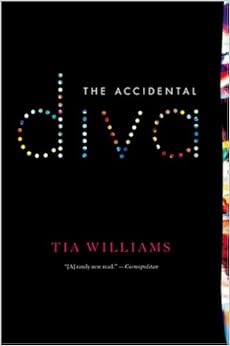
Posted by
MissA
at
7/22/2011 11:40:00 AM
Mini Reviews: Drown, Douglass' Women, Rooftops of Tehran
2011-07-22T11:40:00-05:00
MissA
adult fiction|African Americans|Asian|book reviews|historical fiction|Jewell Parker Rhodes|Junot Diaz|Latino/a|Mahbod Seraji|mini-reviews|
Comments
Saturday, July 16, 2011
Mini Reviews: In Full Bloom, The Ice Cream Girls, and The World in Half
The Ice Cream Girls by Dorothy Koomson 2010Sphere/Hachette Book Group
IQ "Silence is the best way forward, I've found. I do not have to say anything, at least I didn't the last few times I was arrested, and I'm going to exercise that right. Even if it makes me look as guilty as sin, I'd rather not say anything that can't be taken back. Silence can always be explained away, erased almost with a single world; the wrong words in the wrong combination at the wrong time can damn you to hell. Or, at least, to prison." Serena pg. 48
When Poppy Carlisle and Serena Gorringe were teenagers they were the sole witnesses to a tragic event that ended in death. The death of a male, relatively young, teacher who told both girls he was in love with them. The teacher (Marcus) quickly became abusive both physically and emotionally. After his death the girls were discovered to have been the last ones to see him alive and they are nicknamed "The Ice Cream Girls" after a racy photo of them licking ice cream is discovered by the press. Poppy is found guilty and spends years in jail, Serena is the happily married mother of two. Poppy is determined to make Serena confess because she's convinced Serena killed Marcus. Serena does not want her family to know about her past, she changed her name to avoid that very thing but she knows she didn't do it and she wants Poppy to leave her alone. Ultimately both of them just want to forget their past and move on.
I really did not like reading this book. As an American I found it hard to believe because the press, in fact the whole case was ridiculous. I'm no expert on the American justice system but USUALLY what happens over here is in a case where an adult is sleeping with a teenager (minor), it's considered rape. People do not immediately jump to the conclusion that the teenager SEDUCED the GROWN MAN/WOMAN. And yet that is exactly what happens in The Ice Cream Girls. The press is slimy and the courts are insanely harsh, judges and jury members being rude and just plain unprofessional. I was so angry at how unfairly the girls were treated that I really couldn't see much past that. I did however take note of how engaging the plot was and that it was so difficult to choose who killed Marcus, Serena or Poppy. Likewise my sympathies lay with different characters at different times, I was equally angry with them both but I closed the book admiring both girls for finally saying NO to Marcus in the past and in their present (he haunts both of them). The girls recall the events from 1987-1989 during which they met Marcus, 'fell in love' with him and were severely hurt by him, he kept them terrified of telling their family, friends, etc about him. These recollections back to the past however were choppy, it was never clear when the narration of past events ended and the present day started (their was a date that showed what year it was for the past but not the present).
The Ice Cream Girls is a chilling tale because it's so real, because there are so many women in situations where they are victims of domestic abuse because there are so many women who don't see a way out. THERE IS A WAY OUT and while this book takes a bit of an extreme approach, the lessons are extremely relevant and I really hope this book left an impact on the right people. Both girls were fifteen when Marcus took advantage of them, at first he didn't force himself on them but he paid attention to them. A handsome older man being nice to two young girls who were vulnerable. Of course they would think they were in love with them and then be too afraid to leave. This situation is sadly real, my only hope is that if anyone ends up in the same spot and takes the same way out, the press and the courts are much more sympathetic. The parents too, that was probably the second most painful thing to read about, the parents believing their daughters were killers and being unable to forgive them. I understand too that the author was just presenting the facts about the UK newspapers, tabloids and legal system but these facts ruined my enjoyment of the story. But the author tells a good story, one that is sad and yet hopeful, a fast-paced tale that will haunt you. I hope the next book I read by the author is much lighter but just as intriguing.
Disclosure: From Tricia, thank you =)
PS I really liked this quote from Poppy as well the imagery is well portrayed "Bella slips her hand in mine and Logan wraps his arms around my shoulders and we head back into the house, so close that every step we take is a step in time, a step that sews up the years we were apart, pulling the seams together until they can barely be seen, and we can pretend that they never really existed." (Poppy, pg. 455). Oh and Serena is Black, Poppy white, just a FYI.
The World in Half by Cristina Henriquez 2009Riverhead Books/Penguin
IQ "It's more Spanish than I've ever spoken with anyone. But with limitations comes freedom. I don't have the luxury of relying on the automatic expressions I have at my disposal when I'm speaking in English. There's no default mode of communication, few standby phrases and ready-made sayings. I have to think about how to express myself. I have to be creative and take roundabout routes to get across what I want to convey. Which means that I say things I never would in English. Ideas occur to me in ways they never have before." Miraflores pg. 153
Miraflores doesn't know her Panamanian father, her mother raised her in their suburban Chicago home and never mentioned him. Mira always assumed her father didn't want to know her after all she was the product of an affair her mother had while married and stationed to her then husband in Panama. Her perspective changes however when she returns from college to take care of her mother who has succumbed to Alzheimer's disease. Upon her return home she discovers letters from her father to her mother, showing the great devotion her father had to her mother and his NEED to know his baby girl. Miraflores decides to travel to Panama to find her father who she hopes will want to meet her and can even fill in some of the missing pieces of herself. She tells her mother she is going to Washington to study volcanoes, and heads off to find herself and in the process learns not just about herself, but also about her parents, Danilo and her country.
I am completely biased in my love for this book. I am unapologetic about the fact that this is one of my favorite books of the year. First I'm biased because Miraflores is half Panamanian as am I. Then her mother is diagnosed with Alzheimer's, a disease my grandfather had. Coincidence? I don't believe in them but it was very cool to read about. Plus the feelings Mira describes upon visiting Panama and wanting to belong to that country as well as the culture shock are feelings I could relate to as someone who is half-non American (haha I don't know the proper term for it, I would have said half Panamanian but I think anyone who is half something not American can relate especially well to Mira's thoughts) as well as because I had just returned from Guatemala, which reminded me a bit of Panama. "The first thing I notice when I get off the plane is what relief it is to hear English again, to understand immediately everything someone says, to eavesdrop without concentrating, to decipher signs at a glance. I'm struck, too, by how contained everything is: lanes of traffic are perfectly orderly, grass grows in even plots, trees thrive in mounds of mulch, building faces are austere. The air smells cleaner." (pg. 260). How did she (she meaning the author) know? Haha this is precisely what I was thinking when I returned from Guatemala except I didn't notice the change in how the air smelled, although now that I think about it, I don't smell water like I did in Guatemala (the town we lived in was next to a lake). It was a shock to land in the Atlanta airport and not immediately try to start grasping for words in Spanish (I was once again accustomed to all things American by the time we arrived in Chicago). That's why I chose that Incredible Quote because I could identify so deeply with it. Trying to express yourself in another language can be excruciating because if you have to choose your words with great care and I found that it wasn't always easy to get my point across but everyone I met in Guatemala was so patient with my broken Spanish. Furthermore, anyone who has ever visited or wants to visit the country where their heritage lies or just wants to be acknowledged as having a claim on their heritage must be able to relate to the following "I'm not sure why, but I want them to know that. I want them to know that I'm not just any tourist visiting their country, that I have a claim to this place and a reason for being here, that I belong to them, at least a little bit. I wonder whether, or how, they treat me differently if they knew" (pg. 34).
The World in Half got me out of my reading rut. I was bored with what I'd been reading at worst unimpressed at best. The World in Half made me remember why I love books so much, because of the personal connections, because of their ability to transport a reader around the world. The writing flows, the characters are solid and the setting is as real and memorable as the Earth itself(heehee cheesy geological references). I cried while reading this book which is rare for me. Not just because of the Alzheimer's but also because I really understood romantic love, reading Gatun's letters to Catarina's mom....I'm speechless. They were the most heartbreaking, passionate, sweetest love letters I've ever read (not that I've read any in real life just in books but whatever). Miraflores is the name of the locks of the Panama canal, Gatun is another name for the locks and also the name of her father. I thought that was really sweet and a bit clever of Mira's mother, it was one of the few things that made me like her because for the most part I was resentful towards Mira's mother (I was making up for Mira's refusal to get truly upset at her mother which was both loving and frustrating). While Mira's mother irked me she also brought me to tears. Or at least the author did. Having seen fairly firsthand the effects Alzheimer's has on people (I believe my grandfather died from its effects, I'm not 100% sure because I don't want to ask, too painful) I could painfully relate to everything Mira described about the memory loss, and the fear she felt as she watched her mother forget basic, small things. While the parts featuring Mira's mother were sad, I enjoyed every minute Miraa (and I, the reader) spent with Danilo, a guy her age who sold flowers outside her hotel and was the nephew of the doorkeeper, Hernan. Danilo only spoke Spanish but Mira's Spanish is excellent so they didn't have a problem communicating (I'm jealous), he helps her search for her father. I'll let Mira explain the effect of Danilo on her "he teases me, fishing me out of myself, casting and recasting his line, tugging gently, holding on tight, reeling until he dredges up something real. I love his inclination for rebellion and how flippantly he uses language, as if words are something to be tossed around like confetti rather than laid out like a stone path" (pg. 154). Speaking of words, this author has quite an exceptional way with them as I think is exemplified in that quote. I also loved her connections to geology, which is what Mira is studying in college. Sometimes Mira states the 'obvious' connection between her life's events and geological terms/events, other times the author leaves it up to the reader to draw the connection. It's always fun to read about a country you have ties to, especially a country that is rarely written about. Every time Danilo or another character said something about Panama, I would ask my dad if he thought that was true or knew what they were talking about. Sometimes he agreed (Panama La Vieja is what tourists call Panama Viejo), other times he didn't (he'd never heard of Que xopa instead of Que pasa, a phrase I'm curious about. Anyone use it?). I love love love this book, my only regret is that I didn't buy it (which will have to be remedied because it's going to be my unofficial Panama guidebook). I've left so much out of this review but it is adult fiction and my rule on that is only a mini-review so I'm going to try and stop gushing (I already did on Twitter :D)
Disclosure: From the library. For me it's a must-buy.
In Full Bloom by Caroline Hwang 2003Dutton/Penguin Group
IQ "I wasn't vehement American Ginger and I wasn't traditional Korean Lee. I was the collision of the names-the accidental adverb resulting from the clash of two worlds, gingerly, how I was meant to go through life. I was the space in between the names. I occupied the shirt pause between them, the breach between the two states, like a ghost who was neither alive nor sufficiently dead." Ginger pg. 99
Ginger Lee has moved to New York in order to further her career, to be someone. Not to be with someone, a Korean someone, which is what her mother wants. Her mother wants Ginger to put marriage before her career and she moves in with Ginger for three weeks to find her a suitable husband. Ginger goes along with it, vowing to sabotage her mother's dates and work harder to win a promotion at A la Mode fashion magazine. At 27 years old, Ginger is considered too old to be merely a fashion assistant and her mother is constantly telling her that her bloom is fading. To Ginger's bemusement, the Korean men her mother sets her up with reject Ginger before she can reject them and her mother's career advice may actually be worth listening to...
Ginger claims she wants complete independence from her mother, but it's easy to see that she's very dependent on her. She admires her mother and is more forgiving of her mother's actions than others might be, but it also sounds like Ginger's mom is not the traditional strict Korean mother. Ginger's mother disowned Ginger's brother, George after he married a white American woman and so Ginger is all she has left. She is determined to see Ginger marry a Korean man and is convinced Ginger needs her help to 'get a man.' (unbeknownst to her Ginger dated throughout college and grad school, just not Korean men). In describing her mother Ginger says"It was really something how in less than a week she'd leapt from coercing me to look for her future son-in-law to saying she wanted a namesake. Such great strides in so little time. It was a shame she wasn't involved in a greater, less hopeless cause than her daughter, like world hunger or female illiteracy." (pg. 69). I liked Ginger's narration, she was determined to be a feminist, but sometimes it backfired on her. She narrates her life story with a good sense of humor and it's touching how she's so willing to go along with whatever her mom wants while still engaging in small acts of rebellion.
In Full Bloom is a surprising, much-needed (says the non-chick lit expert) addition to the chick lit canon. I was really happy with the ending because I thought it was most unusual. I was also pleasantly surprised by the fact that homophobia was brought up and when Ginger tells off a certain someone for assuming she and all her Asians are 'the help' it's a fabulous moment. I especially appreciated that Ginger's mother does not fall prey to the immigrant mother stereotype. Perhaps the best part is when Ginger realizes that she's prejudiced against Koreans, I think many people of color and immigrants are reluctant to acknowledge that they look down on their culture at times or are too eager to forget where they came from. A charming, merry tale with an unconventional ending and a diverse cast.
Disclosure: Library
*I do mini-reviews of all adult fiction books I read and want to review.
Posted by
MissA
at
7/16/2011 01:26:00 AM
Mini Reviews: In Full Bloom, The Ice Cream Girls, and The World in Half
2011-07-16T01:26:00-05:00
MissA
adult fiction|Asian|Black people|book reviews|Caroline Hwang|chick lit|contemporary|Cristina Henriquez|Dorothy Koomson|Latino/a|mini-reviews|UK|
Comments
Subscribe to:
Posts (Atom)