The Accidental Diva by Tia Williams 2004
Putnam
Incredible Quote: "What he didn't tell Billie was how naive she sounded, telling him what hustling was about. In the fifth grade, he had more game in his size-five Adidas kicks than anyone at that party could ever hope to have. He hustled to survive. It was either get out there and sell the shit out of some crack, or eat grape jelly for dinner and hope the rat that bit you in your sleep wasn't carrying anything lethal. When Billie talked about hustling and playing the game, what she really meant was that she was ambitious. She was a go-getter. She set high goals for herself and met them, exceeded them. But the bottom line was that she had been born into a supportive, loving, comfortably middle-class family that took care of her and nurtured her and provided as security blanket. Jay came from nothing. Worse than nothing" (186).
One Sentence Review: A diverting read that is excellently paced and notable for both its now-outdated culture references and relevant social commentary on a number of topics ranging from class to fashion to race with a distinctive (in the best way possible) narrative voice.
I love this distinction Ms. Williams makes in her novel. I never realized that people describing themselves as "hustlers" bothered me until I read this passage and found myself nodding in agreement. Especially when celebrities use the term, I just find it ridiculous (excluding those who actually came up from nothing as opposed to those born to famous parents, etc etc) and Ms. Williams perfectly illustrates why. If you're thinking this quote is a bit heavy and shying away from this novel, never fear. This quote is expertly woven into a romp of a read that straddles the line between light and social commentary. It was exactly what I needed to end 2015, a lot of fun to read while making witty observations about being "the only" and exploring class issues that it managed to not only hold my attention but also cause me to pause and think after reading a passage.
The only negative I can see is that it confirmed my fears about the beauty industry in terms of its shallowness. But it's a unique (for me) professional setting for a book so it kept me turning the pages. This book was published in 2004, 12 years later it's sad that we're still having the same conversations. Through Billie the author tackles cultural appropriation (which Bille calls "ethnic borrowing" in the beauty and fashion industry and maybe it's just because of the rise of the Internet and public intellectuals and blogging but it had honestly never occurred to me that people were having these conversations pre-Twitter. That demonstrates my ignorance and I was happy to be enlightened while also being sad that white gaze still has so much power over beauty standards. Although it is getting better because it is harder for beauty companies, fashion companies and magazines to ignore being called out when they "discover" some trend people of color have been naturally gifted with/been doing/wearing for years.
Aside from the pleasing depth of the novel, it's a quick paced read. I actually felt caught up in Billie's sweeping romance and just as intoxicated as she did, I didn't want to resurface from her studio apartment. Honestly I'd like a prequel so that we can live vicariously through Billie, Renee and Vida's college years. And I'm so happy her friends served more of a role than just providing advice at Sunday brunch. Also Billie's family dynamics were absolutely hilarious and unexpected.
I dealt with similar issues to Billie and Jay although not on as large a scale, granted I'm not a professional (yet) but I can relate to the class issues that come up in a relationship with two different economic backgrounds. And not to be a cliche but especially when it's the woman who comes from the comfortable lifestyle and the preconceived notions that we have/that other have about us, difficulty is involved and so on a personal level I was able to really connect with Billie (and better understand Jay).
The Quick Guide to Reading in Color
Showing posts with label African Americans. Show all posts
Thursday, March 10, 2016
Throwback Thursday: The Accidental Diva
Posted by
MissA
at
3/10/2016 09:23:00 PM
Throwback Thursday: The Accidental Diva
2016-03-10T21:23:00-06:00
MissA
adult fiction|African Americans|Black people|book review|chick lit|Putnam|The Accidental Diva|Throwback Thursday|Tia Williams|
Comments
Tuesday, February 23, 2016
Negroland
Negroland: a memoir by Margo Jefferson 2015
Pantheon/Knopf Doubleday
IQ "Average American women were killed like this [by men in crimes of passion] every day. But we weren't raised to be average women; we were raised to be better than most women of either race. White women, our mothers reminded us pointedly, could afford more of these casualties. There were more of them, weren't there? There were always more white people. There were so few of us, and it had cost so much to construct us. Why were we dying?" 168
There is so much to unpack here, so many quotes I want to discuss, which I will do later on in the review but if you only want to read one paragraph I'll try to make this one tidy.
One sentence review: There is something new to focus on with every reading and like all great works of literature there is something for everyone, the writing is flowery but I mean that in the best way possible.
I fell in love with the life of Margo Jefferson and the history of the Black American elite (think Our Kind of People). I would say I'm on the periphery of the Negroland world so much of what Jefferson describes is vaguely familiar to me but obviously I am not a product of the '50s and '60s so that was all new to me. I appreciated Jefferson's honesty that she finds it difficult to be 100% vulnerable, I imagine that is part of why she chooses to focus so much on the historical. But at least she doesn't pretend that she will bare her soul, but she still manages to go pretty damn far for someone who believes it is easier to write about the sad/racist things. Jefferson eloquently explores the black body, class, Chicago, gender, mental illness and race from when she was a child into adulthood with a touch of dry humor here and there. Jefferson is the epitome of the cool aunt and I want to just sit at her feet everyday and learn (I was fortunate to hear her speak at U of C and it was magical, her voice is heavenly and she's FUNNY).
I understand complaints that the narrative is disjointed but Jefferson always manages to bring her tangents back to the main point. It is not simply random ramblings the author indulges in, each seemingly random thought serves a purpose that connects to the central theme of the chapter/passage. Jefferson does not owe us anything, yes she chose to write a memoir but she also chose to write a social history. She explores some of her flaws and manages to avoid what she so feared; "I think it's too easy to recount unhappy memories when you write about yourself. You bask in your own innocence. You revere your grief. You arrange your angers at their most becoming angles. I don't want this kind of indulgence to dominate my memories" (6). For someone raised to be twice as good and only show off to the benefit of the Black race, Jefferson thankfully manages to let us in on far more than I expected when it comes to the Black elite.
Jefferson comes at my life when she says, "At times I'm impatient with younger blacks who insist they were or would have been better off in black schools, at least from pre-K through middle school. They had, or would have had, a stronger racial and social identity, an identity cleansed of suspicion, subterfuge, confusion, euphemism, presumption, patronization, and disdain. I have no grounds for comparison. The only schools I ever went to were white schools with small numbers of Negroes" (119). I too attended majority white schools and have often wondered if I would have had an easier time identifying with other Black students in college (and even high school) if I had gone to majority Black schools instead of remaining on the periphery. She goes on to explain her impatience because she felt that for the first few years of school she was able to live her life unaware of race and I would agree, there were only a few incidents but mostly I felt free. So she's right, it's a trade off and ultimately we all end up in the same white world. I still think I should have gone to an HBCU just to see what it's like, to force myself to confront my own privilege but I managed to do that at my PWI and there's no point in worrying about it anymore. It's this matter-of-fact tone Jefferson uses throughout the book that I adored, she largely avoids sentimentality. Although she somehow manages to fondly look back at Jack & Jill which makes me sad that I don't share the same happy memories of the group and based on conversations with a few others on Twitter I am not alone in that (someone should research the history of Jack & Jill and explain why it has become so awful although I have my own theory).
Much has already been said about how candidly Jefferson discusses depression, an aspect of mental health that was not discussed in the Black community. Thus I do not wish to dwell on the topic since writers far more articulate than I have mentioned it in their reviews, but I appreciate her talking about it and I know what she means. Slowly but surely the 'strong Black woman' facade is being allowed to crack and we are all the better for it. I wish she had delved a bit into Black women and eating disorders because she mentions how much she loved Ballet and the ideal beauty standards of the Black elite (no big butts or noses for example) but maybe this is not something she witnesses personally. Jefferson mentions that when Thurgood Marshall and Audrey Hepburn died around the same time, she and her friend felt guilty for caring more about Hepburn's death because of all she symbolized for them. At first I raised my eyebrows at this sign of racial disloyalty but she notes what Hepburn meant to her; "And the longing to suffer nothing at all, to be rewarded, decorated, festooned for one's charms and looks, one's piquant daring, one's winning idiosyncrasies: Audrey Hepburn in Funny Face and Breakfast at Tiffany's. Equality in America for a bourgeois black girl meant equal opportunity to be playful and winsome. Indulged" (200). And I understood exactly what she meant. It's why I cling to Beyonce, Carmen Jones (and Dorothy Dandridge by extension), Janelle Monae etc etc. I can't think of a Black manic pixie dream girl but I'd love to have a Black girl play one, to be able to complain about a character we have long been denied.
On Black men & women; "But the boys ruled. We were just aspiring adornments, and how could it be otherwise? The Negro man was at the center of the culture's race obsessions. The Negro woman was on the shabby fringes. She had moments if she was in show business, of course; we craved the erotic command of Tina Turner, the arch insolence of Diana Ross, the melismatic authenticity of Aretha. But in life, when a Good Negro Girl attached herself to a ghetto boy hoping to go street and compensate for her bourgeois privilege, if she didn't get killed with or by him, she usually lived to become a socially disdained, financially disabled black woman destined to produce at least one baby she would have to care for alone. What was the matter with us? Were we plagued by some monstrous need, some vestigial longing to plunge back into the abyss Negros had been consigned to for centuries? Was this some variant of survivor guilt? No, that phrase is too generic. I'd call it the guilty confusion of those who were raised to defiantly accept their entitlement. To be more than survivors, to be victors who knew that victory was as much a threat as failure, and could be turned against them at any moment" (169). Jefferson embraces feminism and pushes back on the constraints of Black womanhood.
I've already picked this book up and re-read random passages which is rare for me so soon after finishing it the first time (this is what happens when you have a towering TBR pile). I took an African American Autobiography class in college and I really hope this book gets added to the syllabus. It combines so many topics of interest to me, acknowledges so many greats in Black history, exposes some secrets of the Black upper class (passing, brown paper bag test) while combining history and memoir, absolutely captivating. I instinctively knew I would need to buy this book (ended up getting it autographed) and I am so glad I did. The cover is phenomenal.
Posted by
MissA
at
2/23/2016 05:51:00 PM
Negroland
2016-02-23T17:51:00-06:00
MissA
5/5|adult fiction|African Americans|book review|Knopf|Margo Jefferson|memoir|Negroland|
Comments
Labels:
5/5,
adult fiction,
African Americans,
book review,
Knopf,
Margo Jefferson,
memoir,
Negroland
Thursday, August 14, 2014
Throwback Thursday: Ship of Souls
Amazon Publishing
Rating: 3.5/5
IQ "Kids on my block called 'reject'. Grown folks at church called me an 'old soul'. One girl at school told me I talked like a whiteboy. But when I ask Mom about it she just said, 'you are black. And nothing you say, or do, or pretend to be will ever change that fact. So just be yourself, Dmitri. Be who you are." pg. 3
Dmitri, known as D, is living with a foster family after his mother dies of breast cancer. D is used to having his foster mom all to himself, when she takes in Mercy, a crack-addicted baby he finds himself unable to cope. He is at a new school and while tutoring he becomes friend with Hakeem, a basketball star who needs extra math help and Nyla, a military brat both boys have crushes on. Sometimes after school D bird watches in Prospect Park and he discovers a mysterious bird, Nuru that can communicate with him. He enlists Hakeem and Nyla to help him help Nuru (who is injured) escape evil forces, the ghosts of soldiers that died during the Revolutionary War. They journey from Brooklyn to the African Burial Ground in Manhattan to assist Nuru in freeing the souls that reside there.
I wish some of the fantasy elements had been developed a bit further, such as Nuru's role, his dialogue also came across sounding a little ridiculous and heavy on the 'wise mentor' scale. The characters did come across as having a message. It is made very clear that Hakeem is Muslim and Nyla is 'different from the stereotype. I wish the individuality of the characters had come off in a more subtle way (for example when Hakeem describes how his older sister listed all Muslim basketball players to convince his dad to let him play. And then Hakim lists them all and weaves in tidbits about the hijab. It came across as stilted for middle school dialogue). But then again this book is intended for a younger audience who need it hammered in that it's dangerous to define people and put them in boxes. I also wish the book had been longer just by a few chapters, selfishly because I wanted more historical tidbits but also because I felt that the fantasy elements happened so fast as did the sudden strong friendship with Hakeem and Nyla. And the love triangle made me sad but that's not the author's fault! Although I would have been happy without it.
Yet again Zetta Elliott seamlessly blends together history and fantasy, Black American history that is often ignored in textbooks. Unlike the descriptions of the characters I found the historical tidbits woven in artfully. There are so many goodies in here about the importance of working with other people, that heroes need not go it alone. This is especially vital because the author makes it explicitly clear that D is unbearably lonely but he keeps himself isolated from other people because he doesn't want to be abandoned or disappointed or lose them in a tragic way as happened with his mother. The author does a great job of making you truly feel and understand D's loneliness and your heart aches for him. Also while I didn't think the friendship had enough time to really grow into the strong bonds that developed so quickly, it was a very genuine friendship (once you suspend your disbelief) in terms of doing anything and everything for your friends and believing the seemingly improbable. It is also clear that the author has a strong appreciation of nature and that makes the fantasy elements more interesting while also making it appear more realistic.
Ship of Souls is a great story that focuses on a portion and population of the American Revolution that is completely ignored by most history outlets. The fantasy world is well-thought out, I only wish the book had been longer to explain more about the world D and his friends get involved in as well as more time to believably develop their friendship. The characters are strong, but they were written with a heavy hand that tries hard to point out how they defy stereotypes. I devoured the story not just because of the length but because it is so different from anything else out there and it's a lovely addition to the YA/MG fantasy world. I can't wait to see what the author does next and again I adored her first YA novel A Wish After Midnight. I recommend both books.
Disclosure: Received from the author, who I do consider a wonderful friend and mentor. Many thanks Zetta!
Posted by
MissA
at
8/14/2014 07:16:00 PM
Throwback Thursday: Ship of Souls
2014-08-14T19:16:00-05:00
MissA
3.5/5|African Americans|book review|fantasy|Middle Grade|multicultural|Throwback Thursday|urban fantasy|Zetta Elliott|
Comments
Monday, August 19, 2013
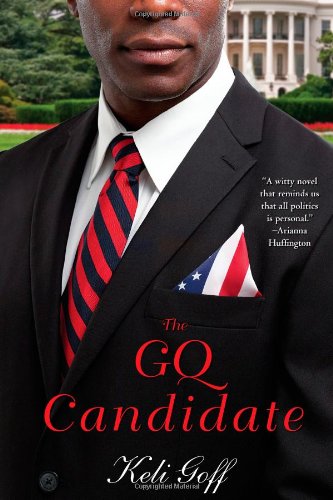
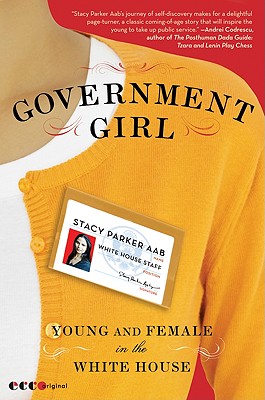
The GQ Candidate + Government Girl
The GQ Candidate by Keli Goff, 2011
Rating: 3/5
IQ "Well, there's not much left to say except that I'm really glad I wore my Manolos today, because if I'm going to insert my foot this far in my mouth I at least want to be wearing nice shoes", Mimi pg. 349
Luke Cooper started out as a state senator and was then recruited to run on the Michigan governor's ticket as lieutenant governor, they won but due to a sex scandal Luke became Michigan's first Black (and Jewish by adoption) governor and one of the youngest governor. His ratings are soaring and due to some remarkably good luck concerning acts of goodwill (such as defending a white nationalist from injury while a group of white nationalists were protesting his policies) that involved social media the rest of the country has a vague inkling of who he is. Some of his friends and mentors advise him to run for president and he throws his hat into the ring for the Democratic presidential nomination. With the help of a loyal, talented group of friends Luke feels confident with his decision to enter the race but it will affect those he loves far more than he could have ever imagined.
It felt like the author was sick of upper class/upper middle class Black people not being portrayed in fiction so she peppered her novel with them. I understand and appreciate her intention but the delivery left a lot to be desired. Luke's family was cheesy in its perfection, even its quarrels felt forced and ridiculous. Everyone had these great personal backgrounds from the oldest characters being Freedom Riders to the youngest being successful and powerful in their respective careers. Not all characters were perfect but it was hard to focus on their flaws when I could barely keep them straight. The narration plodded on and I think the author should have instead focused on Luke and his immediate family instead of Luke's family, friends and his friends of friends. The book was very long in order to accommodate all these characters and the gazillion plot lines (or so it seemed) which was frustrating when the book reached the end and a rather dramatic moment was rushed through. Furthermore the book ends with Luke making a crucial decision and although I can guess what he chooses, I think that since this book was all about politics (in a way) it should have ended with him actually making a political decision.
This book is about a presidential campaign but politics do not enter the equation which keeps it from being a polarizing read due to controversial issues. While Luke is a Democratic, a variety of political affiliations are mentioned but since the issues are not delved into its inconsequential. Instead the book focuses on how political campaigns are run, the people behind the scenes of the candidate, the media's relationship to a campaign and networking and fundraising. It was nice to read a book with such a dream cast, I just wish the author had either taken the presidential campaign storyline out of it (and instead focused on a group of highly educated Black friends post-college living life) or narrowed down the cast of characters. The book was a slow read but Luke and his friends are a highly entertaining bunch, try to ignore the lack of plot and while you will most likely get frustrated at the ending The GQ Candidate is still a good read.
PS Fact: I bought this book at my Borders as it was closing. So this book will always be associated with that, I even still have the receipt that says 'final sale'. Sadness
PPS: I know everyone else read this as Barack Obama-like but I actually related Luke Cooper more so to Cory Booker. Anyway just a thought
Rating: 2.5/5
IQ "If I have one wish for America, it is my hope that when our leaders stumble, as they will, when they hurt others and themselves, which is inevitable, that we will be as compassionate to them as we sense they would be with us if the faults were our own. Our leaders are not gods, and they are not our fathers. But they can be our best hope for peace among nations", pgs. 291-292
Stacy Parker Aab's memoir details the life of a young, biracial White House staffer. She was born (1974) and raised in Detroit and attended George Washington University where she became an intern at the White House, working in George Stephanopolous' office. Eventually she began working for Paul Begala as his special assistant.
My summary is brief because unlike the back of the book I'm not trying to claim that this memoir provides "a searing look at the dynamics between smart young women and the influential older men who often hold the keys to their dreams". It didn't reveal much about gender relations in the Clinton White House but it did provide a look at the daily atmosphere. However the stories shared are not that interesting, while I didn't want scandalous tidbits (indeed it took me awhile to recover from the story of Vernon Jordan sexually harassing her because I admire that man immensely) I did hope this memoir would provide some interesting anecdotes. Instead since Aab was never that high up this book is more of a day-by-day look at the work of young staffers, people who are important to the functioning of our government but who don't interact with that many people of name-recognition. I also thought that the author spent a lot of time bragging about herself, making sure we knew how loved she was in Stephanopoulous' and Begala's office. Furthermore she was determined to gloss over any issues that might have made her more interesting, instead she focused on portraying herself as the perfect staffer (there was about 2 sentences about drug use that held up her security clearance but she doesn't go into further detail). It just rubbed me the wrong way which I grant is a matter of personal taste. I also wish she had went into more detail about her life post-White House, especially meeting her husband, since she goes on and on about wanting a boyfriend but then rarely talks about her relationships (which she doesn't have to do but then why talk about how important having a boyfriend was to her?). Finally, the end part about the Obamas fit oddly into the book and seemed more like her way of sharing her thoughts about their presidency rather than connecting the dots to her time in the White House (except for mentioning that they hired some veteran Clinton staff).
I did find it fascinating to read about the inner-workings of the staff (for a time and then it got old) such as "RON"s (remain overnight), people who were in charge of paving the way for the president at whatever hotel or celebrity home he stayed at on his travel. Those are roles that we definitely don't think about and I was also appreciative at the glimpses of humanity displayed in the Secret Service men she talked about since they seem like daunting, mysterious figures (which is their job to do but still). Overall Government Girl left me disappointed because I had expected it to be more exciting, at the very least, I wish the protagonist had focused more on being genuine and less on presenting a perfect good girl image. It does a good job though of giving people an idea of daily life for the young men and women who are so helpful to the 'big names' and really keep our government running, I am grateful to them.
Posted by
MissA
at
8/19/2013 06:45:00 AM
The GQ Candidate + Government Girl
2013-08-19T06:45:00-05:00
MissA
2.5/5|3/5|adult fiction|African Americans|autobiography|Government Girl|Keli Goff|politics|Simon and Schuster|Stacy Parker Aab|The GQ Candidate|
Comments
Tuesday, June 5, 2012
Mini Reviews: This Side of the Sky, Passing Love & Paris Noire
This Side of the Sky by Elyse Singleton 2002
Bluehen Books/Penguin
IQ "Old people used to say there comes a time when you remember fifty, sixty years ago as if it were last week, but damn if you can remember last week at all. They were right. Every generation thinks their time is the time and talks about the resent as if it's some stable territory they can occupy indefinitely. Yet when we say now, by the time we get to the w sound, the n is in the past." Lilian, pg. 8
Lilian Mayfield and Myraleen Chadham grew up in Nadir, Mississippi and they've been friends since they were babies. Nadir soon grows too stifling for both of them, Lilian wants a great education which she can't receive in the segregated South and Myraleen wants an adventure. Circumstances soon arrive that make it prudent for them to leave town and they travel about from Philadelphia to joining the Army and serving in England and then settling down in post WWII Paris for awhile. They struggle financially, learn about love and suffer through some trying times and tough losses, but they always, always, have each other.
This book took sooo long to get started. I was hoping the girls would run away soon but it felt like it took them forever to decide to leave Mississippi and even then it wasn't really of their own free will. I also felt that parts of the story were implausible and while I was happy that some things occured, other events happened that seemed too coincidental so overall I'm going to say the book could have been more realistic to life. Furthermore I would have liked to get the perspective of August or some other guy to balance out the trio of Lilian, Myraleen and Kellner (a German POW).
I loved the character of Myraleen, she's a spitfire uttering statements like "once I hate a bastard, I hate him forever. I guess I'm just loyal that way" (pg. 68), who wouldn't love a character like that? I also really liked Lilian, her quiet strength spoke volumes louder than Myraleen's tough dialogue. They have a beautiful friendship from the very beginning and the core of the book, the best part-next to the characters of the cities they pass through-is their enduring friendship that goes through some bumps but always heals. I also loved Mudear, Lilian's mother. Tough as nails but super sweet as well and even though she didn't finish her high school education she's still whip-smart. It's funny, one exchange between Mudear and Lilian stands out for me because it holds truths that still apply today. "Mudear read aloud anything she saw about colored people. 'See there', she'd say. 'Negro Holds Up Store. That's why we can't get anywhere. We don't know how to act.;
'But, Mudear,' I said. 'plenty of white people stick up stores, rob banks. And you don't see a headline saying 'White Man Robs Bank'.
'Got a point. [...] See, that's why I sent you to school, so you could think. Not too many folks can think. A lot can only talk. Better if it was the other way around" (pg. 81).
The historical details were intriguing as well, especially learning about German POWs. I didn't know German POWs were lent out to farms in America and I didn't know how bad the Russians treated them. This book provided a more humane look and reminds readers not all Germans were Nazi, something that should strike people as obvious and yet it still bears repeating.
This Side of the Sky is not overpowered by the strong personalities of the places Myraleen and Lilian visit, instead the dominant aspect is the friendship of the girls. They have different dreams but they also want the best for each other and are willing to sacrifice themselves for the other to ge a chance at her dreams, at her own sense of happiness. An attitude like that can only end in good things. The historical details about the treatment of German POWs and the discrimination Black women faced in America and while serving their country in the UK (of course the discrimination was from our own Army, not the English people) during WWII are vividly portrayed. The book is very thourgh in all its description, no detail is too small to be touched upon and while I didn't appreciate that quality in the beginning of the book, my patience paid off.
PS Another favorite quote that lightly touches on Paris aging too "Paris is changing. Pavement replaced cobblestones after students used them to pelt police in the '60s riots. McDonald's arrived in the '70s. Right-wing machinations and Third World immigration have strained the racial climate. Yet the core city is much the same. It's a comfort to grow old in a place that's so much older ,where even the light posts appear to understand. It must be so hard to age in America. A city block can be unrecognizable from one decade to the next, because the cheap plaster and plastic keep getting replaced by new cheap plastic and plaster." pg. 323. Food for thought, I'm going to retire somewhere like the Paris she describes, it may even be Paris!
Grand Central Publishing/Hachette Book Group
IQ "But I will tell you this-adventure is only a word. Don't be so fixed on findng, live and in that the adventure will come." Ruby, pg. 296
Nicole-Marie Roxane Handy has a serious case of Francophilia but until the death of her dearest friend she hadn't had the courage to visit Paris on her own. The death of her beloved friend kicks her butt into gear and she heads to Paris, leaving behind her Alzheimers-ridden father, her mother who is now more of a caretaker than a wife, and the marriage proposal from a man who is married. While exploring Paris Nicole finds an old photo of her father, he never spoke about his time studying in Paris and he doesn't remember it anymore but the photo is inscribed to a beautiful young woman who is not Nicole's mother. Nicole grows determined to discover the identity of this young woman and her connection to Nicole's father.
We learn that the young woman is Ruby and she alternates chapters with Nicole. Ruby lived in Paris in the 1950s and my-oh-my it was a glorious time. Jazz clubs were beginning to open and there was a solid community of Black Americans. Towards the end the book does drag a bit. But it's ok because I wasn't ready to leave Paris just yet anyway. It does start off slowly but again I was content to meander through Paris with Nicole, but I did get bored with all the Mississippi parts (that's where Ruby was from. I feel like its always the same family issues with books set during the 1920s-40s about teenaged girls in small towns, they wanna go off and explore but their super-protective mothers stifle them until they runaway. Eh-yawn). Also while I loved Arnett, I didn't understand his relationship with Ruby. The author started off seeming like one way and then all of a sudden Ruby & Arnett were pledging eternal devotion to each other, it came out of the blue since I was convinced he was going to drop her any minute.
I liked Ruby, I may be one of the few people who actually liked her. I didn't mind that she was selfish and at times downright unlikable, she had spirit and as Nicole observes "a flash of that young, willful woman who dared to change her destiny. Reality hadn't met Ruby's expectations; she took what she could and stayed with it" (pg. 286). I do not love Ruby due to her current lifestyle but I respect her attitude towards life and I admire her resilience, she was devoted to Paris and everything French. She learned the language and the mannerisms, she learned about the entire culture and that must have been very hard to do living on a shoestring budget and constantly having to work. Plus Ruby knew her flaws. She didn't try to change them but she didn't try to conceal them either, in her old age she is comfortable with who she is and she makes very few apologies. Ruby is quite a character and I would love to meet her. Her advice she gives that I included as my Incredible Quote is excellent and something that makes complete sense but I feel like many people don't know that little bit of wisdom. It's one of my favorite book quotes, hands down. Living life is an adventure, no need to go search one out (that's ok too but people shouldn't feel like failures if they haven't had some grand adventure as long as they still took risks). Nicole didn't have as much of a lasting impression on me as Ruby did but I didn't dislike Nicole. I found her a bit boring at first simply because I never understand why people are afraid to travel but I grew fond of her too. I thought it was a good choice for the author to make Nicole 56 and show that it's never too late to have romantic travel flings (or serious relationships ;) The details about Black people in Paris and life in Paris in general during the 1950s are exquisite.
Passing Love features lovely romances with surprising twists and adds a fresh spin to the classic tale of discovering one's past. It becomes immediately clear that this is not the average coming-of-age-by-discovering-family-secrets story simply based on Nicole's age and the way she goes about her search. I loved the title, its deceptively simple. As the story develops so too does the title, taking on many different meanings. I firmly intend on buying this book as my own reminder to visit Paris, when I do I intend on visiting all the places mentioned, exploring Black Paris. A new favorite.
IQ "She lapsed into the patois that was Martinique because it allowed her to relax into herself. She could speak proper French if she took a mind to the task. It wasn't even difficult. After all, it was De Gaulle's French she spoke every time she left her apartment and strolled the winding streets of Montmarte. Even General LeClerc could speak no better French than she when she taught her sixth grade class. Not that those ruffians from Morocco, Senegal and Algiers would know the difference anyway. She sighed. Who was she to think such thoughts? Wasn't she born and bred in Martinique, herself?" Marie Therese pg. 2
It's the liberation of Paris! The year is 1944 and Marie-Therese Brillard and her children Collette and Christophe are swept up in its exciting aftermath. They each find romance but with very different people. Colette with a white Frenchman, Christophe with the married wife of a Free French fighter and Marie Therese with Monsieur Lieutenant, a Black American soldier. These romances will not all end in happily ever-after....
I chose that little paragraph as the Incredible Quote because its one of my favorite parts (obviously) because it provides some insight into the time period and Marie Therese's frame of mind without being direct. But it also illustrates a characteristic of this novel that I detested and that is "oversharing". The reader already knows based on the first sentence in that paragraph that Marie Therese has some connection to Martinique. There could have been a better way to make it clear that she was born and raised there then by having the speaker REMIND herself where she grew up. Something as simple as "Who was she to think such thoughts, she an immigrant herself?" And then obviously the reader would think 'huh since she speaks in the patois of MARTINIQUE than that's where she must be from'. Thus the awkward sentence that ends the paragraph in the IQ has been avoided. Sadly that happens a lot throughout this book, characters practically hurt themselves trying to show off their knowledge about WWII and the events occurring in their country. The problem is, they repeat things to other characters that they should have already known. I get extremely annoyed when authors use characters as history teachers, i.e. they spout off facts or ask dumb questions that HISTORICALLY they would have already known the answer to. Here's an example, "Collette. Maman. The sentries. The ones that always march by the boulangerie at least twice a night to make sure we're all inside the bakery and not sneaking out to help the Resistance. They...." (pg. 6). Why not just send at "The sentries"? Because Marie-Therese and Collette should already know what Christophe is talking about, the author should be able to find another way to explain what German sentries do in Paris than just carelessly insert it in Christophe's dialogue. 'Oversharing' (as I call it) like this happens throughout the duration of the book. Another issue I had with this book is Collette. I'm not sure why the author even included her. If you read the back cover. you would think the story is told in alternating points of view or that at least Collette gets some story time. Nope. She's simply a vehicle for the mother to wax on and on about the dangers of dating outside the race. BUT WE LEARN NOTHING ABOUT COLLETTE. This infuriated me because she was mentioned all the time but I finished this book unable to even tell you the name of her Frenchman. It would have been nice catch a glimpse of their romance. Especially since it was never clear to me if they would have faced prejudice, my guess is no but that's based on other books I've read about the French treatment of Black people (see above reviews) I wouldn't be able to back that guess up based on only reading this book.
Even though the book did a terrible job of presenting historical information, I loved the scenes at Glovia Johnson's house. She's a beautiful, wealthy, glamours, seductive Black American woman living in France and she hosts salons at her homes, both Blacks and whites visit her legendary salons. They seemed like a lot of fun and Glovia Johnson was my favorite character because she was at least interesting. The rest of the characters were spineless, except for Marie-Therese who had some backbone but was drab. Glovia Johnson literally plays the field, as in she bed with German soldiers and influential French people depending on whose in power in order to keep up her luxe lifestyle. She has little shame but that's ok because she's very sweet and clever. I do not want to just complain about the IQ, I also chose it because it provides a glimpse at how people viewed Black immigrants which was a perspective I found fascinating since it is rarely discussed. Immigrants from the Caribbean looked down on Black Africans as did white French, but the white Frenchmen(and women) loved Black Americans. "Marie Therese struggled to hide her nervousness. Her French had to be correct even though this American spoke with the most atrocious accent. That is, when the chanteuse bothered to speak French at all. Still, she was one of them, and all Paris loved that accent coming out of the mouths of America's black emigres. If only it were so for the Africans and West Indians" (pg. 11), sentences such as those made me appreciate the book a little bit more.
Paris Noire does a service to the world of historical fiction (and books as a whole) because it talks about a time period that most people are very familiar with but offers a perspective that has not been explored. The lives of Black people in France before, during and after WWI all the way to the 1950s has always intrigued me since they faced so little discrimination. But this book points out that French love for Black people only extended to Americans. The book was very disappointing but I had high hopes for this book and that was part of the problem. Perhaps if my hopes had not been so high I would have liked it better as fluffy-tragic romance novel. Instead I expected some intense, lightly romantic, in-depth historical fiction. The fact that the character of Collette was completely ignored bothered me immensely as did the tendency of the author to have her characters speak awkward dialogue simply to provide historical information. I wish it had been about Glovia Johnson instead. It was just ok.
Disclosure: Bought
Posted by
MissA
at
6/05/2012 10:34:00 PM
Mini Reviews: This Side of the Sky, Passing Love & Paris Noire
2012-06-05T22:34:00-05:00
MissA
adult fiction|African Americans|Black people|book reviews|Elyse Singleton|France|Francine Thomas Howard|historical fiction|Jacqueline Luckett|mini-reviews|
Comments
Monday, February 20, 2012
Male Monday: Cracking the Ice
Cracking the Ice by Dave Hendrickson 2012Westside Books
Rating: 3.5/5
IQ "No one had said a word in his defense. No one had lifted a finger. No one. Jessie thought of a phrase Pop often used: No snowflake in an avalanche feels responsible. He hated all of them, every snowflake on the hockey team. Yet he couldn't very well give up, could he? Doing that would rob him of his dreams and give them what they wanted." pg.153
Jessie wants to play hockey, eventually making it to the NHL. It's not a problem per se, but it will be a battle because Jessie is growing up in the 1960s and there was only one Black professional hockey player at this time, Willie O'Ree for him to look up to. Jessie is offered the opportunity to attend a prestigious New Hampshire boarding school on a full scholarship and the chance to play on the school's hockey team. Best case scenario Jessie hopes he will get spotted by scouts and be on his way to the NHL after a grand college career, worst case scenario, Jessie plays for one of the best high school hockey teams in the country and attends a top college. He sees this situation as a win-win and although his parents have some serious misgivings, they ultimately agree. Unfortunately, Jessie expected some racism but he is shocked by the racism he faces from 99% of his teammates, he expected his teammates to come around when he showed his skills. Jessie does not want to throw in the towel, but he's not sure he wants to spend four years of his life being miserable, and not given playing time by his hockey coach.
I don't have many problems with this book, I didn't love but it was not a waste of my time. In fact, I think it's one of the most interesting books I've read this year. And it touches a subject close to my heart. But first a few quibbles. Jessie has a girlfriend, they are in love. Jessie is fifteen. I thought this would be one of those 'first-love but move on' type stories but it's not which I felt was unrealistic. But then again, it was the 1960s, maybe people fell in love and stayed together at an earlier age. *shrugs* I also did not like the ending because I felt like it made the whole story pointless. I can't explain it without going into spoilers but while it wasn't completely depressing, I did feel like the ending made the whole premise unnecessary. Furthermore, I really really liked the focus on hockey but I was curious as to how Jessie was doing academically. Were his classmates just as racist? His teachers? There are a few dorm incidents but it was never clear to me if Jessie's teachers and classmates were all narrow-minded.
My father loves hockey. My father is Panamanian American so this is not exactly "normal". I am not going to pretend I watch hockey avidly because I don't have time to watch sports everyday but some of my earliest memories of father-daughter time is me lying on my father's stomach as we watch a hockey game, usually the Blackhawks versus whoever. I watched all the Stanley Cup playoff games last year and I would venture a guess that I know a little more about the Blackhawks than most bandwagon fans after our 2010 win. But whenever I hear someone talk about hockey, I think about my father. Especially because we often discuss the few Black players in the NHL and usually, if the BHawks aren't playing, we support whichever team has a Black player (if they both have Black players on their teams, great. Then it's just based on talent). My father has told me that he gets some ribbing from his friends for liking hockey and the few times I mention I like hockey, I get some weird looks (and Black people usually tell me that it's a "white sport" to watch and play). I found it interesting that the author chose to give the book a 1960s setting when this book could have been even more interesting set in the present-day. Cracking the Ice did not, I felt, do a good job of explaining why many Black Americans do not play hockey. It's mostly an economics issue and I would venture a guess that this held true in the 1960s as well as today plus I am sure there are still racial incidents today. I was also curious as to how Jessie became a fan of hockey, that was never explained. If it was because he grew up in the Northeast where hockey is hugely popular, than the book should have explained why other Black teenagers were not interested in hockey. The descriptions of hockey however are delightful. The author clearly has deep-rooted affection for this sport and it shows in the detailed dialogue and descriptions of hockey greats, hockey plays and the euphoric highs one gets playing this often-brutal, skilled, sport.
Cracking the Ice is noteworthy because it is a one-of-a-kind book, it takes the civil rights movement to the hockey arena and it handles the subject nicely. The racism is disgusting and difficult to read about, it's always scary to play with racist teammates but especially in hockey because it is a team sport and violence is involved and so as Jessie points out, you need to know your teammates have your back. If they are too bigoted to protect their own teammate solely because of his skin color, that's a serious problem. I think the author does a great job conveying the determination not just of Jessie but of Black people in general in the 1960s to follow their passions even though many white Americans tried to dissuade them. This story skates by and at times I grew genuinely nervous for Jessie. I also appreciated that the story showed how hockey evolved by explaining the safety measures, helmets were a recent thing which is scary to think about. Jessie and his roommate Stick, the only other Black student at the school, present two examples of how Black youth dealt with the racism they experienced on a daily basis, it was even more fascinating because it was from the perspective of Black athletes. Stick is willing to just coast by academically or even cheat because he knows that he's a great football and basketball player and the benefactors won't let him fail. But that doesn't mean he is accepted by all the students and even Stick realizes that he needs to be more than "the dumb Black athlete" stereotype. I am glad to see an author attempting to break the sheen of ice that covered hockey and its often-racist past for young readers.
Disclosure: Received from publisher, thank you!!
PS Here's a list of current Black NHL players. I'm a big fan of Dustin Byfuglien (the only African American currently playing to have won the Stanley Cup. With the BLACKHAWKS =D), Jamal Mayers and Jarome Iginla (Black Canadian, first Black captain in NHL)
Posted by
MissA
at
2/20/2012 08:36:00 AM
Male Monday: Cracking the Ice
2012-02-20T08:36:00-06:00
MissA
3.5/5|African Americans|book review|Dave Hendrickson|male monday|sports|Westside Books|Young Adult|
Comments
Tuesday, September 27, 2011
My Own Worst Frenemy
My Own Worst Frenemy by Kimberly Reid (Chanti on the Case #1) ARCDafina KTeen/Kensington Publishing Corp
Release Date: Today!
Rating: 4/5
IQ "But as soon as I see him sitting on the library steps waiting for me, I turn to lava, hot for him but without form. I have no resolve; everything in me turns soft." Chanti pg. 265
I chose the above sentence for the Incredible Quote because I thought it was a good example of the author taking tired old lines to describe feelings and creating new similes. The lava comparison made me pause for a second whereas if it been something like "weak at the knees" or "turned into jello" I wouldn't have given it a second glance.
Fifteen-year old Chanti (short for Chantal) has already managed to gain the disdain of her new principal, Headmistress Smythe and the 'queen bee' Lissa at her new school, Langdon Prep. Langdon is filled with mostly rich students, except for Chanti and the super-cute Marco Ruiz. Chanti and Marco attend Langdon on scholarship and everyone knows it and looks down on them because of that fact. They are also easy targets and as things begin disappearing around the school, it becomes clear that someone is setting up Chanti and Marco. The final straw is pulled when Chanti and Marco are blamed for home burglaries. Chanti's mother is an undercover cop so she can help her daughter clear her name a little but she also can't risk blowing her cover. Marco is willing to help Chanti figure out who the burglar is and possibly even to catch him/her.
Chanti is funny but it's not all silly humor, early on in the book she is talking about how to pronounce her name, "And please pronounce my name right-Shawnty, not Shanty like the towns where poor people live in a Steinbeck book" (pg. 2). At first I thought this line was an obvious trick to show how uniquely smart Chanti was for her neighborhood (where most of the kids didn't give two hoots about school) but she doesn't utter many of those lines and when she does, it doesn't seem obnoxious. In fact, it seems like a plausible line for someone with enough confidence to say. Chanti also reminded me of my younger sister in a good way. My sister utters ridiculous statements all the time and Chanti inadvertently does too such as when she's trying to silently tell other girls to back off Marco, "I'm at the back of the line working up the nerve to give her the evil eye that says 'he's mine, and you'd be wise to back up.' Some women can do that. Lana could. MJ could. But they're both scary and scary won't work for me. I could probably do crazy. Just as I'm about to get my crazy look going, Lissa looks down at the notes she's about to bore us with. Smythe looks up at me then, and I'm pretty sure she thinks I'm crazy.
'Is there anything wrong Chantal?'
'No, um..it's just that I don't have a pen.'" (pg. 24). Chanti describing herself trying to get her crazy look going made me laugh out loud for some reason. Probably because it's something I or one of my friends or my sister would say. I also really appreciated the fact that Chanti didn't over-use random slang nor did she talk completely proper. Like many Black students I know, she knew when to speak properly and when she could relax a bit and that transition is something not all authors grasp but it's an important distinction I think.
The mystery was excellent. I admit I was skeptical since Chanti was fifteen (and I do wish she was older because that might make it a little more realistic) and so she had to work her way around the driving issue and that didn't always work out plausibly. And I didn't like the fact that the book is mostly about Chanti, her mother and Marco. More character development is needed, I especially found it hard to believe that EVERYONE at Langdon refused to befriend Chanti. The mystery element kept me guessing and there were enough twists thrown in to keep me guessing but not enough to completely confuse me. I do wish Chanti's mother hadn't been a police detective because while I don't read many mysteries I feel as though that's a classic cliche (a la Nancy Drew), detective-whose-parents-are-cops-or-lawyers. That being said I really liked the fact that Chanti used authentic cop tips, she didn't go off and do crazy things. Since her mother was a cop, she makes a point of distinguishing between how cops act on TV and how they can act in real life. Sometimes I need a reminder that cops on TV are not 99% authentic! There's a good number of suspects and it's easy to follow along with Chanti as she eliminates them. The romance is light, in fact, there isn't really any romance which I liked because the way the book ended concerning Chanti's relationship with Marco made a lot of sense (bonus: bicultural romance!) for high school underclassmen.
My Own Worst Frenemy is a fine example of books we need more of in books for youth. An intelligent main character who doesn't take herself too seriously who happens to be Black and who uses common sense to solve a mystery that isn't completely random and unrealistic (i.e. a teenager solving a murder). Chanti is a fun protagonist and she could easily have been one of my best friends. I was pleasantly surprised at issues of class that were more in depth than I thought they would be concerning not just the students at Langdon but also the faculty and janitorial staff. There are some definite holes; the conclusion was rushed, more character development is needed, at times the author seemed to be stretching to make characters appear as suspects/remove them from the suspect list and personally I wish Chanti was older but overall it was a strong debut and I certainly intend on reading further about Chanti's escapades (particularly to find out the backstory of Bethanie. I'm dying to know more about her!).
Disclosure: Received from author. Thank you so very much!
Posted by
MissA
at
9/27/2011 11:39:00 PM
My Own Worst Frenemy
2011-09-27T23:39:00-05:00
MissA
4/5|African Americans|book review|contemporary|Kimberly Reid|mystery|Young Adult|
Comments
Labels:
4/5,
African Americans,
book review,
contemporary,
Kimberly Reid,
mystery,
Young Adult
Monday, August 29, 2011
Male Monday: We Could Be Brothers
We Could Be Brothers by Derrick Barnes 2010
Scholastic Press
Rating: 1.5/5
IQ "I didn't care anymore if he thought I was tough enough or hard enough or cool enough. All I knew was that when it mattered most, I was friend enough. " pg. 145
Robeson Battlefield and Pacino Clapton come from two very different homes. Robeson (nicknamed Crease by Pacino because of his iron-pressed pants) lives in, as Pacino calls it "a nice chunk of the suburbs slammed right down in the middle of the hood" (pg. 25). Pacino lives in "the hood" and helps his mother pays the bills and watches over his younger siblings after school. Pacino and Robeson wouldn't have met if it weren't for Tariq, a kid who get them both in PSS (Post-School Suspension).
Short summary I know but the book the jacket describes must belong to some other book. And I can't write a more thorough summary because it would give too much away. First, based on the cover, I thought the book involve a variety of narrations from Pacino, Robeson and Tariq. It does not. First, Pacino acts all "hard" and then decides to be friends with Robeson. It happens completely out of the blue in my opinion. Robeson has zero personality, he preaches and preaches and preaches but he's believable because I definitely knew annoying know0it-all kids like him when I was in junior high. I'm not so sure the author intended to make him sound so insufferable though but like Pacino, I was irritated at how he always quoted his father's life lessons at random moments. Robeson's only flaw was that he wasn't a straight-A student which isn't that serious since he's not in high school yet anyway. Pacino's flaw might be that he uses the m-word or likes to fight but neither of those is detrimental or explored in a way to make the reader see why it's so bad.The most annoying aspect of this book was that fact that Robeson explained EVERYTHING in too much detail, the author explained things that a reader should be smart enough to gather based on the text. For example, "You're no guest. You come over so much now it's like you're one of my big-headed boys,' Dad responded to Pacino, calling him one of his sons in a roundabout way" (pg. 162). The author should have faith that the reader will be able to infer that the father is calling Pacino one of his sons based on what the father says, the extra text is unnecessary and it drives me crazy. The extra explanations continue throughout the duration of the book.
I HATED how Robeson talked about Rosilyn, the one girl in PSS with Pacino and Robeson. For a supposedly educated "brotha" he acted extremely ignorant. Again, I think if the author did this on purpose a worthwhile lesson could have been subtly taught but the issue of how Robeson treats Rosilyn is never addressed. Only how Pacino treats her which isn't entirely respectful but sometimes he acted a lot nicer than Robeson. At one point Robeson thinks to himself "[s]he looked like a lady today" (pg. 101) He's in EIGHTH GRADE. I may be naive but I'm fairly certain the guys in my eighth grade class did not care one bit if a girl looked like a lady. Then he goes on to insult her further by thinking that "[s]he had on a pretty silk blouse and some kind of gold necklace that she must have borrowed (pgs. 101-102, emphasis mine). You know what people say about assumptions....why would he even think that she borrowed the necklace? It was just rude and incredibly ignorant and made me mad to no end. True I was already annoyed by the talking down to readers but the Rosilyn incidents didn't help. Furthermore the continuous use of "brotha" was ridiculous. Back in the day I think teenagers used that expression a lot more but I have NEVER heard a teenage Black guy my age say "brotha." Maybe "wassup bro" but usually it's "dude" or "man" or even "n-" or something of that ilk. My father and his friends would be more inclined to say "brotha" and they usually say it as a joke. Therefore I found it hard to believe that Crease and Pacino would walk around saying "brotha" instead of the n-word.
We Could Be Brothers was a book I was waiting on eagerly. I loved the author's first book, a YA novel that was authentic and managed to talk about the importance of teaching Black boys particular lessons in a humorous, subtle manner. Unfortunately this book does not deliver. I felt as though the author talked down to his readers, constantly explaining what was going on in a particular scene with unnecessary dialogue and explanations when the reader could easily understand the situation. The book is preachy and dull. I wish the main characters had included Tariq and that the author had further delved into the heads of all three boys. Instead they remain flat characters that the author uses to make certain points. Initially I was going to give this book a 2 but then I couldn't think of a single reason as to why I would recommend someone read it. The Making of Dr. Truelove was absolutely hysterical. I'm inclined to think that maybe the author should stick to funny YA novels or write nonfiction books about raising Black boys because THIS is just not working.
Disclosure: Received as a gift from Zetta Elliott. Thank you Zetta :)
Posted by
MissA
at
8/29/2011 06:53:00 AM
Male Monday: We Could Be Brothers
2011-08-29T06:53:00-05:00
MissA
1.5/5|African Americans|book review|Derrick Barnes|male monday|Middle Grade|Scholastic|We Could Be Brothers|
Comments
Friday, August 12, 2011
If It Takes a Village, Build One
If It Takes a Village, Build One: How I Found Meaning Through a Life of Service and 100+ Ways You Can Too by Malaak Compton-Rock 2010
Broadway Books/Random House
Incredible Quote "I believe that if you care about people, you should care about all people. And if you really believe that we are all part of this human race, all global citizens, then it makes sense to care about all people and to help people anywhere in the world. Certainly, the individuals who receive your time, money, and support appreciate it. But I also think each of us benefits when we serve internationally. There are the cultural benefits, such as learning more about another way of life and understanding other parts of the world in a more in-depth way. Even more important, I think we come to feel that the world is a warmer, friendlier place and that we are part of a human family that sustains us all." pgs. 151-152
Malaak Compton-Rock is a dedicated humanitarian. She has written a book to help others help more people. Her mother took her to rallies and exemplified a life of service to her, and both her parents discussed politics, race and education at the dinner table. In her first book, Ms. Compton-Rock shares the lessons she learned from her mother, and various jobs on living a life dedicated to service. She also provides tips on how to raise children committed to volunteerism and includes resources such as websites and names of various organizations worth checking out to consider volunteering with and/or giving a donation. Starting with how to find the right volunteer opportunity for yourself and your family and continuing with how to throw a fundraiser, start a nonprofit and research reputable charities. To quote the book flap this is "the must-have book (and perfect gift!) for aspiring do-gooders". (And I 100% agree with that quote).
One of my favorite quotes is "service is the rent we pay for living" first said by Marian Wright Edleman. This quote is the daily mantra of Malaak Compton-Rock and through the stories and tips she shares, it becomes quite clear that she is paying more than her share. I was skeptical at first as to how usable her tips would be considering that she also happens to be the wife of Chris Rock and thus has lots of money and influence to give to various worthy causes. Ms. Compton-Rock however, continuously stresses that she realizes how fortunate she is but for the most part are tips are applicable to would-be (and current) volunteers of all incomes. Certain tips concerning corporate sponsors I don't think will apply to everyone but there are other tips about using local businesses and other resourceful ways to save money on planning an event. What I disliked the most about this book was the fact that after all the author's talk about buying gifts, cards, etc from non-profit organizations (or businesses like RED) she doesn't take her own advice and donate the profits from her book to a particular cause. Or at least she doesn't publicize it which is both good and bad. Good because if she does donate proceeds from her book sales, she's being humble by not showcasing it but I'm more eager to buy books where I know proceeds are being given to a certain organization I support and/or find interesting.
I chose the quote I did as Incredible because I've often struggled when people remind me (especially my mom) "charity begins at home". I realize that and we all know America has its fair share of problems but I'm also drawn to working with international NGOs (well not exactly work per se although that's what I want to do after college but for now I just mean choosing where to donate my money and whether or not to spread the word) and I never have the answer for the question of choosing domestic vs. international causes to champion. I want to do both and now thanks to Ms. Compton-Rock I have an answer I can adapt in my own words. She describes it perfectly (if only I was so eloquent)! Another key point she makes early on that I think is well worth bearing in mind concerning deciding how much to donate she states that people "often start feeling guilty about how small their gifts seem, not realizing that every cent counts to a nonprofit organization. They turn what should be a joyous, positive, self-affirming experience into something that causes them guilt or sadness. And no one should be feeling either of these emotions when they have decided to serve by giving" (pg. 31). Sometimes I feel sad when I'm giving but only because I wish I could do more, I wholeheartedly agree that when you donate money you should happy because you took a BIG first step. But I also think you should feel a bit restless and a CRAVING to do more.
If It Takes a Village, Build One is an essential read for everyone because everyone can/should donate their time, money and talents to serving others. The author doesn't try and guilt the reader with harrowing statistics (while there are a few sprinkled throughout they never overwhelmed me with sadness and I'm a mess when it comes to that sort of thing), instead she provides the statistics and then shares the organizations that are DOING something to lower those scary stats. Her stories are uplifting and I *plan* on keeping this book around for the rest of my life for organizations to volunteer for during and after college as well as for tips on how to raise kids (if I ever have any) with generous spirits. I closed this book feeling like (as cliché and cheesy as this is about to sound) I could DO ANYTHING and MAKE A DIFFERENCE in some kind of positive way. I immediately emailed two local organizations I volunteer for with some new ideas and the wheels are turning in my head concerning the blog and C.O.L.O.R. Personally I would recommend this to everyone!
Disclosure: Bought (while in NYC at a closing Borders. I LOVE NYC!)
Ps Check out the author's website for even more resources
Posted by
MissA
at
8/12/2011 06:22:00 AM
If It Takes a Village, Build One
2011-08-12T06:22:00-05:00
MissA
African Americans|autobiography|book review|Malaak Compton-Rock|non fiction|Random House|self-help|volunteering|
Comments
Friday, July 29, 2011
Out of My Mind
Out of My Mind by Sharon Draper 2010Atheneum Books for Young Readers/Simon & Schuster
Rating: 5/5
IQ "Fifth grade is probably pretty rocky for lots of kids. Homework/ Never being quite sure if you're cool enough. [...] I guess I have all that, plus about a million different layers of other stuff to deal with. Making people understand what I want. Worrying about what I look like. Fitting in. Will a boy ever like me? Maybe I'm not so different from everyone else after all. It's like somebody gave me a puzzle, but I don't have the box with the picture on it. So I don't know what the final thing is supposed to look like. I'm not even sure if I have all the pieces. That's probably not a good comparison, since I couldn't put a puzzle together if I wanted to." Melody pgs. 293-294
Melody is 11 years old, in 5th grade, and has both a photographic memory and cerebral palsy. Melody has a very advanced/severe case of cerebral palsy in which she can't speak and can barely move. She sits in a wheelchair and must be fed, bathed, taken to the bathroom and assisted with putting on her clothes. Melody is most likely the smartest kid in her school but no one knows it, many teachers don't think she's capable of learning and neither do doctors. She spends her days in classes with other children who have special needs learning preschool-level lessons, and it's driving her crazy. All Melody wants is to be able to speak, to tell her parents that she loves them and ask to be put in classes with children her age, on her intellectual level (or close to it because Melody is freakin brilliant). One day Melody learns that there may be something that will give her a voice, the problem is not everyone is ready to hear her.
I loved every page of this book and I cried through most of it because I could not fathom how cruel Melody's classmates were. I can't imagine being so mean to someone with special needs, especially not in fifth grade. It's like that expression about picking on someone your own size. I think it's fine to tease kids with special needs as long as they know you ARE KIDDING because kids do tease each other, but that's something friends do. Friends don't make fun of other friends' disabilities. What is that? Oh man I was so so angry while reading this book (it was a mix between tears of anger and tears of sadness). I didn't feel pity for Melody but I was enraged on her behalf. Melody has a wonderful voice, sometimes she's plagued by self-doubt (who isn't?), other times she is confident and she tells it like it is, not really worried about sparing people's feelings. Plus she has a wry sense of humor and she says things that made me crack a smile but I bet my eyes remained sad (if that makes. Basically the jokes were funny but what prompted the jokes wasn't funny). She has spunk, in fact I think she is the epitome of spunky. "When people look at me, I guess they see a girl with short, dark, curly hair strapped into a pink wheelchair. By the way, there is nothing cute about a pink wheelchair. Pink doesn't change a thing" (pg.3).
One of the most powerful moments in the book is when it hits Melody that children around the world have CP. "I stop for a minute and stare at the board. It has never occurred to me that there are kids like me in Germany and China and France who need a machine to help them talk" (pg. 137), how many of us consider that children/people around the world suffer from the same diseases/disabilities we do in the U.S. and many of them probably receive even less help? There were some inconsistencies in the book, for example the character of Rose was simply bizarre. One minute she was cool, the next I wanted to shout at her. I still don't fully understand her character, the other characters were one-dimensional except for Melody's family and Mrs. V. I never really understood how tough it is to care for someone with a disability but after reading this book I have a better idea and appreciation for the work of caregivers. Mrs. V was unimaginably sweet and my heart was warmed knowing that there really are people like her, only a few, but they exist. Melody's parents were wonderfully genuine, they adored Melody but Melody also witnessed the strain caring for her caused them. Especially once her mother had another child, the author acutely describes the loneliness and even resentment Melody feels as well as the guilt for not being able to do basic tasks for herself. Her parents argue fiercely but not all the time and they always make-up, they frustrate Melody and each other but that's realistic.
Out of My Mind left me a bit like Melody, speechless. The only difference being that I had tears running down my cheeks and Melody rarely cries. I admit I overlooked the one-dimensional characters and rather confusing ending along with the choppy pace because the emotional factor was so high. This book left me feeling drained and absolutely terrified (and in awe) of how cruel children can act. I honestly can't imagine anyone in my sixth grade class making fun of a kid with cerebral palsy (but I could see a kid in my fifth grade class doing that which is upsetting). Melody is one of the best main characters I've come across in a while (especially in middle grade) and even though she's fictional, I want her to succeed in life. Shoot, I could read a whole series of books about her. I was hesitant to read this book right away because I knew it would make me cry. I was right but it's the best kind of cry, and this is a great book. A book that leaves you with a deeper sense of comprehension and compassion.
Disclosure: Received this book about a year ago from Lyn. Thank you and I'm sorry I just now reviewed it!
Posted by
MissA
at
7/29/2011 12:03:00 AM
Out of My Mind
2011-07-29T00:03:00-05:00
MissA
5/5|African Americans|book review|contemporary|disability|Middle Grade|Sharon Draper|Simon and Schuster|
Comments
Friday, July 22, 2011
Mini Reviews: Drown, Douglass' Women, Rooftops of Tehran
Drown by Junot Diaz 1996Riverhead Books/Penguin
IQ "We sat and drank and finally talked, two strangers reliving an event-a whirlwind, a comet, a war-we'd both seen but from different faraway angles." pgs. 206-207 [referring to Yunior meeting his father's mistress]
The author's debut, a collection of ten short stories concerning Yunior, his brother Rafa and his family. The story takes place in the campo and barrios of the Dominican Republic and the city communities of New Jersey.
I love The Brief Wondrous Life of Oscar Wao (the author's second book), I don't love Drown, I'm just in like, tentative like. I did not like the confusing narration, at first I couldn't figure out that the story was being told by the same guy, Yunior because he's not always referred to by name. Since the story takes place in both the D.R. and New Jersey and there's no sense of time, it's also difficult to figure out how old Yunior is. There is no clear continuity so I was left wondering about what happened to the rest of Yunior's messed up (aren't they all?) family. In fact, I can't even say for sure if it was all about Yunior, maybe it wasn't but I'm going to continue thinking it was until someone helpfully explains otherwise. Yunior's father is a jerk, he abandons his family in the D.R. to head to America and then remarries. But hold your judgement because by the end of the book, I understood this lost father a little bit better. Still don't like him, but I understand him, sorta.
The stories in Drown are gritty, genuine and riveting. The entire cast of characters is hardened beyond their years both cynical and aching for the American Dream as well as to be loved. The irony is that they all push love away and some of them throw away the opportunities America offers them. But it's not entirely their fault, as usual there is a distinctive gray area concerning the perils of following the American Dream and the gifts that America can give. These stories are confusing and sometimes the characters are perplexing but they are memorable. I liked the author's confined prose, it is both frustrating and delightful, he manages to create such realistic scenes and characters in so few words that it's stunning. He has a unique way of describing people and things such as "Outside, Mami said, her voice a murder about to happen" (pg. 79). I practically started quaking when I read that line. I could hear the cadence of voices, not just the Spanish accents but also the accents of those from Santo Domingo and those who live in the city, the pain, toughness and vulnerability rings clearly. And I love that he doesn't translate his Spanish or even highlight the words so you know it's Spanish, it's just there y no es un problema.
Disclosure: From the library
Douglass' Women by Jewell Parker Rhodes 2002Washington Square Press/Simon & Schuster
IQ "Not seeing my color was the same as seeing it." Ottilie pg. 194
Frederick Douglass was a brilliant man, an extraordinary orator and abolitionist, he was most ordinary however when it came to love and passion. He married Anna Murray Douglass, a free Black woman who helped him escape from slavery. He had an affair with Ottilie Assing, a German woman (who was half-Jewish), she helped keep him organized as he spoke across America and later Europe. Anna and Freddy had five children. Ottilie and Douglass had none. This is the story of two very different woman and their love for the same man.
The author states that her goal is not to diminish Frederick Douglass with this book, only to show that he was human. She succeeds in doing just that, but I admit I lost some respect for him as a person based on how he treated both women (but especially Anna) and his children. Anna and Ottilie are so different. Anna keeps the family whole, she cleans the house, feeds the children and makes sure Frederick (or Freddy as she calls him although he doesn't always like it) feels comfortable. She is very religious and would have been content if Frederick had simply become a Preacher. Anna has no real desire to learn to read and write, she only agrees to lessons so that Freddy will stop badgering her about her inability to read but Anna ends up never becoming literate. That is part of the reason Frederick turns to Ottilie who is more of his equal intellectually. With Ottilie, Douglass (Ottilie called him Herr Douglass for awhile and then affectionately just called him Douglass) could discuss politics, literature, art, philosophy, anything that came to mind. I had a hard time understanding why Anna wouldn't want to learn to read and write but I closed this book with a better understanding of why she was happy with who she was and I admired her for her spirit. Ottilie was young, slender, blonde. Anna was older than Frederick, curvy, black. Frederick insulted Anna by having an affair with another woman but he added insult to injury by giving Ottilie a room in his home, but Anna had her own way of asserting her quiet dominance over her home. Douglass was never physical (well one time but that was the only time noted in the book) but he was self-centered and a snob (it is fascinating how once Black people reached the upper class they forgot their roots, even our great abolitionists. Mr. Douglass fought avidly to free all slaves but he did not want his children marrying former slaves). Anna's view of love made me sad "I'd let him go 'cause it was best, Best for him. Worse for me. Ain't that love?" (pg. 38), to me that is love sometimes but not ALL the time. Plus it should be mutual, Frederick never did what was worst for him but better for Anna.
In Douglass' Women the author does a skillful job of showing not just the physical differences between Anna and Ottilie but their different views on home, Douglass/Freddy and love. Neither woman is judged by the author, both their stories are presented in a neutral tone, and both women have somewhat just claims on Frederick, who is both oblivious and blithely ignorant to all the pain he has caused. I like how the women never became friends, because while it is based on two very real people the author could have tried to make the story happier, instead she makes them grudgingly accepting of one another which is more authentic. The alternating points of view works well for this novel, but I do wish a timeline had been kept. I like being able to think about what other events were occurring around the world during the time this story took place (although any event pertaining to slavery was carefully noted through dialogue). I now want to know Frederick Douglass' side of the story (and to learn more about his eldest daughter, Rosetta Douglass, she seems like an exceptional woman). More than anything else this book taught me, it emphasized that love really makes no sense because although Douglass was a less than ideal family man and lover, Anna and Ottilie still loved and admired his noble bearing, his courage, and his intelligence. The funny thing is, I still do too. But they both should have left him and started a new life.
Disclosure: Received to giveaway as a prize for the POC Reading Challenge. Thank you so much Ms. Rhodes!
Rooftops of Tehran by Mahbod Seraji 2009
New American Library/Penguin Group
IQ "Has anyone ever told you that you have That?' I [Pasha] must look thoroughly confused. 'You've never heard of That?' he asks, surprised.
I shake my head no.
'It's a priceless quality that's impossible to define, really,' he explains, 'but you recognize it in the actions of great people.'" Doctor pg. 29
I shake my head no.
'It's a priceless quality that's impossible to define, really,' he explains, 'but you recognize it in the actions of great people.'" Doctor pg. 29
It's the summer of 1973 and Pasha is seventeen years old, spending most of his time chatting on his rooftop with his best friend, Ahmed. Pasha and Ahmed's conversations range from reflective to hysterical, discussing life, love and cruel teachers. Gradually love begins to be the main focus of their conversations. Ahmed has fallen in love with Faheemeh, who is engaged to another man. Pasha is secretly in love with Zari, engaged to Pasha's dear friend, Doctor. Zari is Pasha's neighbor and has been engaged to Doctor since birth. Zari and Pasha slowly become friends since Doctor is away so often and that doesn't make it any easier for Pasha to stop loving Zari. Summer flies by and wonderful memories are created until one night, the shah's SAVAK (secret police) appear to arrest a loved one and Pasha unknowingly helps them make the arrest. Pasha, Ahmed, Zari and Faheemeh are rudely awakened to life under a dictator who cares little about crushing his people's rights and Zari makes a shocking choice that may have broken Pasha forever.
I couldn't decide at first if this book was YA or adult, but I ended up classifying it as adult since the imprint the book was published under isn't YA. Plus Pasha seemed more like a vehicle for the author to use in order to express his views. Pasha seemed more mature than the average seventeen-year old guy, but maybe American male teenagers are just less mature than male teenagers in other countries? Obviously there are exceptions to that rule but I had a hard time believing Pasha was a teenager in high school. Especially when he's using extremely eloquent, flowery language such as "life was a random series of beautifully composed vignettes, loosely tied together by a string of characters and time." (pg. 4) I didn't like the Doctor storyline. I admire Doctor but I never got the feeling that Zari really loved him thus her devastating choice was harder to understand. The ending was satisfactory, there are some loose ends but such is life and there is supposedly a sequel being written which I would definitely read. Zari's choice is probably one of the best climaxes in a book I've ever read, it was unexpected and horrific. I honestly don't think any Westerner unfamiliar with the Middle East could see it coming. The book opens with Pasha in a mental hospital in 1974 and I flew through the book in an effort to discover why he was there. The most depressing part of the whole book is knowing that the Shah remains in power until 1979, Pasha and his friends must endure about five more years of his harsh rule. Granted, the Shah tried to do some good things (modernizing Iran) but his awful record on human rights makes his efforts inexcusable.
This book provides a through view of life in one middle-class neighborhood in Tehran. Pasha is a voracious reader and it's both amusing and bemusing to read some of things he and his friends think about the U.S. His observations allow readers to compare the daily life of Iranians to daily life here, and things we take for granted, not just with amenities and freedoms but things like falling in love. "I read somewhere that people in the West, like in the U.S. and Europe, date for a long time before falling in love,' I say, restless with anxiety. [...]'But here in Iran, we look at someone, and we fall in love. All the girl has to do is smile, and we're swept off our feet. No dating, no getting to know each other, no real opportunity to get acquainted, do you know what I mean?'" (pgs.56-57) More than anything, the point is really reinforced that Iranians will bitter for quite some time at the U.S. for being STUPID enough to reinstate the Shah. Personally, I think it's one of our worst foreign policy blunders. In addition to the cultural tidbits, the book has the BEST best friend I've ever come across. I want an Ahmed in my life. He's gallant, rebellious tender and absolutely hilarious. I offer you a teaser "You're a good dancer', Faheemeh compliments him. [Ahmed]
'I had dance lessons from Tennessee Williams himself.'
'Tennessee Williams was not a dancer,' I [Pasha] argue.
'I tried to tell Tennessee that, but he wouldn't hear of it'" Ahmed (pg. 67). I giggled at that line and any other time Ahmed opened his mouth. He's the type of friend that tries to make Pasha laugh through his tears and he avoids uncomfortable topics because he knows that he's basically the glue that keeps everyone together. If Ahmed cried, they would all be done. And there's lots of tears, Iranians mourn for a long time and in an elaborate, open, manner. They wail, tear at their clothes, etc. The author brings this vividly to life along with other elements of Iranian culture but at the heart of this novel is the painful, but oh-so-worth-it aspect of first love. I would recommend this to those who've fallen in love, are transfixed by the Middle East/Iran or just looking for a historical fiction romantic tragedy. But honestly, I'd recommend it to everyone, especially since we need to recognize and respect those who have That.
Disclosure: From the library
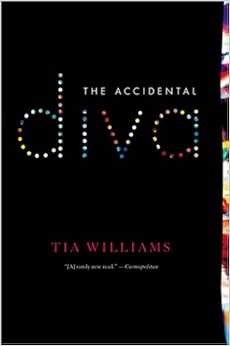
Posted by
MissA
at
7/22/2011 11:40:00 AM
Mini Reviews: Drown, Douglass' Women, Rooftops of Tehran
2011-07-22T11:40:00-05:00
MissA
adult fiction|African Americans|Asian|book reviews|historical fiction|Jewell Parker Rhodes|Junot Diaz|Latino/a|Mahbod Seraji|mini-reviews|
Comments
Subscribe to:
Posts (Atom)