Showing posts with label autobiography. Show all posts

Monday, August 19, 2013

The GQ Candidate + Government Girl

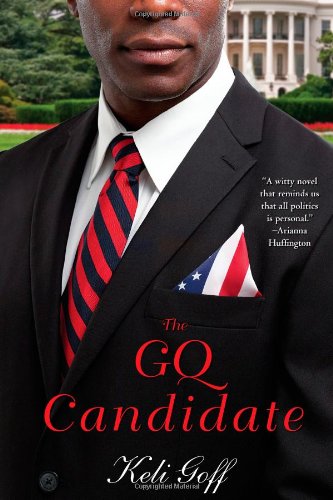
The GQ Candidate by Keli Goff, 2011
Atria Books/Simon & Schuster

Rating: 3/5

IQ "Well, there's not much left to say except that I'm really glad I wore my Manolos today, because if I'm going to insert my foot this far in my mouth I at least want to be wearing nice shoes", Mimi pg. 349
Luke Cooper started out as a state senator and was then recruited to run on the Michigan governor's ticket as lieutenant governor, they won but due to a sex scandal Luke became Michigan's first Black (and Jewish by adoption) governor and one of the youngest governor. His ratings are soaring and due to some remarkably good luck concerning acts of goodwill (such as defending a white nationalist from injury while a group of white nationalists were protesting his policies) that involved social media the rest of the country has a vague inkling of who he is. Some of his friends and mentors advise him to run for president and he throws his hat into the ring for the Democratic presidential nomination. With the help of a loyal, talented group of friends Luke feels confident with his decision to enter the race but it will affect those he loves far more than he could have ever imagined.

It felt like the author was sick of upper class/upper middle class Black people not being portrayed in fiction so she peppered her novel with them. I understand and appreciate her intention but the delivery left a lot to be desired. Luke's family was cheesy in its perfection, even its quarrels felt forced and ridiculous. Everyone had these great personal backgrounds from the oldest characters being Freedom Riders to the youngest being successful and powerful in their respective careers. Not all characters were perfect but it was hard to focus on their flaws when I could barely keep them straight. The narration plodded on and I think the author should have instead focused on Luke and his immediate family instead of Luke's family, friends and his friends of friends. The book was very long in order to accommodate all these characters and the gazillion plot lines (or so it seemed) which was frustrating when the book reached the end and a rather dramatic moment was rushed through. Furthermore the book ends with Luke making a crucial decision and although I can guess what he chooses, I think that since this book was all about politics (in a way) it should have ended with him actually making a political decision.

This book is about a presidential campaign but politics do not enter the equation which keeps it from being a polarizing read due to controversial issues. While Luke is a Democratic, a variety of political affiliations are mentioned but since the issues are not delved into its inconsequential. Instead the book focuses on how political campaigns are run, the people behind the scenes of the candidate, the media's relationship to a campaign and networking and fundraising. It was nice to read a book with such a dream cast, I just wish the author had either taken the presidential campaign storyline out of it (and instead focused on a group of highly educated Black friends post-college living life) or narrowed down the cast of characters. The book was a slow read but Luke and his friends are a highly entertaining bunch, try to ignore the lack of plot and while you will most likely get frustrated at the ending The GQ Candidate is still a good read.


PS Fact: I bought this book at my Borders as it was closing. So this book will always be associated with that, I even still have the receipt that says 'final sale'. Sadness

PPS: I know everyone else read this as Barack Obama-like but I actually related Luke Cooper more so to Cory Booker. Anyway just a thought
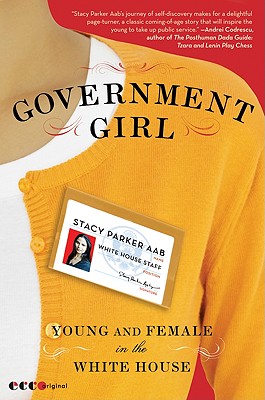

Government Girl: Young and Female in the White House by Stacy Parker Aab 2010
Ecco/HarperCollins

Rating: 2.5/5

IQ "If I have one wish for America, it is my hope that when our leaders stumble, as they will, when they hurt others and themselves, which is inevitable, that we will be as compassionate to them as we sense they would be with us if the faults were our own. Our leaders are not gods, and they are not our fathers. But they can be our best hope for peace among nations", pgs. 291-292

Stacy Parker Aab's memoir details the life of a young, biracial White House staffer. She was born (1974) and raised in Detroit and attended George Washington University where she became an intern at the White House, working in George Stephanopolous' office. Eventually she began working for Paul Begala as his special assistant.

My summary is brief because unlike the back of the book I'm not trying to claim that this memoir provides "a searing look at the dynamics between smart young women and the influential older men who often hold the keys to their dreams". It didn't reveal much about gender relations in the Clinton White House but it did provide a look at the daily atmosphere. However the stories shared are not that interesting, while I didn't want scandalous tidbits (indeed it took me awhile to recover from the story of Vernon Jordan sexually harassing her because I admire that man immensely) I did hope this memoir would provide some interesting anecdotes. Instead since Aab was never that high up this book is more of a day-by-day look at the work of young staffers, people who are important to the functioning of our government but who don't interact with that many people of name-recognition. I also thought that the author spent a lot of time bragging about herself, making sure we knew how loved she was in Stephanopoulous' and Begala's office. Furthermore she was determined to gloss over any issues that might have made her more interesting, instead she focused on portraying herself as the perfect staffer (there was about 2 sentences about drug use that held up her security clearance but she doesn't go into further detail). It just rubbed me the wrong way which I grant is a matter of personal taste. I also wish she had went into more detail about her life post-White House, especially meeting her husband, since she goes on and on about wanting a boyfriend but then rarely talks about her relationships (which she doesn't have to do but then why talk about how important having a boyfriend was to her?). Finally, the end part about the Obamas fit oddly into the book and seemed more like her way of sharing her thoughts about their presidency rather than connecting the dots to her time in the White House (except for mentioning that they hired some veteran Clinton staff).

I did find it fascinating to read about the inner-workings of the staff (for a time and then it got old) such as "RON"s (remain overnight), people who were in charge of paving the way for the president at whatever hotel or celebrity home he stayed at on his travel. Those are roles that we definitely don't think about and I was also appreciative at the glimpses of humanity displayed in the Secret Service men she talked about since they seem like daunting, mysterious figures (which is their job to do but still). Overall Government Girl left me disappointed because I had expected it to be more exciting, at the very least, I wish the protagonist had focused more on being genuine and less on presenting a perfect good girl image. It does a good job though of giving people an idea of daily life for the young men and women who are so helpful to the 'big names' and really keep our government running, I am grateful to them.

Tuesday, November 15, 2011

Leaving Microsoft to Change the World

Leaving Microsoft to Change the World: An Entrepreneur's Odyssey to Educate the World's Children by John Wood 2006
Collins/HarperCollins

IQ "My favorite creative idea came from Parkgate, a Montessori primary school in London. Catherine, the energetic founder and headmistress of the school, called to say that her students had invented a new fund0raising technique. They offered their parents the opportunity to pay for what they called the Sponsored Silence. For 10 [I believe pounds] per hour, the parents could basically hit the Mute button on their children for the evening. Sales of this new luxury item were quite robust. [...]Children can be natural fundraisers, and very entrepreneurial, if given the freedom to think creatively." pg. 224

I found that quote especially appealing because I 100% agree, kids never cease to amaze me with their cruelty but then they outdo themselves with kindness, finding ingenious ways to raise money for a variety of causes. And I love the idea the children in London came up with. It got me thinking that something similar could be done in schools where students are particularly rowdy and they could raise money for those "with no voice" such as those incarcerated, victims of sexual and physical abuse, etc.

John Wood is the founder of RoomtoRead, an organization I was unfamiliar with until the fabulous Sarah Rettger recommended Wood's book to me. I'm so glad she did, it was fantastic! Room to Rea's goal is to promote literacy and provide an education to every child, no big deal. Currently they are based in Nepal, Vietnam, Cambodia, Sri Lanka, India, Laos, Bangladesh, South Africa and Zambia. John Wood originally worked for Microsoft as a marketing director but after a hiking trip to Nepal where the illiteracy rate is 70% he was inspired to send books for a library. The Nepalese people were skeptical he would return but he did, bringing "thousands of books bundled on the back of a yak", shortly afterward he decided to start his yet-unnamed non profit organization to build libraries, schools and distribute books. This is his story and the story of the origins of Room to Read.

One of the most intriguing aspects of this story is the business model of Room to Read, even though Room to Read is a nonprofit. The author talks about how they relay on donations of all kinds, not simply the ones from billionaires. They insist the community they build the school/library in must take part in the building of the school/library, this way the community feels a deeper connection to it. I think that's a really great point that I have never heard mentioned by other non-profits. If people don't feel a sense of ownership they won't care, but give them some responsibility and people will create the best product they can. Classic business model, no? They also ensure that they have local staff and partner with local businesses/governments. I think more and more non profits are realizing that they need to consult with the actual people who live in the country they are trying to "reform/improve." It's very refreshing and reassuring. I loved reading John Wood's explanation as to why Room to Read tries to fund raise from more than large donors "there simply are not enough billionaires out there to solve all of the world's problems. True change requires mass participation, because one person writing a large check is never enough. He could change his mind about the cause, or make bad investment decisions that deplete his capital, or die and leave his money to his heirs rather than to charity. To rely on just one person is quite risky, especially when the future of millions of people is at stake. The larger problem is that too many of the truly rich are loath to give away their fortune in any meaningful way. [...he then goes on to say...] The Andrew Carnegie of the 21st century will not be a rich white male. It will be a network of concerned global citizens, and we will create it" (pgs. 151-152), he's ambitious, determined, and optimistic. In short, everything I would expect a business person to be (obviously intelligent as well) with the rarity of being truly about service.

The added bonus of this inspirational and productive story is the behind-the-scenes look at Microsoft. He doesn't spend a lot of time talking about Bill & Melinda Gates but he does mention a time when he met Bill Gates. It's not the most flattering portrait but the author makes apologizes for why Gates might have acted the way he did. What I found even more interesting was the author describing his interview with Melinda French Gates, who was Bill Gates' girlfriend at the time. The position he was interviewing for would be under her supervision and while it was brief mention, it gave a tiny peek at Microsoft in the earlier days. Something that wasn't mentioned but that I'm curious about, is if the Bill & Melinda Gates Foundation supports Room to Read? Furthermore the author is very pragmatic but also very fair. Perhaps I found him to be very fair because I can be very harsh and critical of people who I feel have been given much but do very little (which I am working on), regardless it's a wonderful quality to have. He discuses telling his girlfriend Sophie about his trip to Nepal and how amazing it was to deliver the books and his idea to do something similar but she isn't interested. "I reminded myself that despite her international postings, her strong preference was for the glamour of the expatriate life in a big city like London, Prague, or Paris. Large paychecks, housecleaners, and a full-time driver on call could make any city feel even better than home. My desire to strap on backpacks and 'go walk about' in the developing world held no appeal to her. We were both 'international', but in very different ways. This does not make either of us a better or worse person than the other" (pg. 43), I want the best of both worlds but I'm slowly realizing that it's not possible but that's Ok. I would rather "go walk about".

Room to Read was founded in 2000 and what makes this literacy organization really stand out is that it's run like a business, but the businesspeople actually have compassion. Room to Read is trying to sell you the importance of gender equality and raising literacy around the world, they have a business plan. Please consider donating to them, I know I will be (I will donate to them before I specifically profile the organization this weekend). John Wood seized the moment and created a dynamic non profit and this gives him a super-hero quality. He has human qualities though, he has doubts sometimes. Wood discusses his wish to own a home, to stay in a long-term relationship, to have more money to devote to a few small luxuries but at the end of the day he loves what he does. If only we all could be so lucky. I wish I could work for Room to Read but I'm not so sure I'd make it past the first round, it's a very competitive interviewing process! Which is as it should be, we need the best and the brightest working with nonprofits to change the world. Fortunately we have Room to Read and John Wood.

Disclosure: From the library. I wish I had bought it though since proceeds go to Room to Read. I may still buy a copy because it's definitely a book needed for my shelf

Friday, August 12, 2011

If It Takes a Village, Build One

If It Takes a Village, Build One: How I Found Meaning Through a Life of Service and 100+ Ways You Can Too by Malaak Compton-Rock 2010
Broadway Books/Random House

Incredible Quote "I believe that if you care about people, you should care about all people. And if you really believe that we are all part of this human race, all global citizens, then it makes sense to care about all people and to help people anywhere in the world. Certainly, the individuals who receive your time, money, and support appreciate it. But I also think each of us benefits when we serve internationally. There are the cultural benefits, such as learning more about another way of life and understanding other parts of the world in a more in-depth way. Even more important, I think we come to feel that the world is a warmer, friendlier place and that we are part of a human family that sustains us all." pgs. 151-152

Malaak Compton-Rock is a dedicated humanitarian. She has written a book to help others help more people. Her mother took her to rallies and exemplified a life of service to her, and both her parents discussed politics, race and education at the dinner table. In her first book, Ms. Compton-Rock shares the lessons she learned from her mother, and various jobs on living a life dedicated to service. She also provides tips on how to raise children committed to volunteerism and includes resources such as websites and names of various organizations worth checking out to consider volunteering with and/or giving a donation. Starting with how to find the right volunteer opportunity for yourself and your family and continuing with how to throw a fundraiser, start a nonprofit and research reputable charities. To quote the book flap this is "the must-have book (and perfect gift!) for aspiring do-gooders". (And I 100% agree with that quote).

One of my favorite quotes is "service is the rent we pay for living" first said by Marian Wright Edleman. This quote is the daily mantra of Malaak Compton-Rock and through the stories and tips she shares, it becomes quite clear that she is paying more than her share. I was skeptical at first as to how usable her tips would be considering that she also happens to be the wife of Chris Rock and thus has lots of money and influence to give to various worthy causes. Ms. Compton-Rock however, continuously stresses that she realizes how fortunate she is but for the most part are tips are applicable to would-be (and current) volunteers of all incomes. Certain tips concerning corporate sponsors I don't think will apply to everyone but there are other tips about using local businesses and other resourceful ways to save money on planning an event. What I disliked the most about this book was the fact that after all the author's talk about buying gifts, cards, etc from non-profit organizations (or businesses like RED) she doesn't take her own advice and donate the profits from her book to a particular cause. Or at least she doesn't publicize it which is both good and bad. Good because if she does donate proceeds from her book sales, she's being humble by not showcasing it but I'm more eager to buy books where I know proceeds are being given to a certain organization I support and/or find interesting.

I chose the quote I did as Incredible because I've often struggled when people remind me (especially my mom) "charity begins at home". I realize that and we all know America has its fair share of problems but I'm also drawn to working with international NGOs (well not exactly work per se although that's what I want to do after college but for now I just mean choosing where to donate my money and whether or not to spread the word) and I never have the answer for the question of choosing domestic vs. international causes to champion. I want to do both and now thanks to Ms. Compton-Rock I have an answer I can adapt in my own words. She describes it perfectly (if only I was so eloquent)! Another key point she makes early on that I think is well worth bearing in mind concerning deciding how much to donate she states that people "often start feeling guilty about how small their gifts seem, not realizing that every cent counts to a nonprofit organization. They turn what should be a joyous, positive, self-affirming experience into something that causes them guilt or sadness. And no one should be feeling either of these emotions when they have decided to serve by giving" (pg. 31). Sometimes I feel sad when I'm giving but only because I wish I could do more, I wholeheartedly agree that when you donate money you should happy because you took a BIG first step. But I also think you should feel a bit restless and a CRAVING to do more.

If It Takes a Village, Build One is an essential read for everyone because everyone can/should donate their time, money and talents to serving others. The author doesn't try and guilt the reader with harrowing statistics (while there are a few sprinkled throughout they never overwhelmed me with sadness and I'm a mess when it comes to that sort of thing), instead she provides the statistics and then shares the organizations that are DOING something to lower those scary stats. Her stories are uplifting and I *plan* on keeping this book around for the rest of my life for organizations to volunteer for during and after college as well as for tips on how to raise kids (if I ever have any) with generous spirits. I closed this book feeling like (as cliché and cheesy as this is about to sound) I could DO ANYTHING and MAKE A DIFFERENCE in some kind of positive way. I immediately emailed two local organizations I volunteer for with some new ideas and the wheels are turning in my head concerning the blog and C.O.L.O.R. Personally I would recommend this to everyone!

Disclosure: Bought (while in NYC at a closing Borders. I LOVE NYC!)

Ps Check out the author's website for even more resources

Friday, June 17, 2011

Barefoot in Baghdad

Barefoot in Baghdad by Manal M. Omar
Sourcebooks

Incredible Quote (IQ) "Years of humanitarian work had taught me that the smallest intervention could set loose an avalanche of unexpected consequences. I knew better than to dive in on a whim. The key was to anticipate and plan for worst-case scenarios and to take calculated risks to improve people's lives. Even the most experienced aid workers could find themselves stuck in some intractable situation. My organization's motto was 'Underpromise and overdeliver.'" pg. 142

Manal Omar is an American aid worker of Palestinian descent and when she moves to Iraq as part of her work with Women for Women International her particular Arabic heritage and beliefs present a bit of a problem. It's hard for many of the Iraqi women to relate to her wearing the veil this is a story about her efforts to gain the trust of Iraqi women (and men) and her friendships with the three men (Yusuf, Fadi and Mais) who help her get started set during the time when things started to go terribly wrong for Iraq.

I thought this book was oddly devoid of what Ms. Omar DID exactly in Iraq. It all seemed very vague, she talked about setting up women's centers but mostly this book focused on the difficulties aid agencies faced working in Iraq. Which was disappointing to me because I had hoped the story would be specifically about what Women for Women International did in Iraq or even touch on what NGOs in general did in Iraq. Instead (and I guess it makes sense since this is a memoir) the story very much focuses on relationships but personally I cared more about her work than her personal life. Which sounds way harsh and I don't mean to say her personal life isn't interesting but I wish she had found a better balance. I wasn't a fan of the writing style either the book opens up moving fast with an engaging and heartbreaking story and then the story is dropped. I honestly couldn't remember who Ms. Omar was talking about once she resumed the story (after a looonnnggg pause in which she discussed her family and her first few months in Iraq) and I had to flip back to the beginning.

I was captivated by the fact that the author had such difficulty gaining the trust of American soldiers as well as the Iraqi women because she wore the veil. The men she worked with were disappointed because at first they didn't view her as a 'true American' and the Iraqi women feared she might be a religious fanatic. The point is continuously made that Iraq is a fairly secular country compared to the countries around them (they often say they are not like Iran) and that is a point of immense pride for the Iraqi people, especially concerning women's rights "They [Iraqi women] had paved the way for women in the region by being among the first to vote, the first to participate in the judiciary system, and the first to demonstrate their economic power. Women from the rural areas became legendary for devising methods to survive the sanctions of the 1990s." (pg. 17). Furthermore the author did an excellent job portraying her relationships with the Iraqi people, they all came alive and the inevitable deaths quite literally broke my heart. I obviously didn't suffer as much as Ms. Omar but I did get so wrapped up that I was near tears.

Barefoot in Baghdad was a disappointing story because I had different expectations. I would recommend going into this story with the mindset of having no expectations or expecting a strong focus on personal relationships between the author and certain people as well as a discussion of American policy flaws in Iraq. I personally admired Ms. Omar because her career path is one I would LOVE to follow. I want to major in international relations and work for an aid agency and travel around the world. However I was hoping to read a story that concentrated largely on aid work and it did not. From a cultural aspect I had a really hard time understanding Ms. Omar deciding to get married so suddenly but she explains that in her culture women don't date. Which I knew from other YA books I'd read but I guess I just assumed adult women would date if they wanted to, but Ms. Omar's culture and religious beliefs are very important to her and I respect that immensely. She asks for her parents blessings on everything but if they say no, she will fight them on it if she believes it's truly important. A striking story that looks at the time when Iraq began to crumble and the danger aid workers faced in Iraq as well as the even greater danger faced by the Iraqi people. I walked away from this book wanting to learn more about this amazing country. The story also reads like a how-to guide for humanitarians imparting lessons such as the IQ and this "As much as we thought we knew what was needed, in the end only the communities we planned to work with really knew" (pg.22).

Disclosure: Swapped with Helen from Helen's Book Blog

*I will be in Guatemala from June 10-20 with no Internet access

Friday, May 27, 2011

Honeymoon in Tehran

Honeymoon in Tehran: Two Years of Love and Danger in Iran by Azadeh Moaveni 2009

Random House


IQ "I wondered whether most Americans had any idea how the actions of their government influenced the lives of those across the world. Iranians had a long, sophisticated tradition of conducting their own opposition to autocracy. When would Washington realize this, and allow Iranians to resist their tyrants in the manner of their own choosing?" pgs. 245-246

In the sequel to Lipstick Jihad, Azadeh Moaveni is living and working in Tehran, having finally adjusted to the many nuances of life in the Islamic Republic. The author notices vivid contrasts, the people of Iran want openness with the West and civil liberties. But if that is the case, how did the conservative , anti-west Mahmoud Ahmadinejad win the 2005 election? In addition to the surprising political turn, Azadeh falls in love, with an Iranian man. They decide to get married in Iran and raise their future family in Tehran. Her upcoming marriage coincides with the Iranian government once again bearing down on 'immodest dress' for women and there is increased intimidation of journalists, especially ones who write for Western newspapers and magazines. Then the unthinkable occurs, the author discovers herself to be pregnant before she is married. The punishment is 100 lashes and one year of banishment. The author must decide to stay in Iran or leave for the West, does she really want to raise her future children in Iran?

There's a lot of information in this book, much like in the other, although there are some natural extraneous details, but to me that added an even more personalized touch. I think another bit of information worth keeping in mind is that besides being the perspective of one Western-educated woman, it is also the perspective of an upper middle class woman. Class plays a big role in Iranian society and this is not the best of books if you want to learn about daily life for the working class (something I'm now interested in after reading this book). Something worth keeping in mind as well is that this book is very slow-paced. As someone who has discovered a passion for the Middle East (and as such I'm willing to read anything I can on those countries) I eagerly read through this book, but if I wasn't so personally enamored with the topic, it probably would have taken me much longer to finish.

Most importantly if the reader has read Lipstick Jihad they will notice immense growth in Ms. Moaveni. "When I first arrived in Iran, fresh and green from northern California, I had obeyed like a schoolgirl in such situations, naively deferential to authority, certain the worst could not happen to me, of all people. Only when the worst (arrest, near arrest, public humiliation and so forth) befell me, repeatedly, as a result of my submissiveness, did I learn to respond like the Iranian young people of my generation: with loud, shrill confrontation. This was the rather simple trick by which my friends; indeed, most young Iranians-managed to evade the bullying ways of the Islamic system: by shouting down its enforcers, daring them to engage in hostile, full-fledged confrontation. It sounds counter intuitive, but it was actually effective. Very often the authority figure in question was either too young, cowed, bored, or poorly paid to deal with an angry female whose shrieks typically gained her the solidarity of passers-by" (pg. 96). I really like this quote because while it very summary-ish, it gives a peek at the change Ms. Moaveni goes through, a change that is well worth reading about. Another intriguing aspect of the story concerns falling in love in Tehran, what life is like for dating couples, for those who just want to hook up and married couples. It's not as restrictive as one might suspect but it's no America.

Honeymoon in Tehran addresses one of the toughest questions future-parents must make, do I really want to raise my child in my home country? In my opinion that is an extremely difficult decision and the author takes great care in weighing the pros and cons of raising her children in Iran. She doesn't want her son to be confused because while at home she could tell him that women are equal to men, Westerners aren't all evil, etc, at school it would be a different story. Furthermore there's a chance that a young child will accidentally let something slip about private family life that is technically against shari'a (Islamic law). Such as 'Mommy made fun of the Ayatollah', the risks are great. At the same time she loves Iran, the people, the beautiful landscapes, the passionate discussions (I'm so jealous of this fact. Debates are a big part of Iranian culture and it seems to me that they manage to passionately argue politics without really offending anyone. That would not be the case in America unless Iranians simply don't discuss controversial issues such as abortion, gay rights, etc because it's a moot point under their theocratic government?) and she has made many friends there. The author's love of Iran is clearly reflected in this book and I personally hope I never have to make a decision like that because there's a downside either way. I also appreciated how this book tried to explain how Ahmadinejad was elected. The author chronicles everyone's surprise at his win but she also notes that many of the people she talked to decided not to vote. Neither one of the author's two books are political, when discussing matters of politics the information is presented in a straight-forward manner with diverse viewpoints. The heart of the story however concerns relationships and how they have been both hurt and strengthened under the Islamic Republic. A fun, informative story for those who like international politics (but not too in depth) and simply reading about other countries.


Disclosure: From the library

PS Fun fact (or not) the author is friends with Shirin Ebadi, in fact she co-authored (and I believe translated) Ms. Ebadi's memoir, Iran Awakening. You can find my lukewarm review here

Thursday, March 31, 2011

Throwback Thursday: Reading Lolita in Tehran

Reading Lolita in Tehran by Azar Nafisi 2004
Random House

IQ "An absurd fictionality ruled our lives. We tried to live in the open spaces in the chinks created between that room which had become our protective cocoon, and the censor's world of witches and goblins outside. Which of these two worlds was more real and to which did we really belong? We no longer knew the answers. Perhaps one way of finding out the truth was to do what we did: to try to imaginatively articulate these two worlds, and through that process, give shape to our vision and identity." pg. 26

From 1995 to 1997, Azar Nafisi and seven of her most committed female gathered in her house to discuss Western literature, the classics that have been forbidden. They gather ever Thursday morning to discuss Vladmir Nabokov, F. Scott Fitzgerald, Henry James, Jane Austen and other greats. This book covers each of the above mentioned authors, but many others are discussed for a bit as well. Not only does the author talk about herself but she reveals an intimate portrait of each one of her young students as well as what life was like in the early days of Islamic Republic and at the end of the 20th century. The author was a professor at the University of Tehran but she was expelled for refusing to wear the veil.

If you don't want Lolita, The Great Gatbsy, Washington Square (or Daisy Miller) and Pride & Prejudice to be spoiled for you, don't read this book. I didn't mind since I'd read two of the four. Also I'm ashamed to say I'd never even heard of Henry James. Not sure where I was when people talked about his classics. Lolita I knew the gist of, but it's sounds so much more suffocating and horrifying than I anticipated. I do want to read it, if only because I think the experience will be all the richer after having read Reading Lolita in Tehran. The book is divided into four parts, each part named after Fitzgerald, James, Nabokov or Austen. What really drew me to this non-fiction story was how easily (or so it seemed to me) the author was able to make comparisons between the lives of herself and her students in Iran with the lives of those they were reading about in books. For example in talking about Lolita she states "I added that in fact Nabokov had taken revenge against our own solipsizers; he had taken revenge on the Ayatollah Khomeini, on Yassi's last suitor on the dough-faced teacher for that matter. They had tried to shape others according to their own dreams and desires, but Nabokov, through his portrayal of Humbert, had exposed all soplipsists who take over other people's lives. She, Yassi [one of the seven students], had much potential; she could be whatever she wanted to be-a good wife or a teacher and poet. What mattered was for her to know what she wanted" (pg. 33).

Unlike Lipstick Jihad this book is much more distressing to read because the rules are so much stricter. Lipstick Jihad took place in the early 2000s, this book is from the '70s to the '90s and I highly recommend both, or at least that you read this book and then one set in present-day Iran so you can see the changes. It's rather astonishing. I do think at times the author waxed on philosophically a bit too much, talking more about the books than life in Iran and/or her students. In fact, I do wish we had gotten to better know the seven girls; Yassi, Mahshid, Manna, Azin, Nassrin and Mitra. We get glimpses of their personalities, but I think the author only lightly touched on the complexities of their lives. Perhaps she couldn't go into much detail for fear of getting them (or herself, loved ones, etc.) in trouble. Stylistically I wasn't a huge fan of how the book was told. The passing of time was confusing and the conversations weren't italicized or put in " " so I wasn't always sure if the author was having an actual conversation or just thinking in her head. What bothered me most was once we hit the 2nd or 3rd part, the book became less about the author/teacher AND the girls and more about just the author. I had been expecting equal playing time so to speak so that surprised me. I also had high expectations for the Pride & Prejudice part, I think the comparisons fell flat except when talking about Iranian society and British society of the 19th century. It was truly sad to read about these young women who knew nothing about relationships but still yearned for their Mr. Darcy, even though he seemed very, very far away indeed. I did however really like this lengthy quote "Mr. Nahvi was one of the few students in whom I was unable to find a single redeeming quality. I could say, like Eliza Bennet, that he was not a sensible man. One day after a really exhausting argument, I told him Mr. Nahvi, I want to remind you of something: I am not comparing you to Elizabeth Bennet. There is nothing of her in you to be sure-you are as different as man and mouse. But remember how she is obsessed with Darcy, constantly trying to find fault with him, almost cross-examining every new acquittance to confirm that he is as bad as she thinks? Remember her relations with Wickham? How the basis for her sympathy is not so much feelings for him as his antipathy for Darcy? Look at how you speak about what you call the west. You can never talk about it without giving it an adjective or an attribute-decadent vile corrupt, imperial. Beware of what happened to Elizabeth!" (pg. 290).

Reading Lolita in Tehran delivers excellent literary analysis with the bonus of raising the curtain off of life in Iran during the early days of the Islamic Republic especially concerning what life was like for students and teachers. It's hard to read about the suffering the people went through, the jobs lost, the rather ridiculous-sounding rules, and worse, the interrogations and the executions. I found it especially sad at how people bewail the brain power that is leaving Iran. I think I can understand why young people wouldn't want to stay, but I can also see how others would see it as betrayal (i.e. why don't they stay and try to work with the system to make Iran better). This is not a book for you (I don't think) if you don't like learning about Iran and/or reading literature analysis. The story is slow-moving but that allows for plenty of details about life in Iran, although I do think the seven young women the book was supposed to be about as well, got pushed to the side towards the middle and end of the book. The transitions and passing of time was confusing as were conversations held, but I can't help but marvel at how this book manages to take seemingly unrelated topics and show how they are similar, to illustrate how classics can literally be applied to people's lives ANYWHERE. Even in what we may think of as a repressive society. For most of the book the literary references went completely over my head, but I found the analysis fascinating and I definitely intend on re-reading this book after I've read (or re-read) each of the main four classics. I'm particularly excited to read some Henry James (I definitely didn't get her comparisons when it came to his work and Iran but that's probably because I know nothing about him or his work)! My favorite part is when they put a book of his on trial in class. It was a lot of fun to read about, but stomach-churning at how much disgust some students had for the book, not all though and that was reassuring.

Disclosure: From library

PS I had quotes picked out from each part

On the Great Gatsby "[w]hat we in Iran had in common with Fitzgerald was this dream that became our obsession and took over our reality, this terrible beautiful dream impossible in its actualization for which any amount of violence might be justified or forgiven. This is what we had in common, although we were not aware of it then. [...] When I left the class that day I did not tell them what I myself was just beginning to discover: how similar our own fate was becoming to Gatsby's. He wanted to fulfill his dream by repeating the past, and in the end he discovered that the past was dead, the present a sham, and there was no future. Was this not similar to our revolution which had come in the name of our collective past and had wrecked our lives in the name of a dream?" (pg. 144), powerful! And I actually understood that connection (it helps that we just finished studying Iran).

On Washington Square "[t]hus, Dr. Sloper commits the most unforgivable crime in fiction-blindness.[...]This I believe, is how the villain in modern fiction is born: a creature without compassion, without empathy. [...] I think most of my students would have agreed with this definition of evil, because it was so close to their own experience. Lack of empathy was to my mind the central sin of the regime, from which all the others flowed. My generation had tasted individual freedom and lost it; no matter how painful the loss, the recollection was there to protect us from the desert of the present. But what did this new generation have to safeguard them? Like Catherine's, their desires, their yearnings, their urges to express themselves were manifested in bizarre ways." (pg. 224) I don't know if I agree that they expressed themselves in 'bizarre ways' , their ways of expressing themselves were merely differently from what one might expect. Honestly I think it was more of a generational thing. Maybe the author just didn't get 'young people'. Ha

Thursday, September 16, 2010

Throwback Thursday: Lipstick Jihad

Lipstick Jihad: A Memoir of Growing Up Iranian in America and American in Iran by Azadeh Moaveni 2005
PublicAffairs Books


IQ "The urge to translate, this preoccupation with language I had dragged around with me, had been a resistance to the sense of foreignness I felt everywhere-a distraction from the restlessness that followed me into each hemisphere. If I could only have conquered words, purged from my Farsi any trace of accent, imported the imagery of Persian verse into English prose, I had thought, then the feeling of displacement would go away. [....' I didn't want to accept that displacement was an inescapable reality of a life between two worlds." Azadeh pg. 243

Azadeh Moaveni is a journalist who has worked for Time magazine and the Los Angeles Times. She was born in Palo Alto, California, where there was a thriving community of Iranians. They didn't view themselves as immigrants, more like "victims of the diaspora", they would one day return to Iran, when the government eased up on its oppression. Azadeh felt caught between two worlds, her American upbringing often clashed with her family's more traditional Iranian beliefs. She didn't always notice or care about the culture clash, but while in college, it became glaringly obvious that there were some serious differences between Iran and America. after graduation, Azadeh moved to Tehran to work as a journalist. While in Iran she learns about the 'rebellious' youth who throw parties, go skiing and try and fight the Islamic regime in any way that she can. She becomes a part of this world, the world of the Iranian youth who are fighting to bring modernity to Iran.

This book is an absolute treat to read. I'm embarrassed to admit that I'm one of those Americans that the author rallies against. She talks about how people would ask her questions (upon her return from Iran) like "were you allowed outside?", etc. I would never ask that question, but I would probably wonder at how much freedom (and fun) a person could have living in Iran. Truth be told, I've never really thought about it. But in my Comparative Politics class we studied Iran's history and I wanted to get a better picture of what modern-day Iran was like in order to be prepared for class. Lipstick Jihad was on our summer reading list so I decided to read it (on my own) while we studied Iran in school. It blew my mind. I have nothing to compare it to but I think the author does such a great job of reflecting Iran's struggle to become modern (the Islamic Regime wants to keep Iran firmly Islamic and traditional, many of the young people want to see Iran embrace modern times). Azadeh has lots of family in Iran and through them (along with her job) she meets many new people. Through these people, she begins attending parties. At the parties, people are drinking, doing drugs, having public displays of affection and essentially doing everything that they are forbidden by law to do. Granted many of the parties she attends are held by the middle and upper classes, but even the working class participate in acts of rebellion, in their own way. There are loud celebrations held in the streets during religious festivals, days the religious leaders have declared sacred but the crowds are too large for the police to force them to settle down.

It's difficult to review a memoir because I've found that I often want to comment more on the content, than the writing. I do want to share two things that I learned that I probably never would have discovered if it weren't for this book. The author is looking for a gym to work out in and she discovers one for the rich. Men and women are allowed to work out there but there are "ladies' hours" and "gentleman's' hours." The women could only work out from nine in the morning till two o'clock. Obviously the women were not expected to have jobs (the author calls it the "mistress gym" because many of the women were mistresses of the religious clerics). Furthermore, none of the other women were there to work out. They mostly gossiped while walking leisurely on treadmills. Eventually the author finds a gym that will suit her, one in which toe women actually sweat as well as chat. There were also classes held at instructor's homes, including yoga and aerobics. I have to admit, I was surprised that gyms were even allowed. On a different note, I was struck by the idea of temporary marriage. Apparently in order to fulfill their most intimate needs, people would enter a temporary marriage, called sigheh. Only men can initiate them however and they "can be as short as fifteen minutes, and the vows can be exchanged in fifteen seconds." (pg. 73). It was started by clerics who wanted a theological excuse to sleep with as many women as possible, but after the revolution of 1979, everyone started getting a sigheh. It was especially useful for dating couples who were not allowed to hold hands or even appear together on the street, if they participated in any of such activities, they could be arrested. The men would be thrown in jail and/or beaten and the women would most likely be raped.

Lipstick Jihad is an eye opening read that should be required reading for anyone who wants to visit/work/live in Iran. The author covers many topics ranging from fashion, dating, entertainment, politics, and the arts. Interspersed throughout the book is information about Iran's rich history and eagh chapter starts off with an Iranian poem. The author seems to write candidly about her family, her mother is committed to social justice, although she is not liberal on issues relating to dating or any other freedom of young people. Her father wants nothing to do with Iran after the Islamic regime comes into power. Both parents present two different opinions on Iran and it's very interesting to read about. The author is genuine and her writing is fused with humor (I rellay liked the titles of her chapters, one of them was called I'm Too Sexy For My Veil. Which is both sad and funny), but she's clearly not telling this story simply to entertain. She wants to educate all of us Westerners who remain blissfully ignorant of Muslim/Iranian/Middle Eastern culture. Clearly we can no longer afford to be so ignorant, and I adored this book so I would recommend it to everyone. It never grew too tedious and I never suffered from information overload. The writing is concise, the story unique and her ultimate conclusions about life in Iran and America are both enlightening and obvious.

Disclosure: From the wondrous library :)

Throwback Thursday is hosted by Take Me Away Reading

Monday, August 9, 2010

Male Monday: Losing My Cool

Losing My Cool: How a Father's Love and 15,000 Books Beat Hip Hop Culture by Thomas Chatterton Williams 2010
Penguin


IQ "It is more accurate to say, however, that the mood of black culture doesn't need to change into something wholly new so much as it must simply find a way to reclaim what it once had. One of the most fascinating paradoxes the student of black history every observes, as well as a tremendous justification for black pride, is the extent to which this culture, against all likelihood, has customarily embodied a joyful, soulful, affirming approach to life and not a spiritually bankrupt or self-defeating one. [...]In other words, it is only after the tremendous civil rights victories of the '60s, only after desegregation, only after affirmative action that black America has become so militantly provincial and nihilistic." pg. 214

Sorry about that long quote, but it's some great food for thought. It seems like almost every other sentence in this book makes you think. I looked within while I was reading this book because I love hip hop. I've mentioned this before, but I will use this review to elaborate a little further. I love hip hop artists for their wordplay, a truly clever line will make me laugh and/or will become my status on Facebook. I love to share these lines with everyone. Some examples of clever hip hop artists; b.o.b., Drake, Eminem, Kanye West, Jay Z and Tupac. There are others but these are the first ones to come to my mind. I also like rap and hip hop for the great beats. Yes I know that many rapers are misogynists and yes their lyrics do bother me. And yet, I can't bring myself to give up this genre. I don't want to be disrespected, but I don't want to be at a party and have to listen to alternative/country/metal music that no one can dance to. I love rap/hip hop because I can dance to it, the clever lyrics are a bonus. Like many people (girls?) my age, I have conflicted views on rap/hip hop. While the author of Losing My Cool and I have some differences when it comes to our background (and age), we both have a sort of love/hate relationship with hip hop. Our reasons are both different and similar. Whoa this became a lot longer than I thought it would. On to the review....

Teenager Thomas Chatterton Williams is into being a playa, getting money, wearing the best clothes and listening to hip hop music. His father, Pappy, wants him to read more (he has plenty to chose from, his father owns 15, 000 books!) and work in pursuit of academic excellence. Williams wore whatever was considered cool at the time, "dumbed down and thugged up his speech" and worked hard to be a part of hip hop culture. "Like all his friends, he knew exactly where he was the day Biggie Smalls died; he could recite the lyrics to any Nas or Tupac song and he kept his woman in line, with force if necessary." However, Pappy insists on Williams studying for the SATs and working hard academically everyday after school. Pappy grew up in the South (he read classic works of literature secretly) and he knows how important it is to have a good education, especially for Black people. Williams lives in two worlds; the world of hip hop and the world of Pappy. Set in the 1980s this is a memoir of Williams life until he graduates from college. It looks at the appeal of hip hop culture and the strong bond between a father and son. (Quotes in parenthesies are taken from the book jacket).

When you finish this book, you realize that it really is amazing that Williams went from "thug wannabe" to a graduate of Georgetown. The funny thing is, he continued trying to live the thug lifestyle when he first got to college. I don't want to give the whole book away, but I loved how candid Williams was about his journey from thug to gentleman (I'm not even sure if that's the right word). I've always understood why Black people imitate rappers. It's all about acceptance. No one wants to be called an oreo. But I never realized how far some people go in imitating the lifestyle rappers describe. In that regard, this book was eye opening. Williams touches upon many thoughts that I've had about certain aspects of black and hip hop culture (just far more eloquently!) but he also expresses sentiments that I've never really considered (see the Incredible Quote. I'd never really thought about how hip hop culture has ruined some of the victories of the Civil Rights movement, but it does make sense. Rappers are telling kids that you don't need to get an education to be successful in life. So much for Brown vs. Board of Education, Ruby Bridges, etc.). I would like to share an excellent quote in which Williams explains what being Black means. "Despite my mother's being white, we were a black and not an interracial family. Both of my parents stressed this distinction and the result was that, growing up, race was not so complicated an issue in our household. My brother and I were black, period. My parents adhered to a strict and unified philosophy of race, the contents of which boil down to the following: There is no such thing as being half-white, for black, they explained, is less a biological category than a social one. It is a condition of the mind that is loosely linked to certain physically features, but more than anything it is a culture, a challenge and a discipline. We were taught from the moment we could understand spoken words that we would be treated by whites as though we were black whether we liked it or not, and so we needed to know how to move in the world as black men. And that was that." (pg. 5)

Aside from Williams thoughtful insights on race and hip hop culture, Pappy's story makes this book even better than it already is. He is an amazing father. He trusts his sons and he lets them make mistakes. He doesn't like Williams' girlfriend Stacy or a lot of his other friends who are so into hip hop culture, but he never forbids Williams to hang out with them. Instead he tries to counter their influence by having Williams study all year round. They work on math, reading comprehension, vocabulary, reasoning and analogies. I can't imagine being forced to study all year round (I need my summers off!) and yet, Pappy's sons turn out well (I'm not so sure I'm capable of getting into Georgetown). Through it all, Pappy is strict, but fair, for example, "If we just did what he asked without too much complaint, he would do us some real solids in return, such as paying us generously for our time ('studying is your job, and an honest day's work deserves an honest day's pay), intervening on our behalf when our doled out chores ('studying is their only job'), and tolerating a slew of hair, clothing and dating choices that were in flagrant violation of his personal tastes." (pg. 13-14). I'm with Pappy 100%. We should get paid for studying, but then again he pays them because they study after school. He doesn't pay them for going to school. Pappy clearly loves his sons and its heartwarming to see. I do love a good story with a strong father present. Williams' mother isn't mentioned much and I would have liked to know a little bit more about her. Other than that, I loved learning about Williams, his brother Clarence and all their friends (especially Charles and Stacy). They remind me of people I know or that I have met oh so briefly. We need more Pappys in this world.

Losing My Cool is a triumphant story that will give readers hope that hip hop culture can be beaten. The author recognizes that hip hop culture is tied closely to black culture and he's never too negative of hip hop culture. There's a reason rap music is so popular and the author deftly explains why that is. His honest portrayal of his life experiences reward readers with valuable lessons and analysis. Williams is a great narrator. His story moves along quickly and his explanation about people and events never disrupts the flow of the story. At times I worried that he would never stop trying to be a thug, and that made his story all the more genuine. He certainly had me nodding my head in agreement. Because black culture is not just hip hop culture.

PS I believe that part of the idea of this book came from an article he wrote for the Washington Post, Black Culture Beyond Hip Hop. It's a fascinating article and the discussion in the comments are well worth reading as well.

Disclosure: Received from Kathy. Thank you so much Kathy!